



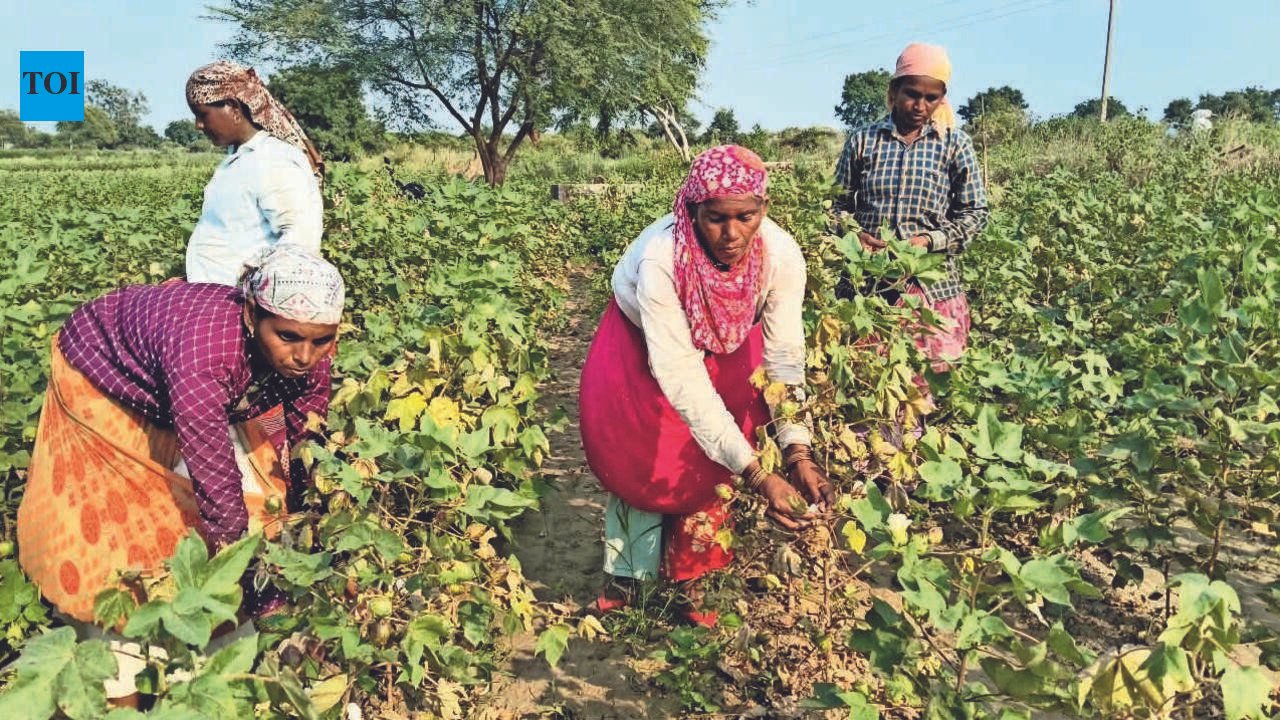
Nagpur: At Wagad Izara village in Yavatmal district, 40-year-old Manda Jadhav and other women workers part the leaves of cotton plants in search of bolls. In a normal year, they move briskly through fields laden with the ‘white gold’, earning up to Rs 700 a day. Wages are calculated by the quantity picked, at rates typically ranging from Rs 6 to Rs 9 per kg. Experienced workers can pick up to a quintal a day.This year, however, many workers like Manda are earning just Rs 250 to Rs 300 a day. Farmers said the cotton-picking season had only begun, but drought had reduced the yield to barely four or five bolls per plant, leaving little to harvest. The season, which usually lasts until March, is unlikely to continue for more than a month, they said.Cotton growers in the area have long grappled with high labour costs and a shortage of farm hands. Now, with fields drying up and farm work dwindling, labourers are taking up whatever work is available locally.“Instead of piece-rate wages based on the quantity of cotton picked, the women are willing to work for a fixed daily wage of not more than Rs 300,” a source said.Manda said she had found work for only three days that season. “There is hardly any cotton in the fields, so there is no work for us. The heat this year is making things worse,” she said.Vandana Rathore, a marginal farmer who works as a cotton picker to supplement her family’s income, said the poor harvest had also deprived her of work on other farms. “The yield in our fields was negligible, and now there is no work on other farms either,” she said.With farm employment shrinking, landless labourers are increasingly vulnerable to microfinance institutions (MFIs), on which many depend for financial support, experts said.Farm activist Kishore Tiwari said easy access to MFI loans was a major concern. Workers were encouraged to borrow because loans were readily available, but the loss of employment was making repayment difficult. Musclemen deployed for loan recovery were now roaming villages where landless workers were struggling to find work, he said.Farmer and activist Manish Jadhav said the govt should ensure more jobs under the employment guarantee scheme. “I hardly find any work available in the area. A mere change of name from MNREGA to G-RAM-G will not make any difference. The change has to be visible on the ground,” he said.An official from the G-RAM-G office said more than 75,000 worksites were employing 2.53 lakh rural workers. Given the drought, work had not been suspended during the farming season, as provided for under the original scheme, the official said.
