


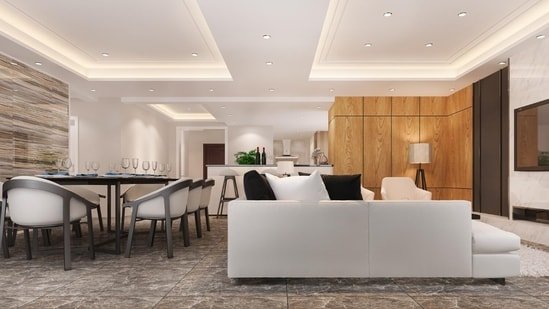
False ceilings are silently doing the heavy lifting to create a coordinated, complete look. When you leave the ceiling bland or use false ceilings only for utility purposes like hiding wires or ducts, you miss out on their true potential. Did you know a false ceiling can fundamentally change the look of your interiors? And the best part is that they come in different styles, so you can choose one that best complements your interior design aesthetic.
ALSO READ: Scorching heat outside? These 8 summer decor tips can make your home feel cooler indoors
In an interview with HT Lifestyle, Ar. Anil Badan principal architect of Studio B Architects walked us through the various styles of false ceilings and explained how they can transform the mood and overall visual appear of a space.
“A well-designed ceiling can make a compact space feel taller, a large room feel more intimate, and an ordinary interior feel layered and refined,” architect Anil shared, suggesting how transformative false ceilings can be for your space.
Most importantly, ceiling should not be planned at the end, and this too the architect emphasised, “Integrating a Reflected Ceiling Plan (RCP) early in the design process ensures that lighting, materials, and levels are thoughtfully coordinated, allowing the ceiling to work seamlessly with the overall interior scheme rather than as an afterthought.”
In fact, it is a very common mistake, as per the architect, homeowners make, treating the ceiling as an afterthought. Instead, it should be approached as an integral design element, one that works in harmony with the layout, materials, and lighting strategy of the space.
Here’s an easy guide shared by the architect to every false ceiling type and which decor they go well with:
1. Gypsum ceilings for minimalist interiors
- Layered ceilings add depth and hierarchy, making them effective in large, maximalist interiors.
- Multiple levels help define zones within open layouts while maintaining continuity.
- Limiting layers ensures clarity, while aligning them with furniture strengthens spatial organisation.
- A mix of recessed, cove, and statement lighting enhances dimension.
- Contrasting finishes highlight each level, creating a structured yet dynamic ceiling that brings rhythm and intentionality to expansive spaces.
The biggest advice from the architect is that a false ceiling should never feel like an isolated design decision, it should complete the space. It should feel integrated right from the beginning as then it enhances how a room looks, feels, and functions.
