


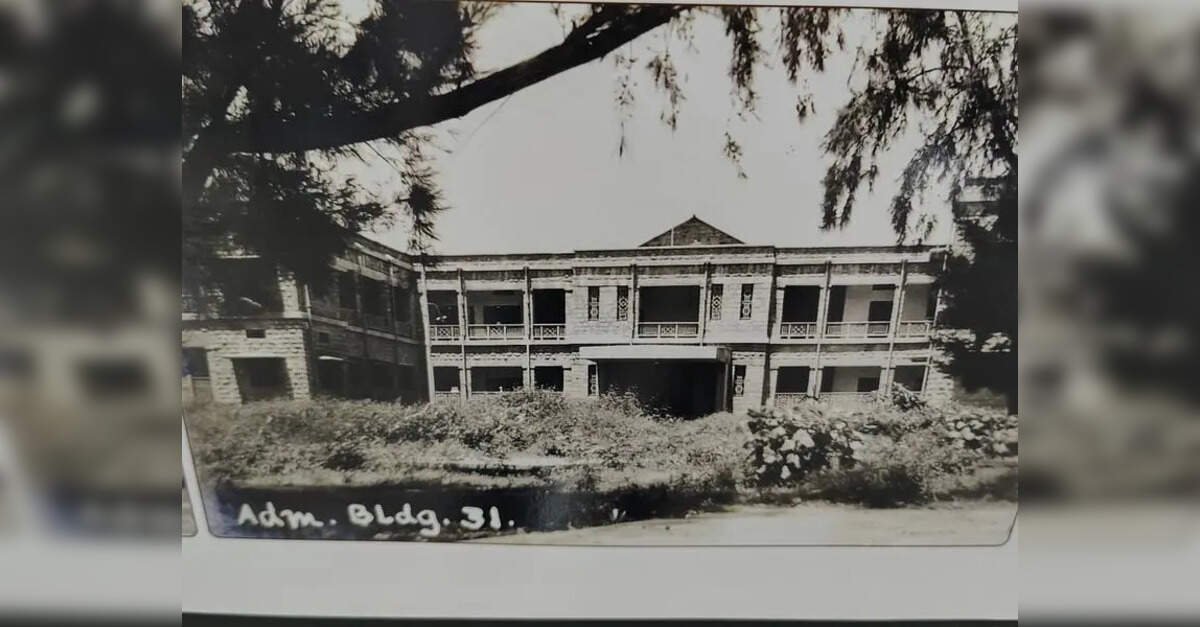
Visakhapatnam: As Andhra University prepares to celebrate its centenary next week, it is worth remembering that even its very name was once the subject of dispute. The 1925 Madras Legislative Council debates reflected deeper identity concerns, as Telugu leaders had long demanded a separate university for Telugu-speaking regions of the Madras Presidency.
K V Reddi Naidu opposed the title ‘Andhra University’, arguing that it carried Aryan connotations. Introducing an amendment, he instead proposed ‘Telugu University‘ to affirm a shared Dravidian identity and linguistic unity. He urged solidarity with Tamils, Kannadigas, and Malayalis.
Figures such as Natesa Mudaliyar and Ramaswami Mudaliyar also supported the proposal. However, the ‘Telugu University’ proposal was narrowly defeated (26 votes to 24), and the name ‘Andhra University’ was retained.
As per the “Proceedings of Madras Legislative Council (1925)”, Reddi Nayudu argued that Telugus are distinct from the historical ‘Andhras’, whom he described as ancient conquerors rather than the true identity of Telugu-speaking people. He insisted that Telugus are fundamentally part of the Dravidian race and should not be separated from Tamils, Kannadigas, and Malayalis through a distinct nomenclature.
“I object to the word ‘Andhra’ for various reasons. In the first place, Sir, we, Telugus, I honestly believe, are not Andhras. We Telugus have always been recognised as Dravidians, and when I ask this Bill to be named after the Telugus, I appeal to my Dravidian friends, my Tamil friends, my Kannada friends, my Malayalam friends, not to part with us, not to segregate us, not to deem us as different from them,” he said in the House while moving an amendment to rename ‘Andhra University’ as ‘Telugu University’.
Rao Bahadur C Natesa Mudaliyar supported the amendment, agreeing that the term ‘Andhra’ suggests territorial limitation, whereas ‘Telugu’ is broader and more inclusive. He argued that Telugu-speaking people are spread across a wide region beyond traditional boundaries, from Berhampur to Cape Comorin, and are not confined to a single area. Spkeaing about a shared Dravidian identity, he stressed that Telugus and Tamils should not be separated culturally or linguistically.
Ramaswami Mudaliyar also supported the amendment, arguing that it was not a superficial change in terminology but a fundamental cultural issue. He criticised the House for underestimating its significance, framing the debate as a choice between promoting Aryan and Dravidian traditions. He warned that Telugu language and literature were being overshadowed by Sanskrit influence and stressed the need for conscious efforts to preserve a distinct identity for Telugus. He presented the amendment as essential for safeguarding linguistic and cultural integrity.
C Ramalinga Reddi, however, dismissed the emotional intensity of the debate, arguing that the distinction between ‘Andhra’ and ‘Telugu’ was “historically and linguistically overstated”. He maintained that the region’s cultural identity was a mixed one, shaped by both Sanskrit and Dravidian influences, making any attempt at a separation unrealistic. He disputed the claim that ‘Andhra’ was inherently Aryan, citing ancient texts such as the Śatapatha Brāhmaṇa and references from Telugu literary history.
A P Patro too opposed the amendment, arguing that ‘Andhra University’ was already a well-established and widely recognised term. He noted that from the outset, the movement for a separate university had been consistently associated with this name, both in public discourse and within the Legislative Council. As the matter had already been thoroughly debated in the Select Committee and the name was formally accepted, he saw no justification for revisiting or altering it.
A SUBJECT OF DISPUTE
In 1913, Andhra Mahasabha demanded a separate university for Telugu-speaking regions
It argued that Telugu language and literature were being neglected
In 1917, B Venkatapathi Raju moved a resolution in Madras Legislative Council for Andhra University
He also proposed setting up additional colleges in Andhra as an interim step
In 1920, Madras University Senate recognised the need for separate universities for linguistic groups
In 1921, M Suryanarayana moved a resolution for creation of Andhra University
On Sept 2, 1921, Legislative Council accepted the resolution, and Andhra University Bill was introduced in Madras Legislative Council in 1925
K V Reddi Naidu proposed renaming it ‘Telugu University’ but the amendment was defeated
On April 26, 1926, Andhra University was inaugurated at Vijayawada
Quote
“I object to the word ‘Andhra’ for various reasons. In the first place, Sir, we, Telugus, I honestly believe, are not Andhras. We Telugus have always been recognised as Dravidians, and when I ask this Bill to be named after the Telugus, I appeal to my Dravidian friends, my Tamil friends, my Kannada friends, my Malayalam friends, not to part with us, not to segregate us, not to deem us as different from them”
— K Venkata Reddi Nayudu said in the House while moving an amendment to rename ‘Andhra University’ as ‘Telugu University’ in 1925
