






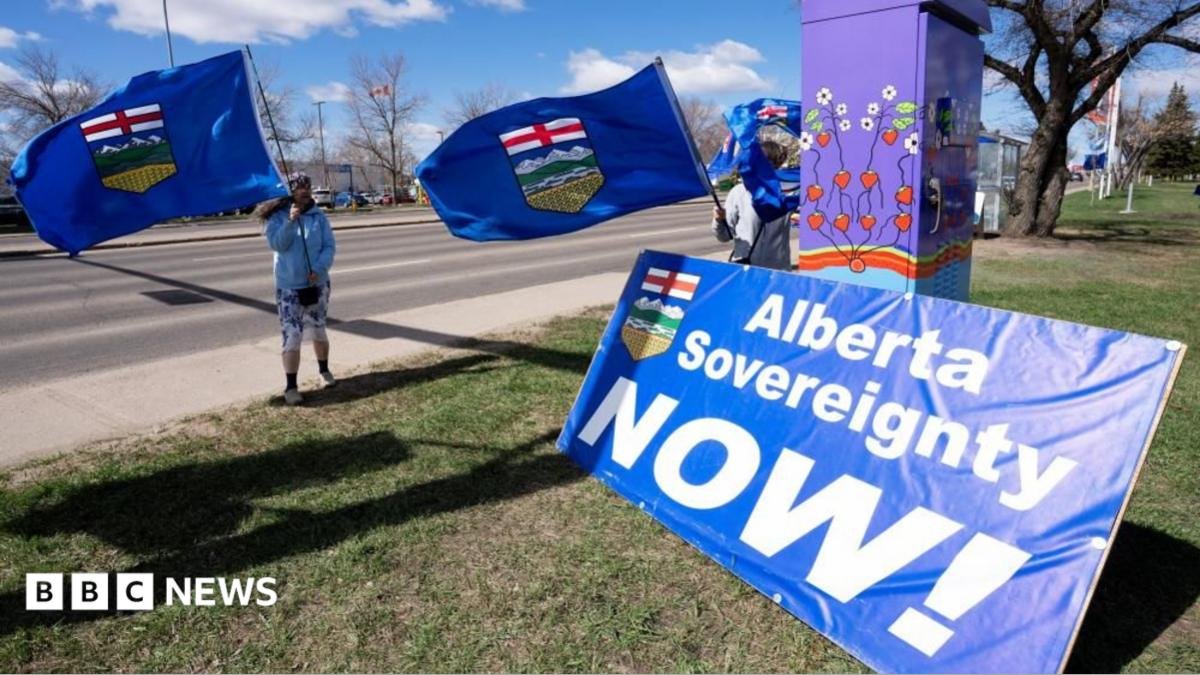
This belief is at the heart of the economic projections from the Alberta Prosperity Project, one of the main groups organising in favour of independence.
In its fiscal plan, released last year, external, they estimate Alberta will save up to C$47bn annually if it stops paying federal taxes.
The plan acknowledges that Alberta’s costs would be higher if it were independent because it would have to pay for things like national defence and international diplomacy, estimating those costs to be up to C$31.6bn annually.
This would be in addition to paying for things Alberta as a province already covers, like healthcare and education, which cost around C$75bn.
After all its essentials and new expenses are paid for, the Alberta Prosperity Project estimates a surplus of C$24bn to C$46bn per year.
With all this extra money, proponents of separation argue Alberta could lower taxes on individuals by more than C$10,000 a year, build out its infrastructure or invest the surplus into the province’s wealth fund.
But a number of economists argue their projections lack clarity and likely overestimate the windfall.
Hill of the Fraser Institute says one of the biggest drivers for economic decline is prolonged uncertainty, especially if the referendum doesn’t put the issue to bed or if it ends up in a lengthy divorce from Canada.
“If someone doesn’t know if Alberta is going to be a part of Canada or if it’s going to go on its own way in the next couple years, in what world are they going to be putting their money in the province?” she asks.
Prime Minister Mark Carney often points to Brexit – the vote to separate Britain from the European Union – as a cautionary tale for Alberta.
The UK economy has taken a 6% hit from the effects of Brexit, according to one report published earlier this year. If Alberta’s economy suffered a similar fate post-independence, its economy could shrink by C$62bn annually, according to one projection by Calgary-based economist Trevor Tombe.
This would also result in its workforce shrinking by 175,000, he estimated.
Wilson dismisses that comparison, arguing the “fundamental dynamics are completely different”.
He says some of the projections by the stay side are all “doom and gloom”, joking that the only possible negative they failed to include is “a large asteroid hitting Canada”.
“We’re a resource economy. We have leverage. We have products the world wants. That’s why investment comes here, despite the constraints imposed by Ottawa,” he says.


