


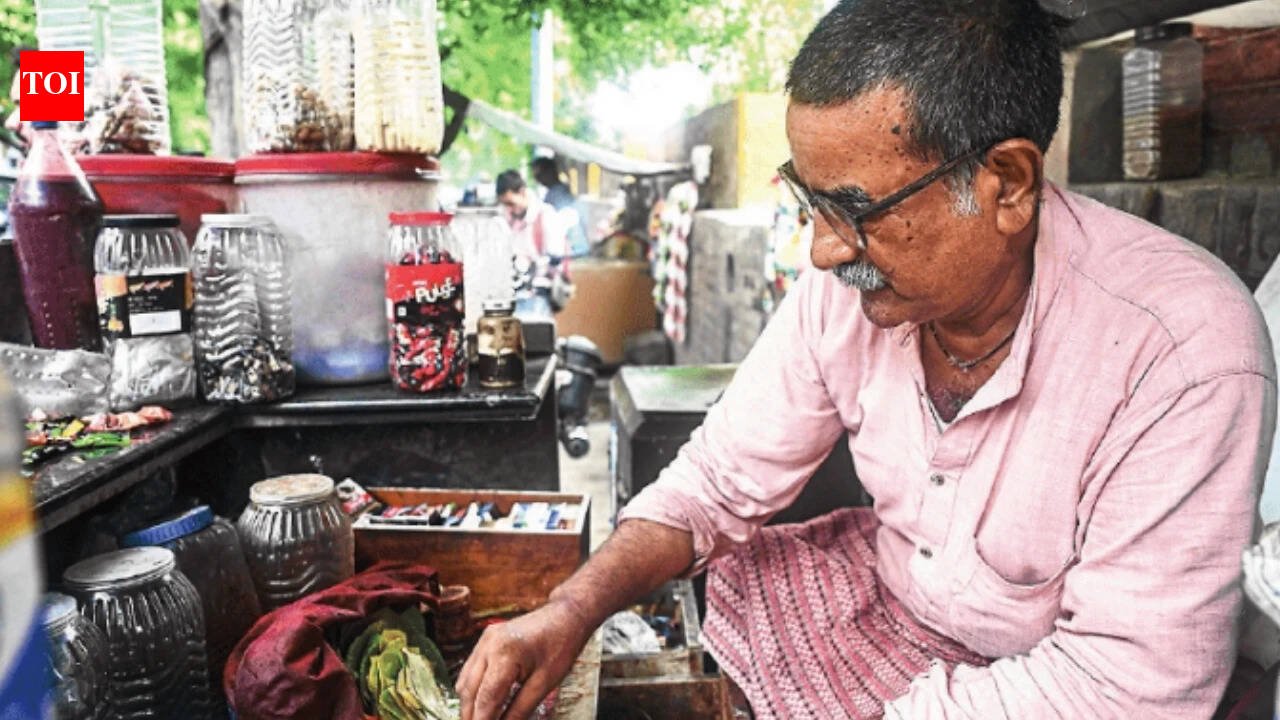
NEW DELHI: If you stand on the steps of the Express Building on Bahadur Shah Zafar Marg, you will notice two open-air stalls selling paan, cigarettes and cold drinks.Birbal Chaurasiya’s makeshift kiosk has stood on the right since the days when only a handful of cars used to be parked in the lane.The automobiles were almost like their owners’ calling cards: newspaper baron Ramnath Goenka’s black Fiat and editor S Mulgaonkar’s white Ambassador.As a teenager, Birbal had escaped a troubled home by taking the Kashi Vishwanath Express from Pratapgarh in east UP in the early 1970s.He was carrying Rs 175, money he owed someone and would return with apologies decades later.A village friend who accompanied him disappeared once the money was over.
CJP Jantar Mantar Protest Updates
Birbal would wash dishes, serve tea in a dhaba behind The Times of India building.At night he would sleep in the cycle stand, curling up like a prawn over flattened cardboard boxes, using the famous Nepa newsprint as a make-shift blanket in winter.Early morning ragpickers would strip him of the cover.Chaurasiyas are traditionally associated with selling ‘paan’ (betel) leaves.Birbal switched to the familiar profession after finding out that fellow villagers were doing the same at Chandni Chowk and earning more.A wicker-basket would become his portable stall. He would tour Daryaganj, Kaudiya Pul, even the pleasure centres of GB Road, where a senior madame became his regular customer.“I trudged about 30-35 kms every day,” recalls Birbal, now in his mid-sixties.One night while he was sleeping, someone filched Rs 70 that he had saved over months.The setback pushed him to share a rented room at Kotla.The generous Express Canteen owner would offer a 50% discount, making him pay 50 paise instead of Re 1 for the ‘thali.’An indulgent doorman would let him watch plays like ‘Romeo and Juliet’ at Mandi House.The tide turned with time. Birbal’s income rose dramatically once he set up the roofless stall in 1980.He would now occasionally gorge on butter chicken at the Peshawari hotel in Daryaganj and pay bills back home. In 1985, he bought a plot of land in Vaishali, Ghaziabad. “Few had the foresight to do it then,” he says.It’s drizzling. Dressed in a faded pink kurta and pyjamas, Birbal sits cross-legged at the kiosk.A thick tarpaulin sheet shelters the stall. He multi-tasks with seamless abandon, talking on the mobile about pending orders, handing out cash to a dealer and preparing paan for a customer.Some customers just pick up a cigarette, light it and walk away without paying or talking.Birbal scribbles down something in a register. “They always pay,” he smiles with the understanding of Lallan Mian of ‘Chashme Buddoor’.Birbal also serves ‘beetroot kanji’, ‘aam panna’, ‘nimbu paani’.The business diversification was prompted by a devastating fire that swept through the third and fourth floors of Express Building in 1996.As several companies temporarily relocated, sales dramatically dropped. “I was depressed,” he says.Those were tough years. In 2000, his elder daughter, Geeta, cleared the entry-level CA Foundation.His ideas on women’s education were partly shaped by his interaction with journalists who often came to his shop for paan or cigarettes.“Some were women reporters; all intelligent, articulate and confident. I understood that progress is linked to education. Which is why I decided to educate my daughters,” he says.Serendipity arrived one summer afternoon. Birbal shared some homemade ‘bel (wood apple) ka sherbet’ with a small group of friends and acquaintances.They were effusive. Some offered to be regular customers.“The next day I made Rs 160 after selling two bottles. My total daily sales from the paan shop was just Rs 150 those days,” he remembers.Birbal had stumbled upon a way out of the fiscal mess. Over the next few years, with his wife’s culinary support, he would also serve pickles, murabba and a variety of homemade drinks.Slowly as the companies returned to the building, so did the customers.Years later, his mobile phone rang one afternoon. “You have become the father of a chartered accountant,” his son said on the phone. Birbal took a while before he realised that he was talking about his elder sister.”That moment I realised my life had not been wasted,” he says with undisguised emotion.Despite MCD’s occasional disruption that forces vendors like him to shut shop, Birbal is mentally relaxed nowadays.His younger daughter Pooja is a cost accountant and son Umesh an insurance agent. He goes on family holidays to places like Manali.And he speaks with quiet pride about flying his mom to Varanasi. He still opens around 9 am and packs up only around 10.30 at night.“But I don’t do it for money anymore. I love the routine, my work,” he says.Over the decades Birbal has seen the service lane mutate into an overcrowded area clogged with cars and people. Journalists have morphed too.“The earlier generation would talk about literature. That doesn’t happen anymore,” he says, “But some young reporters still have the fire. That’s what I like.”Delhi is often cold and hard,or both, towards the deprived but the city also holds out a sliver of promise that the hardiest and the persistent cling on to.Birbal isn’t the kind of achiever celebrated on the TED stage, but his life speaks to thousands of migrants who arrive every day in the unsparing capital hoping to survive, and maybe, carve out a better life.
