


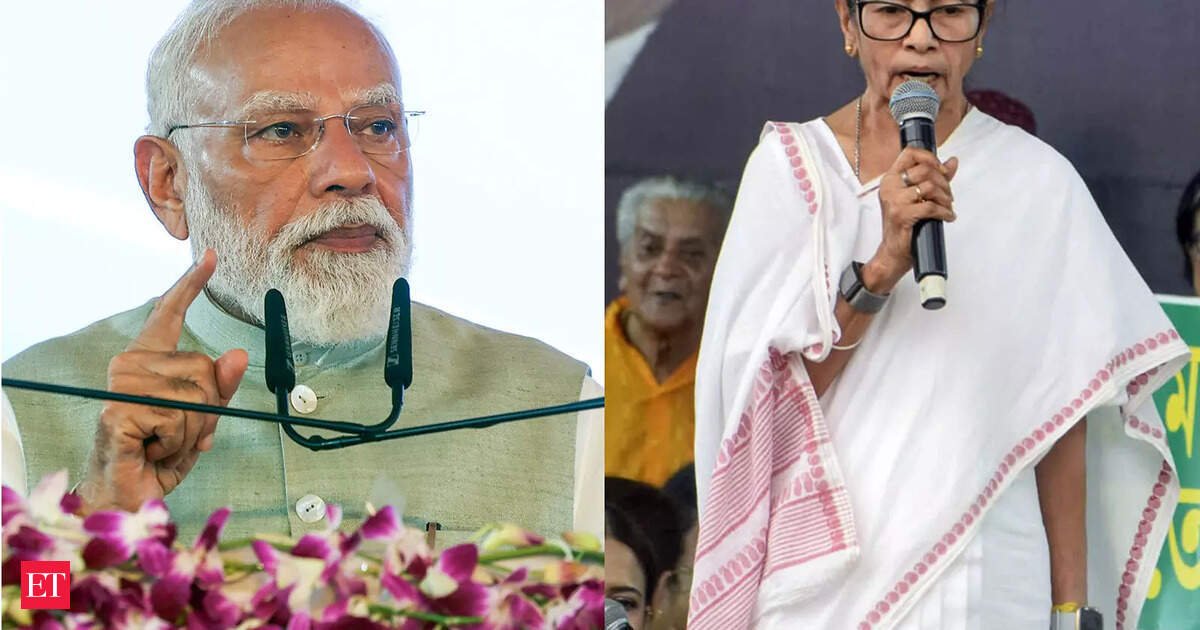
With the ruling All India Trinamool Congress (TMC) seeking a fourth consecutive term under Mamata Banerjee, and the Bharatiya Janata Party (BJP) positioning itself as the principal challenger, the election has become a referendum on governance, identity and political dominance.
Track West Bengal Assembly Elections Phase 1 Voting Live Updates
Like in the recent past, the state is witnessing a largely bipolar fight this time too, with smaller players struggling to shape outcomes beyond select constituencies.
The backdrop to this election is equally intense. Campaigning has been marked by sharp rhetoric, legal disputes and persistent concerns over violence and electoral integrity. Incidents of clashes ahead of polling, large-scale security deployment and the identification of thousands of “super-sensitive” booths reflect the charged environment in which voting is taking place.
At the same time, controversies around voter rolls, allegations of corruption and debates over identity and migration have dominated political discourse, making this election one of the most complex in the state’s recent history.
A combination of factors will ultimately decide the outcome: the Special Intensive Revision (SIR) of electoral rolls, law and order concerns, welfare delivery, identity politics, corruption allegations, employment and economic distress, regional dynamics and the overarching question of anti-incumbency versus continuity.
SIR and the electoral rolls controversy
One of the most contentious issues shaping the Bengal elections this year is the Special Intensive Revision (SIR) of electoral rolls. The exercise led to the deletion of lakhs of names, triggering a political storm. Opposition parties, especially the TMC, have argued that the revision risks disenfranchising genuine voters, particularly minorities and other marginalised communities.
On the other hand, the BJP has defended the move as necessary to remove bogus voters and illegal migrants from the rolls. This sharp divergence has turned the issue into a core electoral plank. For many voters, especially those directly affected, the controversy is not just administrative but deeply political, influencing perceptions of fairness, inclusion and state intent.
Law and order and political violence
Law and order remains a defining issue in West Bengal’s electoral politics. Reports of clashes, pre-poll violence and allegations of intimidation have once again brought the issue to the forefront. The Election Commission’s extensive security measures, including the classification of thousands of booths as “super-sensitive,” underscore the scale of concern.
The BJP has consistently attacked the Mamata government on this front, framing the election as a fight for restoring safety and democratic norms. Meanwhile, the TMC has countered by highlighting administrative efforts to ensure peaceful polling. For voters, especially in rural and politically volatile regions, perceptions of safety and fairness could significantly influence turnout and choice.
Also read: Mission Bengal: Why BJP has found it hard to break Mamata Banerjee’s bastion
Welfare politics and governance
Welfare schemes have long been the backbone of the TMC’s political strategy. From cash transfers to social support programmes, the party has sought to build a strong connection with beneficiaries, particularly women and economically weaker sections. These schemes are being projected as evidence of governance and delivery.
However, the BJP has attempted to challenge this narrative by questioning the implementation and alleging leakages. It has also pitched central welfare schemes as alternatives. The election, therefore, becomes a contest between competing welfare narratives, state-led versus Centre-supported, causing voters to evaluate both delivery and credibility.
Identity politics and polarisation
Identity politics continues to play a crucial role in Bengal. Issues such as religion, citizenship and cultural identity have been central to campaign narratives. The BJP has foregrounded concerns around infiltration and border security, while also appealing to sections like the Matua community.
The TMC, in contrast, has positioned itself as a defender of Bengal’s inclusive identity and federal autonomy. This clash of narratives — nationalist versus regional — has sharpened political polarisation.
For many voters, identity considerations are intertwined with economic and social concerns, making this a decisive factor in several constituencies.
Corruption allegations and governance fatigue
Allegations of corruption against sections of the ruling establishment have emerged as another key issue. Opposition parties have repeatedly raised questions about transparency and accountability, attempting to convert these into electoral gains.
The TMC has sought to contain the damage by highlighting its development record and distancing its leadership from controversies. Whether voters prioritise governance delivery over corruption concerns, or vice versa, will be a critical determinant of the 2026 poll outcome.
Employment and economic distress
Economic issues, particularly unemployment and migration, are increasingly shaping voter sentiment. Regions like Jangalmahal, once affected by insurgency, now report concerns centred on lack of jobs and out-migration.
The opposition has used these concerns to question the state government’s economic management, while the ruling party has pointed to infrastructure development and social stability. For younger voters, economic aspirations could outweigh traditional political loyalties, making this a silent but powerful factor.
Regional and constituency-level dynamics
West Bengal’s electoral landscape is highly diverse, with regional issues often shaping outcomes at the constituency level. Areas like North Bengal, the Siliguri corridor and border districts have distinct political and strategic importance.
Local leadership, legacy factors and community alignments will also play a role. For instance, in parts of Malda, historical political loyalties continue to influence voter behaviour. These micro-level dynamics mean that while the election appears bipolar, outcomes could still be decided seat by seat.
Anti-incumbency versus continuity
After more than a decade in power, the TMC faces the classic challenge of anti-incumbency. Voter fatigue, local grievances and unmet expectations could work against the ruling party. At the same time, Mamata Banerjee’s personal appeal and the party’s organisational strength provide a strong counterbalance.
The BJP, meanwhile, is banking on a consolidation of anti-incumbent sentiment and its emergence as the primary alternative. The central question remains whether voters prefer stability and continuity or are willing to opt for change, a decision that will ultimately define the election’s direction.
The 2026 West Bengal Assembly elections are being held in a deeply polarised and closely contested environment. Voting is scheduled in two phases, April 23 and April 29, with results expected on May 4.
At its core, the election is not being decided by a single issue but by the interplay of multiple forces like administrative credibility, welfare delivery, identity narratives, economic aspirations and the credibility of electoral processes.
The SIR controversy has raised fundamental questions about voter inclusion, while law and order concerns continue to shape perceptions of governance. Welfare schemes remain a powerful tool for the incumbent, even as unemployment and corruption allegations test its appeal.
Ultimately, Bengal’s verdict will hinge on how voters weigh these competing narratives. If welfare and leadership outweigh discontent, the TMC could retain its dominance. If concerns around governance, identity and economic opportunity converge, the BJP may find an opening.
In a state known for decisive mandates, the 2026 election once again promises to be a defining moment in its political trajectory.
