



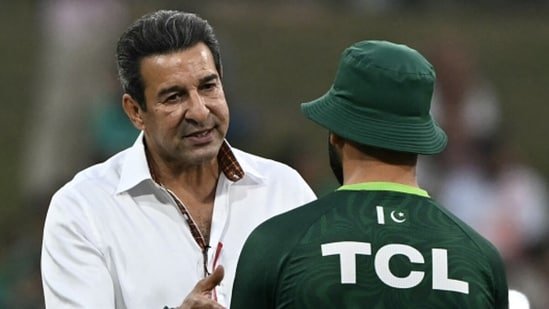
The legendary Wasim Akram presided over some of Pakistan cricket’s greatest highs. Winning the 1992 World Cup and finishing as runners-up in the 1999 edition stand among his career’s defining achievements. As lethal as he was with the ball, claiming four international hat-tricks and finishing as the world’s second-leading ODI wicket-taker, Akram played a pivotal role in Pakistan’s rise in world cricket from the late 1980s to the early 2000s. Even after his retirement following the 2003 World Cup, Pakistan remained a force to be reckoned with, winning the World T20 2009, reaching the semi-finals of the ICC Cricket World Cup 2011, and the final of the 2022 T20 World Cup.
However, the last few years have been abysmal for Pakistan. They were knocked out in the league stages of the 2023 and 2024 World Cups, and even in the ongoing ICC Men’s T20 World Cup, Pakistan are hanging by a thread. A defeat to England has pushed them to the brink, and although the doors to the semi-finals have not completely shut, they are slowly closing.
Also Read: How Pakistan’s semi-final equation shifts after New Zealand’s thumping victory over Sri Lanka
Akram was in the commentary box when Harry Brook scored a century to guide England home, with the look on his face conveying more than words could. Akram appeared visibly pained as he watched a team he once helped shape struggle on the big stage. Ramiz Raja looked equally distraught, while Nasser Hussain called the action ball by ball, but Akram’s expression said it all.
Watch:
Why are Pakistan on the edge?
Pakistan need New Zealand to lose to England, and beat Zimbabwe by a big margin to pull through into the semis. As England secured a place in the semi-final of the T20 World Cup, the cameras captured all three commentators, but Akram’s expressions remained the biggest talking point. Time and again, Akram has maintained that he does not intend to be part of Pakistan’s coaching setup, though he remains open to interacting with players individually. Since retiring, Akram has taken on multiple roles, including serving as a bowling consultant for Kolkata Knight Riders in the Indian Premier League and as director and bowling coach of Islamabad United in the Pakistan Super League. However, the idea of coaching the national side has never appealed to him, largely because of his discomfort with trolling and the lack of respect he believes coaches often face from both the public and, at times, players.
Waqar Younis, Akram’s long-time fast-bowling partner, served as head coach of the Pakistan team on two occasions but had to step down both times within relatively short spells. More recently, the frequent turnover of coaches, such as Mike Hesson, Jason Gillespie, and Gary Kirsten, proves Akram’s point and reflects a mercurial approach the Pakistan Cricket Board has often shown toward its coaching staff.


