






Srinagar, Oct 13: The Jammu and Kashmir Waqf Board’s proposal to introduce common themes for Friday sermons at mosques and shrines across the Union Territory has triggered opposition from the Muttahida Majlis Ulema (MMU), National Conference (NC) and Peoples Democratic Party (PDP), with political and religious leaders questioning the Board’s authority to regulate religious discourse.
The controversy follows the Waqf Board’s decision on Saturday to constitute a core committee of Imams and Islamic scholars to finalise common themes for sermons delivered during Friday prayers and other religious occasions.
According to the Board, the decision was taken at a meeting following suggestions received from Imams and religious scholars.
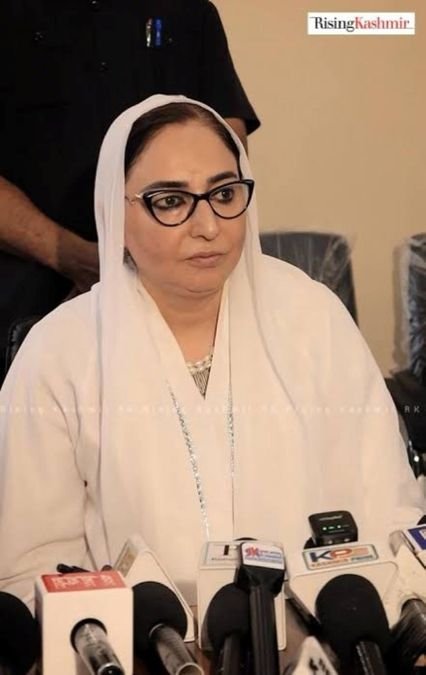
Reacting to the development, NC state spokesperson Imran Dar alleged that the proposal would provide the BJP with an opportunity to influence the content of Friday sermons in Kashmir. The J&K Waqf Board is headed by BJP leader Darakhshan Andrabi.
“Now @BJP4India will DRAFT Friday sermons for mosques across Kashmir,” Dar wrote in a post on X.
He alleged that the proposed arrangement would allow the BJP to determine which issues religious preachers could address, how those subjects would be presented and which matters would be excluded from sermons.
Maintaining that he was not a fundamentalist, the NC spokesperson said he nevertheless found the proposed move unacceptable.
PDP leader and legislator Muntazir Mehdi also criticised the proposal, saying the Waqf Board’s mandate was limited to managing religious institutions and did not extend to determining what Imams and Khateebs should preach.
“Waqf’s job is management, not dictating sermons. Imams and Khateebs don’t need a prescribed agenda to guide their communities,” Mehdi said.
Meanwhile, the MMU, an umbrella organisation representing prominent religious and socio-religious bodies in Jammu and Kashmir, strongly objected to the proposal, maintaining that a statutory institution had no authority to determine or regulate sermons delivered from mosque pulpits.
“The Mimbar (mosque pulpit) is an Amanah (trust) and religious guidance is the domain of Ulema, Imams and recognised religious institutions, rooted in Islamic scholarship and the traditions of the different schools of thought,” the MMU said in a statement.
The religious body maintained that neither the state nor the government could assume control over religious discourse by prescribing themes or preparing speeches for delivery during prayers.
Describing such intervention as “forcible state intrusion into the religious sphere”, the organisation said it was inconsistent with the principles of freedom of religious practice.
The MMU urged the Waqf Board to confine its activities to the management, maintenance and protection of Waqf properties instead of becoming involved in matters of religious interpretation and guidance.
Significantly, the MMU had separately announced last week that it would introduce coordinated Friday sermons beginning this Friday to address pressing social concerns.
Meanwhile, The Awami Itihaad Party (AIP) and the Jammu and Kashmir Apni Party have opposed reports that the J&K Waqf Board is considering introducing uniform Friday sermons across mosques in the Union Territory, arguing that the move could undermine the independence of religious scholars and disregard local community concerns.
AIP Chief Spokesperson Inam Un Nabi questioned the Board’s authority to prescribe sermon topics, saying the management of waqf institutions should not extend to controlling religious discourse.
J&K Apni Party Chief Spokesperson Muntazir Mohideen also expressed concern over the reports, saying different areas have distinct social issues that religious leaders should be free to address in their Friday sermons.
“The issues faced by people in one locality may be completely different from those faced by people in Srinagar or any other part of the Union Territory,” he said, arguing that a uniform sermon could overlook local realities.


