



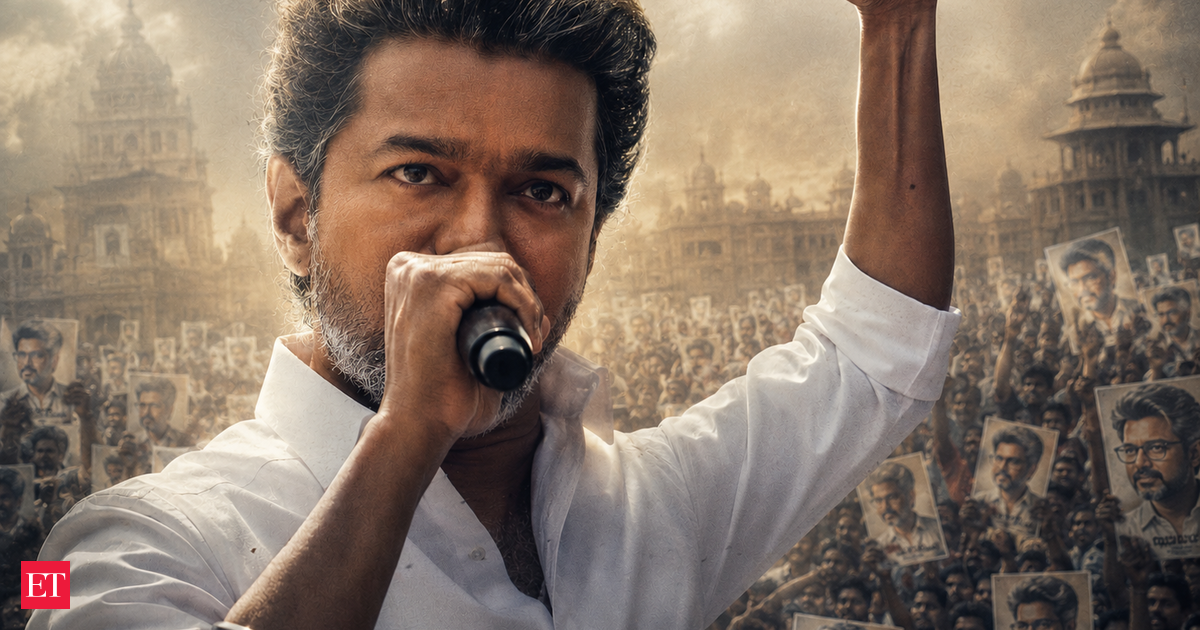
Yet beneath the frenzy lies a deeper anxiety among the established political forces. They may still be able to prevent Tamilaga Vettri Kazhagam (TVK) of actor Joseph Vijay from forming the government, but they increasingly appear aware that something larger has already changed in Tamil Nadu politics. The anti-establishment mood that powered Vijay’s rise cannot easily be reversed. Even if TVK does not enter office immediately, the political sentiment that produced its breakthrough victory is likely to dominate the state’s politics for years to come.
Also Read: Vijay’s signature strategy powered TVK tsunami
The frenzied battle for numbers
The immediate political contest in Tamil Nadu is unfolding around one question — can TVK gather enough support to cross the majority mark and form the government?
The answer remains uncertain, and that uncertainty is driving hectic political manoeuvring across party lines. On Thursday, TVK chief Vijay visited Governor Rajendra Vishwanath Arlekar for the second time in two days as he continued efforts to stake claim to form the government. ANI has reported based on sources that the Governor has maintained that TVK must first prove it has the numbers before any oath-taking can take place. Sources cited by multiple reports said the Raj Bhavan wants assurance of a stable government before inviting Vijay to take office.
TVK emerged as the single-largest party with 108 seats in the 234-member Assembly, a stunning result that shattered political expectations but still left the party short of the majority mark of 118. Congress has extended support to TVK, taking the tally to 113 seats. But that still leaves Vijay dependent on smaller parties and possible defections to secure a working majority.
Also Read: The six-phase chronology of Thalapathy’s ‘victory-path’
This arithmetic has thrown every political formation into strategic recalculation. The DMK has publicly stated that the constitutional convention requires the single-largest party to be invited first. DMK spokesperson Saravanan Annadurai argued that democratic principles favour giving TVK the initial opportunity to prove majority on the floor of the House. Outgoing chief minister MK Stalin even remarked that the DMK would “watch without disturbing for six months” if TVK formed the government. Yet at the same time, the DMK sharply attacked the Congress for supporting Vijay, accusing it of “backstabbing” INDIA bloc allies and undermining opposition unity nationally.
The contradictions reveal the nervousness within the established political class. The DMK cannot openly oppose the constitutional logic favouring the single-largest party. But it also recognises the long-term danger posed by TVK’s rise.
The AIADMK’s position has appeared even more unstable. Reports suggested that Edappadi K Palaniswami’s party was initially prepared to extend unconditional support to Vijay in the interest of forming a stable government. But those discussions reportedly collapsed after what AIADMK leaders described as prolonged silence from the TVK camp. Senior leaders later claimed Vijay had failed to respond adequately to their overtures, forcing the party to pull back.
At the same time, AIADMK shifted its MLAs to neighbouring Puducherry in what many interpreted as an attempt to prevent poaching and internal rebellion. Resort politics, a familiar feature of unstable coalition moments elsewhere in India, has now arrived in Tamil Nadu as well.
Smaller parties have suddenly become crucial power brokers. VCK has confirmed receiving a request from TVK for support and said its leadership committee would decide the party’s stand. CPI and CPM are also under pressure to clarify whether they will support TVK or remain aligned with the DMK-led bloc. Every additional MLA now carries outsized importance.
What makes the current moment remarkable is that Vijay is negotiating from a position that is simultaneously weak and powerful. Numerically, he lacks a majority. Politically, however, he has become the centre around which all other parties are repositioning themselves.
The verdict was about more than seats
The present uncertainty over government formation should not obscure the larger political message delivered by voters. TVK’s breakthrough cannot be dismissed as a temporary protest wave or a celebrity-driven anomaly. The scale and spread of support indicate something deeper and more durable within Tamil Nadu’s electorate.
TVK secured nearly 35 per cent of the vote, comfortably ahead of both the nearly 24% of DMK and 21% of AIADMK. The two Dravidian giants together still command a substantial social base, but their combined vote share fell dramatically compared to more than 70% in previous elections. That decline is politically significant because it suggests that the electorate is no longer instinctively returning to one of the two traditional power centres. For almost six decades, Tamil Nadu politics revolved around the alternating dominance of the DMK and AIADMK. Both parties built enduring emotional connections through welfare politics, social justice narratives and Tamil identity. But over time, many voters began seeing the rivalry as predictable and structurally closed. The election became not simply a judgment on governance, but a referendum on whether the state needed a new political alternative altogether.
TVK successfully tapped into this mood. Vijay’s appeal certainly benefited from his film stardom, but celebrity alone cannot explain a result of this magnitude. Tamil Nadu has seen film personalities such as Kamala Hasan enter politics before. What distinguishes Vijay’s rise is that he became a vessel for broader anti-establishment sentiment already brewing within society.
The shift appears especially visible among younger voters. Unlike earlier generations shaped by the emotional legacy of the Dravidian movement, many younger Tamil voters seem less attached to traditional party identities. Concerns over employment, corruption, rising costs and institutional stagnation increasingly influence political choices. Vijay’s campaign connected with this generational impatience.
Importantly, TVK did not position itself as anti-Tamil or anti-Dravidian. Instead, it argued that social justice, welfare and Tamil pride no longer needed to remain monopolised by two entrenched parties. In that sense, the election may represent the beginning of a post-duopoly phase rather than a rejection of the underlying political culture of Tamil Nadu. That’s why the verdict can;t be seen as merely fragmented. It is a transformative verdict.
Why the genie can’t be put back into the bottle
This is precisely why the established parties appear uneasy despite TVK still lacking a majority. They understand that even if tactical alliances or constitutional procedures keep Vijay out of power for now, the political energy behind his rise is unlikely to disappear. Once voters begin believing that alternatives are possible, old monopolies become difficult to restore.
That is the real significance of this election. TVK has already broken the psychological structure that governed Tamil Nadu politics for decades. The state is no longer operating within a rigid DMK-versus-AIADMK framework. Voters demonstrated willingness to look beyond inherited political binaries.
This creates a long-term challenge for both traditional parties. The DMK still retains strong organisational capacity and welfare credibility. The AIADMK still possesses pockets of loyal support. But both parties now face voters increasingly open to experimentation. They are no longer confronting only each other. They are confronting a political mood that distrusts entrenched establishments altogether. That mood cannot simply be negotiated away through post-poll arithmetic.
Indeed, if TVK ultimately fails to form the government despite emerging as the single-largest party, the anti-establishment sentiment could deepen further. Vijay would likely position himself as the leader denied power despite receiving the clearest mandate for change. That narrative could strengthen TVK politically rather than weaken it. The established parties appear to recognise this danger. Their current calculations are therefore not just about government formation but also about containing a structural political shift before it fully consolidates.
But such moments are difficult to reverse once they acquire emotional momentum among voters. Tamil Nadu’s voters have already showed fatigue with familiar political structure. The rise of TVK reflects accumulated frustration with dynastic politics, predictable alliances and a system many voters increasingly see as closed and repetitive.
Whether Vijay becomes chief minister this week, months later or only after another election may ultimately prove secondary to the larger transformation already underway. What TVK has done is to give the vague anti-duopoly sentiment in the state electoral legitimacy, organisational expression and a mass political face. That is why the anxiety within the political establishment appears so visible today. The numbers game may still deny TVK immediate power. But the forces that produced TVK’s rise are unlikely to retreat quietly.


