



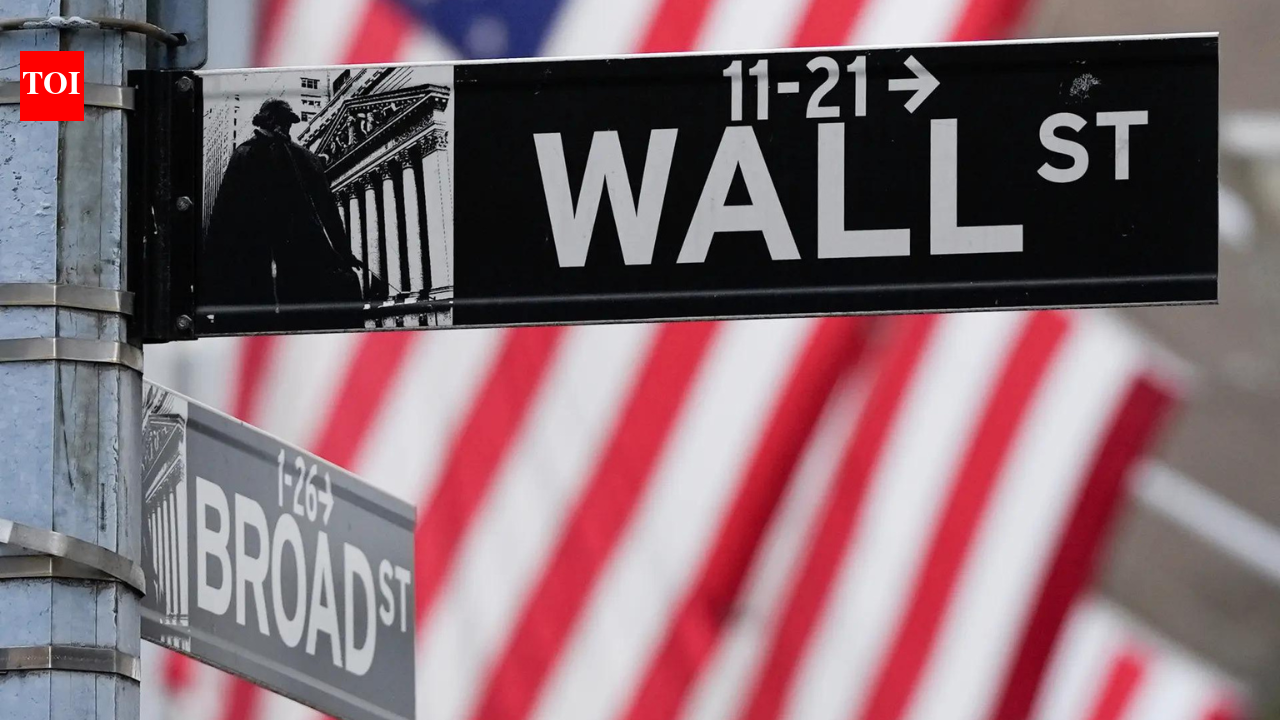
US stock markets traded higher on Thursday, with technology and artificial intelligence (AI)-linked stocks rebounding after a volatile week, while investors continued to monitor rising geopolitical tensions in the Middle East, inflation concerns and global interest rate expectations.The benchmark S&P 500 rose 0.5% in morning trade, recovering some of the losses recorded over the previous two sessions.The Dow Jones Industrial Average gained 326 points, or 0.7%, while the Nasdaq Composite advanced 0.7%.The recovery came after sharp swings in AI-related stocks over the past week, with investors reassessing valuations in a sector that has led much of the market’s gains this year.
AI stocks lead market recovery
Technology shares were among the strongest performers on Thursday. Marvell Technology rose 5.5%, while chipmakers Intel and Applied Materials gained 7.8% and 7.5%, respectively.However, not all AI-linked companies benefited from the rebound. Oracle plunged more than 10% after outlining plans to raise nearly $40 billion through debt and equity issuance to fund AI-related investments, despite reporting stronger-than-expected quarterly earnings.Investors have increasingly questioned whether massive AI-related spending can generate the profits and productivity gains that many companies are projecting. Technology stocks have borne the brunt of recent selling as expectations of tighter monetary policy and concerns over stretched valuations weigh on sentiment.
Oil prices remain in focus amid Iran conflict
Investors also kept a close watch on developments in the Middle East.Brent crude slipped 0.5% to $92.64 per barrel, while US crude edged up 0.3% to $90.29 per barrel.Oil markets remained volatile as reports of ongoing talks between Washington and Tehran were offset by fresh warnings from US President Donald Trump.Trump warned Iran it would be hit “very hard” and said he could assume “total control” of the country’s oil and gas markets.The comments came amid renewed hostilities following the downing of a US Apache helicopter near the Strait of Hormuz earlier this week.At the same time, diplomatic efforts have intensified, with Iranian and European officials exchanging messages on a possible preliminary peace framework.
Inflation and central bank outlook
Markets were also digesting fresh economic data and central bank decisions.A US wholesale inflation report released on Thursday showed producer prices increased more than expected in May, according to news agency AP. Elevated energy costs linked to the Iran conflict have contributed to inflationary pressures globally.The European Central Bank (ECB) raised interest rates by 25 basis points to 2.25%, its first rate hike in nearly three years. ECB President Christine Lagarde described the decision as unanimous and said policymakers were not pre-committing to any specific rate path.Meanwhile, investors expect the US Federal Reserve to keep rates unchanged at next week’s policy meeting, though markets continue to price in the possibility of a rate increase later this year.Fed funds futures imply a 51.6% probability of a rate hike at the Fed’s October meeting.
Global markets mixed
European markets traded mostly higher after the ECB decision, while Asian markets delivered a mixed performance.London’s FTSE 100 gained 0.9%, while Hong Kong’s Hang Seng Index fell 0.7%.The pan-European STOXX 600 index was little changed, while currency markets remained relatively stable.Investors also tracked the World Bank’s latest outlook, which cut its global growth forecast for 2026 to 2.5% and warned growth could slow further if the fallout from the Iran conflict intensifies.The combination of geopolitical uncertainty, inflation risks and shifting expectations for interest rates continues to drive volatility across global financial markets.


