



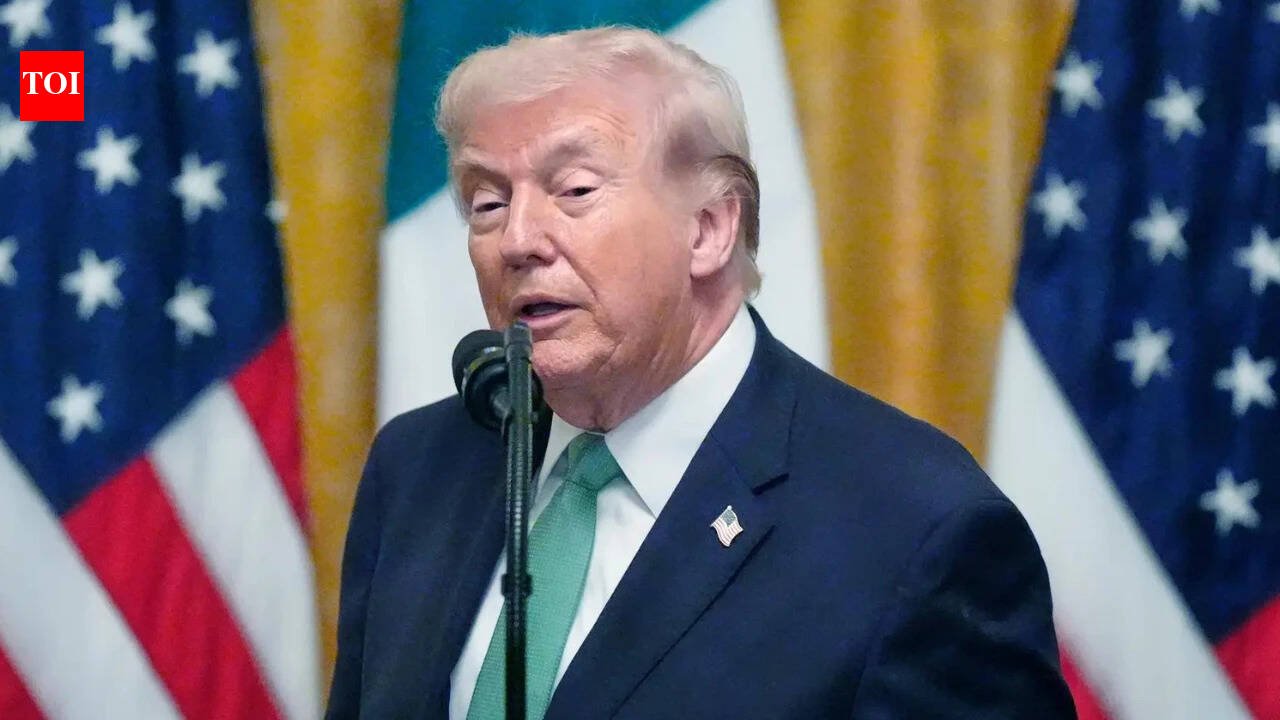
US President Donald Trump has temporarily waived the century-old Jones Act for 60 days in a bid to ease rising energy costs in the United States, after the US-Israeli war with Iran sent oil markets sharply higher and pushed up petrol prices.As per news agency AFP, the move allows foreign-flagged ships to transport cargo between US ports during the waiver period, temporarily setting aside a long-standing restriction under the 1920 law.
White House says move aims to ease oil market disruption
The White House framed the decision as an emergency step to soften the economic fallout from the conflict.“This is just another step to mitigate the short-term disruptions to the oil market as the US military continues meeting the objectives of Operation Epic Fury,” White House press secretary Karoline Leavitt said in a statement.Leavitt was referring to the joint US-Israeli military campaign against Iran launched on February 28.“This action will allow vital resources like oil, natural gas, fertiliser and coal to flow freely to US ports for sixty days,” she added.She also said the administration “remains committed to continuing to strengthen our critical supply chains.”
What the Jones Act waiver means
The Jones Act was originally designed to protect the US shipping and shipbuilding industry by requiring goods moved between American ports to be carried on US-built and US-flagged vessels.Critics have long argued that the law restricts competition and raises transport costs, especially during supply shocks.By temporarily lifting that rule, the administration hopes to make it easier and cheaper to move key energy and industrial commodities across the country at a time when supply chains are under pressure.The White House announced the 60-day waiver separately as part of a wider effort to contain soaring oil prices, with the law often blamed for making fuel more expensive.
Petrol prices jump as war hits global energy flows
According to AAA motor group data cited by AFP, US gasoline prices have climbed by more than 27 per cent since the war began.The spike comes as global oil markets have been rattled by the conflict.Oil prices surged again on Wednesday after Israeli strikes hit facilities linked to Iran’s South Pars/North Dome gas field, the world’s largest known gas reserve and a site that supplies roughly 70 per cent of Iran’s domestic natural gas.Brent crude rose more than five per cent to $108.60 a barrel, while US benchmark West Texas Intermediate gained 1.9 per cent to $98.01.Pressure on prices has intensified after Iran halted traffic through the Strait of Hormuz, a key global chokepoint through which roughly one-fifth of the world’s oil normally passes.
Broader push to boost supply
The Jones Act waiver came alongside another major energy move by the Trump administration.The US treasury on Wednesday also eased sanctions on Venezuela’s state-owned oil company PDVSA, allowing US companies to buy Venezuelan oil under certain restrictions in an effort to increase global supply during the Iran war.That licence does not fully remove sanctions but it reopens access for US firms that existed before January 29, 2025, while ensuring payments go into a US-controlled account rather than directly to sanctioned Venezuelan entities.Taken together, the steps underline how aggressively the White House is trying to counter the war’s impact on fuel prices and energy security.


