


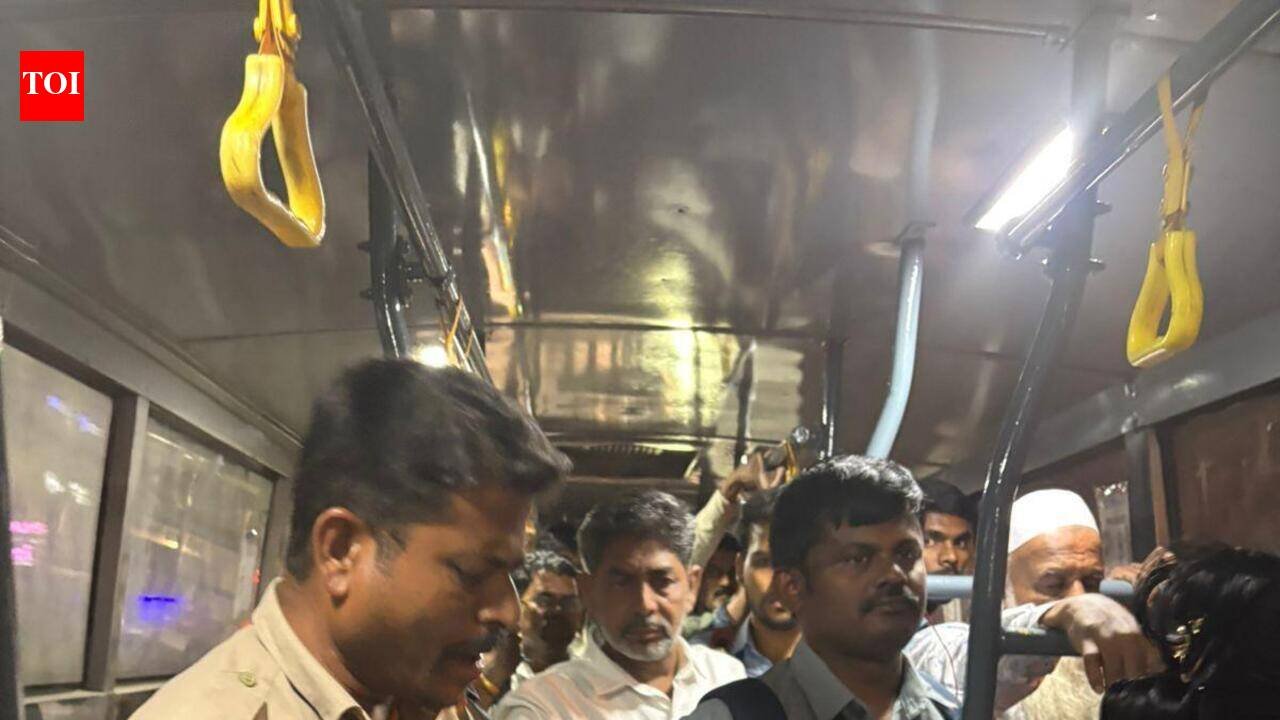
Bengaluru: UPI has made a major stride in BMTC. Now it has become the mode of payment for more than half of the Bengaluru transport corporation’s ticket sale, marking a major shift towards digital fare collection. The rapid adoption of QR code-based payments has made ticket purchases more convenient for thousands of daily commuters. However, persistent network glitches and transaction failures continue to disrupt the system, raising concerns over the reliability of the cashless ticketing experience.According to BMTC data, UPI collections, which contributed just 22.2% of its total revenue in Jan 2025, steadily climbed through the year to touch 50.9% in Dec 2025. This trend continued this year, with UPI contributing 51.4% of the corporation’s Rs 609.5 crore revenue between Jan 1 and July 30. During this period, commuters paid Rs 313.4 crore through UPI, indicating that digital payments have become the preferred mode of ticket purchase for a majority of passengers.During the period, commuters paid Rs 313.4 crore through UPI, indicating that digital payments have become the preferred mode of ticket purchase for a majority of passengers.The transition marks a sharp change from the initial days of the rollout, when both conductors and commuters were reluctant to adopt digital payments. BMTC introduced QR-code-based UPI payments on its electronic ticketing machines around six months ago to simplify ticket purchases and reduce cash handling. The corporation had earlier experimented with static QR-code stickers pasted inside buses, allowing passengers to scan and pay before the conductor reached them.BMTC introduced QR-code-based UPI payments on its electronic ticketing machines around six months ago to simplify ticket purchases and reduce cash handling. The corporation had earlier experimented with static QR-code stickers pasted inside buses, allowing passengers to scan and pay before the conductor reached them.However, that system was discontinued after several instances of misuse. Officials found that some passengers showed fake or edited payment screenshots without actually transferring money. During peak-hour rush, conductors found it difficult to verify every transaction, resulting in revenue leakages. The new machine-generated dynamic QR codes were introduced to plug those gaps by generating a unique code for every transaction.Poor connectivityWhile the new system significantly increased digital transactions, commuters and conductors say operational challenges continue to affect its reliability. One of the most common complaints is poor internet connectivity. Since the ticketing machine generates a QR code only after the conductor enters the destination details, any network delay slows the process. On the outskirts where mobile connectivity is weak, a QR code is often not generated despite payments.The delays are particularly evident during rush hours. On several crowded routes, buses can be seen waiting for a few extra moments at bus stops while conductors complete digital transactions for multiple passengers.There are also instances where conductors discourage UPI payments altogether when connectivity is poor. During a journey by TOI from Shivajinagar to Banashankari recently, the conductor refused to take UPI payment, citing network issues, and sought payment by cash. In case cash wasn’t available, the conductor directed this reporter to get down from the bus. Three other passengers, who tried to make digital payments during the same trip, were also turned away for the same reason.Another recurring issue involves payment failures. Several commuters cited instances where money was debited from their bank accounts but the ticketing machine failed to register the payment immediately, leaving passengers and conductors unsure whether the transaction was completed. Resolving such disputes during crowded journeys often becomes difficult, they said.A 23-year-old travelling from Marathahalli to Majestic said: “UPI is much more convenient than carrying cash with change. But there have been several occasions when the conductor refused digital payment because the machine wasn’t responding or there was no network. Fortunately, my fellow commuter gave me cash with which I purchased the ticket.”quoteBMTC spokespersonAll 50 BMTC depots have now been equipped with the new ETMs featuring dynamic QR codes, and over 50% of our ticket revenue is being generated through UPI payments. Earlier, there were a few instances of misuse, due to which we have completely removed those static QR codes, and only the machine-generated dynamic QR codes are in use now. That issue has been resolved
