


The Trump administration has detained dozens of parents and spouses of active-duty US troops as it rolls back immigration protections for military families in the pursuit of its mass deportation agenda.
More than 50 parents and spouses of active-duty service members have been detained since Donald Trump returned to office, and at least six have been deported, an Associated Press investigation found. It is the first accounting of such detentions, which the government does not track.
At least eight immediate family members of US service members remain in federal immigration custody.
Parents and spouses of people in the military have generally been shielded from deportation under bipartisan consensus for decades. But the AP found they are now routinely being detained for months as they try to adjust their legal status through the policies available to service members’ close relatives and even as parts of the military continue to recruit by advertising immigration benefits for enlistees’ families.
Experts warn that the reversal could undermine military preparedness even as the US is at war in Iran. It has left military members without emotional support and caretakers for their children, delayed deployments and forced some to take leave.
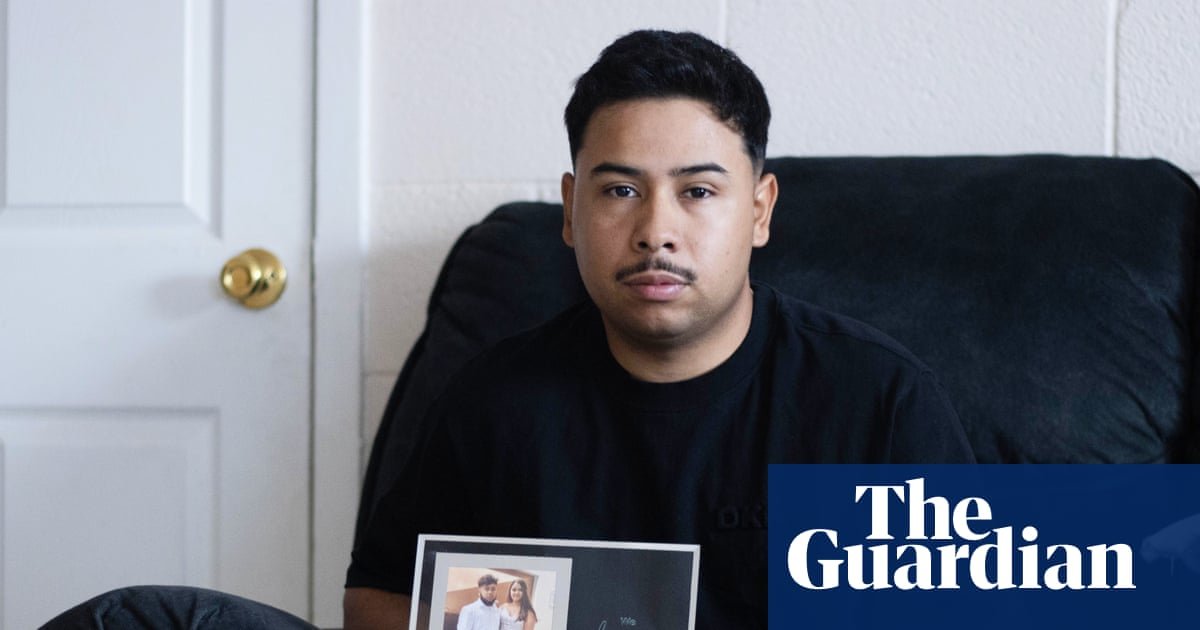
“How can I even focus on my military career because I have to worry about how my wife is doing?” said army Sgt Hedar Leonel Turcios Juarez, who was stationed in Fort Bliss, Texas, when his wife was detained outside a Walmart in front of their six-year-old daughter in July.
A handful of detentions of service members’ spouses have prompted public backlash and led to intervention by the homeland security secretary, Markwayne Mullin, to secure their release.
The Department of Homeland Security has said it does not compile data on these cases. The AP obtained information by analyzing thousands of federal court records compiled by Habeas Dockets, a project run by the non-profit Immigration Justice Transparency Initiative, by reviewing existing media coverage and by verifying information with family members and attorneys. The actual number is probably much higher than the 51 cases AP found.
The AP asked for comment from the DHS. The agency did not provide specific information about the majority of cases but noted that at least seven people had been removed from the US before, at least eight had removal orders and at least two had drunken driving or drug-related convictions.
“DHS and ICE value the contributions of all those who have served in the US military,” the DHS said in a statement, adding: “US military service alone does not automatically grant lawful immigration status, or exempt aliens from the consequences of violating US immigration laws.” The Pentagon declined to comment.
Air force tech Sgt Wendy Gbeve, 30, said she had not had a good night’s sleep since her father, Luis Alberto Ramírez Zavala, was detained by immigration officials last month. Gbeve was there when he was arrested at a routine interview with US Citizenship and Immigration Services (USCIS) in Missouri about his pending application for legal status.
She spent hours refreshing the USCIS page to track where the government was taking her father: from a county jail in Missouri to an Immigration and Customs Enforcement (ICE) detention facility in Texas. Finally, roughly two weeks after he was detained, she found out he had been deported to his native Mexico.
“It’s the most frustrating, helpless feeling,” Gbeve said.
Gbeve said ICE still had not informed her family why her father was removed so quickly. Ramírez Zavala spent most of his life in the US working as a ranch hand in rural Illinois.
Ramírez Zavala’s wife of 30 years, a legal permanent resident, is considering returning to Mexico to be with her husband. For Gbeve, whose husband is also in the air force, that would leave no one to watch their children, ages two and four, if both were deployed.
“That would be our entire safety net,” she said.
Meanwhile, army staff Sgt Alexis Jaramillo, an aviation operations specialist who has served for more than a decade, said he would normally be involved in training soldiers at Fort Polk, Louisiana. Instead, he is on administrative leave, caring for his five-year-old stepson, Noah, after his Brazilian wife, Maisa Lopes Eliaser, was detained in early July.
It happened during what the family thought was a routine appointment at a USCIS office in Alabama. Eliaser arrived in the US on a tourist visa in 2019, and the couple was trying to change her status. Immigration officials asked Jaramillo and his stepson to leave the room. The next time they saw Eliaser was inside a detention facility.
“It is really overwhelming because I need to take care of my kid by myself. No one is here to help me out,” Jaramillo said.
At least one active-duty soldier halted her imminent deployment after her husband was detained by immigration officers, leaving no one to care for their then-five-year-old son, court records show. A judge eventually ordered the husband released.
A new policy , implemented in April 2025, states that “military service alone does not exempt aliens from the consequences of violating US immigration laws.”
Experts in military immigration law said this marks a stark shift from previous administrations.
Dan Gividen, who served as ICE’s deputy chief counsel from 2016 to 2019 under Trump , represents a soldier’s father who has been in ICE custody for more than eight months. He said that during his time as an ICE prosecutor, immigration authorities rarely detained service members’ immediate family members unless they had committed violent crimes.
“We would not place them into removal proceedings, period. That’s insane,” Gividen said. “The fact that they’re doing it now is just outrageous.”
Maria Elvira Salazar, a Florida Republican US representative, held a news conference in July advocating for the release of the wife of retired staff Sgt Wilmer Trujillo, who served in Iraq and Afghanistan. The DHS said his wife illegally re-entered the US after being deported in 2005.
“The immigration system is failing the honorable and good Americans,” the congresswoman said.
