


Last year, vehicle production fell in all three North American countries, though Canada saw the largest decline of 5.4%, according to an analysis by TD Bank, and automakers have begun to make changes to their production lines.
The impact of tariffs, along with inflation and rising gas prices stemming from the Iran war, have prompted alarm in many communities in Michigan and across the country.
Data from the Bureau of Labor Statistics, or BLS, shows that Michigan gained just 500 jobs in the 12 months leading up to June this year, compared to Texas, which added 177,900 jobs.
State officials also put Michigan’s unemployment rate at 5.1% in May, a slight uptick from April. Only a handful of states – including Illinois, Nevada, California, Connecticut, Oregon and Washington – stood at 5% or higher.
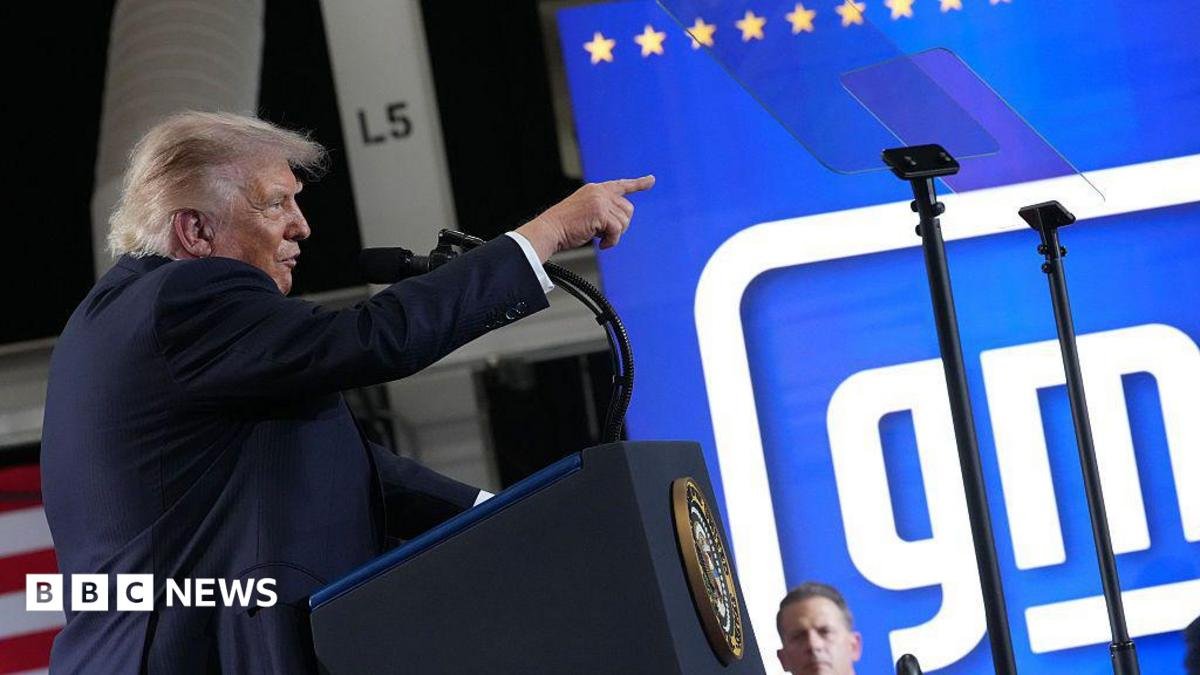
Trump, however, repeatedly lauded his economic policies and the impact they are having on the state’s auto workers.
“Now, at long last, Michigan finally has a president who stands up for Michigan autoworkers,” Trump told the assembled GM employees, blaming any lingering woes on “globalist” US politicians he believes “sold out” American workers.
The president’s visit to Michigan coincided with the opening of the new Gordie Howe International Bridge, a span between Detroit and Windsor, the auto manufacturing capitals of each country.
The first commercial truck – carrying auto parts headed into Michigan – crossed the bridge just hours before Trump’s event.
Correction 27 July: This article has been updated to reflect that the amount the White House says General Motors is investing in US manufacturing is $6bn.
