



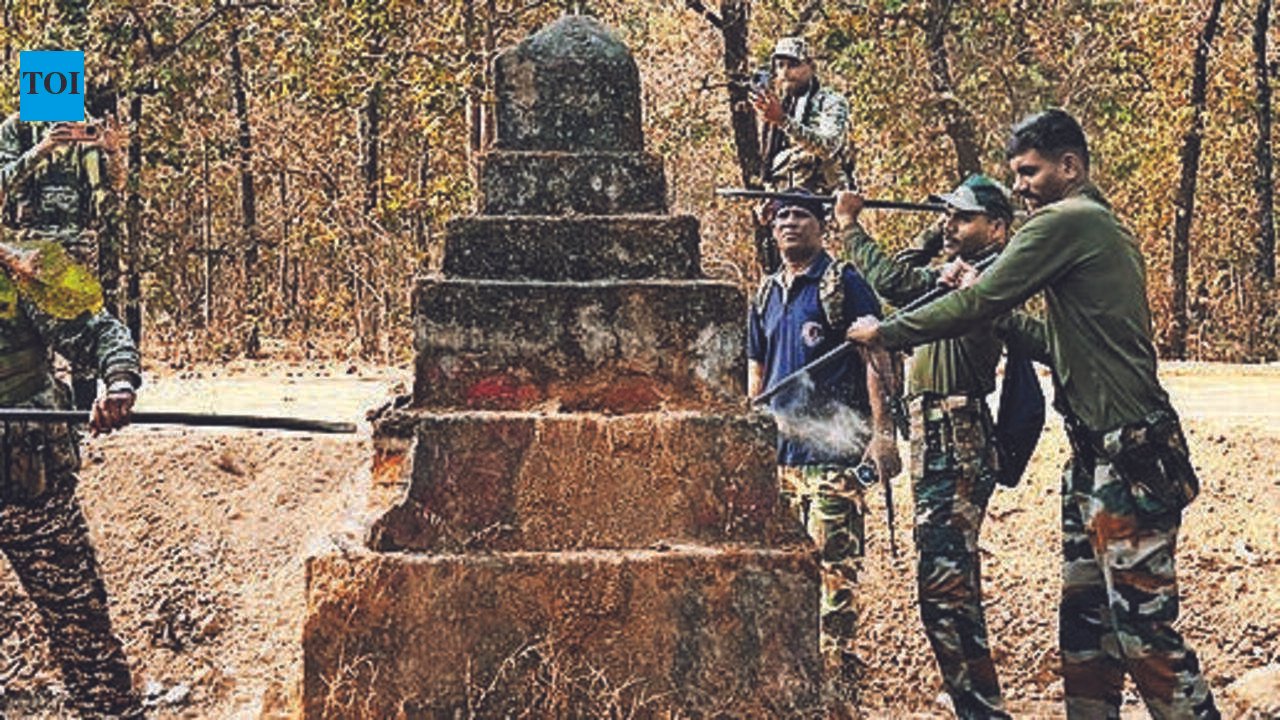
Nagpur: At least 575 sqkm area of forested Abujmarh hills — the once impenetrable Maoist headquarters that was booby trapped and isolated for decades — is being demined and sanitised inch by inch by commandos and Gadchiroli police before handing it back to the indigenous tribes. The forbidden hills had served as the nerve centre of People’s Liberation Guerrilla Army (PLGA) fighters and the Maoist politburo.The initiative forms part of a broader push by chief minister Devendra Fadnavis to expand infrastructure and public services into some of the state’s remotest regions. With roads, electricity, healthcare and education projects being planned in far-flung hamlets, authorities view the clearing of Abujmarh as critical to unlocking development opportunities, infrastructure and resuming agriculture.A significant milestone came on August 15 this year, when the tricolour was hoisted for the first time at police posts in Tumarkothi, Binagunda, Bangadi and Phulnar in the dense forests of Gadchiroli on Maharashtra-Chhattisgarh border. The flag-hoisting ceremonies in what was once termed ‘Red Corridor’ symbolised restoration of state authority in no-go zones.Maoists were flushed out of their dens during sustained operations to meet Union home minister Amit Shah’s March 31 deadline to wipe out the rebel movement in India.Officials say anti-Maoist operations in recent years had drastically weakened the insurgency in Gadchiroli. While small rebel groups continue to move across Maharashtra-Chhattisgarh border, their presence has been reduced considerably. Security forces are continuing operations to track and apprehend the remaining guerrillas.Gadchiroli superintendent of police M Ramesh said the big challenge now is sanitisation of the 575 sqkm area. “The terrain is dotted with landmines, booby traps and PLGA bunkers built over several decades to ambush security forces,” he said.Authorities are also working on locating hidden caches of weapons, cash and ammunition manufacturing units. Intelligence gathered from surrendered Maoists helped commandos identify several such locations. During recent operations in Binagunda, Kakur and Balebeda, forces dismantled three major Maoist arms-manufacturing facilities and recovered substantial quantities of weapons, explosives, machinery and cash.So far, around 50 sqkm of the forests has been sanitised, with the remaining area being cleared in phases. The objective is to ensure safe access for security personnel, govt departments and development agencies.Inspector general of police (Anti-Naxal Operations) Sandip Patil said the region had long been used by Maoists for training cadres and manufacturing explosives, while local tribal populations remained deprived of basic govt services. Once the sanitisation process is over, officials plan to facilitate the return of tribal families to their ancestral lands, rebuild homes, resume farming and receive govt benefits.


