



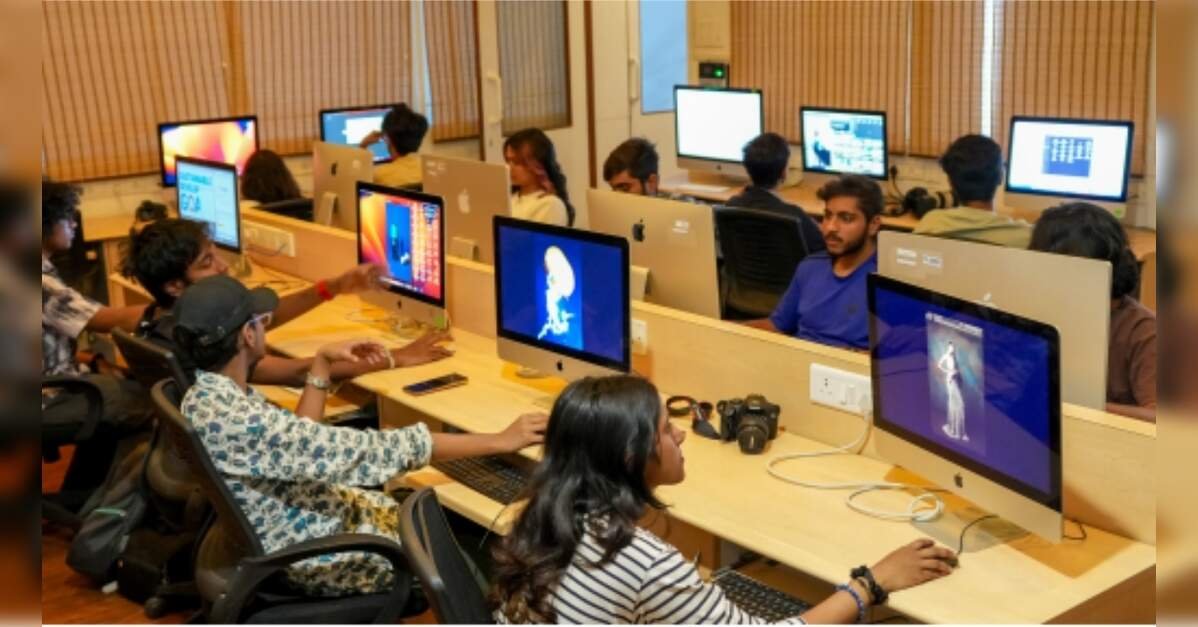
Pune (Maharashtra) [India], July 10: Most photography & filmmaking programmes in India hand students a syllabus and a studio slot. Symbiosis School of Visual Arts and Photography (SSVAP) in Pune takes a different position altogether. Here, a Pulitzer Prize-winning photojournalist conducts masterclasses. A dedicated automobile photography studio, the only one of its kind in any photography & filmmaking institute in the country, sits alongside four (five) other genre-specific studios. And a three-year degree is built, by design, around doing rather than memorising.
Established in 2012 under Symbiosis International (Deemed University), which holds an A++ accreditation from NAAC, SSVAP began as Symbiosis School of Photography before evolving into the broader institution it is today. Located on the Knowledge Village campus at Lavale, Pune, the institute sits within a media and communication faculty that gives it academic depth as much as creative range.
The flagship three-year BA in Visual Arts and Photography covers fashion photography, fine art, wedding, people and portrait, photojournalism, sports, automobile, interior & architecture, ad films, Short films, direction, sound design, cinematic lighting, sound, direction, storyboarding, script writing, and documentary filmmaking. The breadth is intentional. The school operates on the conviction that a visual artist confined to one genre is a limited professional. Practical knowledge takes precedence over conventional textbooks and lectures at every stage, with one-on-one mentorship sessions built into the academic structure alongside a robust visiting faculty network of working professionals.
Puneet Gupta, Head of SSVAP, captures the school’s outlook clearly, “In an age where Artificial Intelligence is rapidly transforming industries and automating countless professions, photography & filmmaking stands as a resilient and irreplaceable art form. AI can generate images, but it cannot step onto a field, capture real moments, or tell authentic visual stories. AI can supplement visual arts, but it cannot supplant the artist behind the lens. At our institute, we believe photography is not just a career, it is a lifelong calling. As technology evolves, the role of the photographer & filmmaker becomes even more vital in shaping how we see and remember the world,” Her own career brings weight to that conviction. With professional experience at Hindustan Times, DNA, and The Indian Express, and research publications in Q1 Scopus-indexed journals, Gupta is a National Photo Award winner and an international scholarship recipient of the Angkor Photography Workshop. The institutional commitment to real-world exposure runs through every element of the curriculum. Study tours are not add-ons; they are core academic components, sending students across the country to shoot in live environments. The school has hosted Adnan Abidi, a three-time Pulitzer Prize-winning photojournalist, for a masterclass for students, and welcomed Prasenjit Yadav, a National Geographic photographer as chief guest for its annual Nature Photography Competition. These are not ceremonial appearances. They are working sessions calibrated to expose students to standards that go well beyond the classroom.
The outcomes are visible in where students land during their degree, not just after it. SSVAP offers internship opportunities with organisations including Incredible India, the Ministry of Culture, Andhra Pradesh Tourism, Lalit Kala Akademi, and Indian Express, partners that place students in live professional environments across government, culture, and media sectors. The programme also supports portfolio-based engagement through live projects, industry visits, and the Kochi Biennale, ensuring that by the time students graduate, their work has already been tested against real briefs and real audiences. The school’s emphasis on entrepreneurial development means many alumni go on to build independent practices, with career earnings that reflect the commercial viability of a well-trained visual professional.
What SSVAP has built over more than a decade is an institution that refuses to treat creative education as secondary to professional education. The argument it makes, through its curriculum, its faculty, its infrastructure, and its alumni record, is that artistic rigour and career readiness are not competing priorities. At SSVAP, they are the same thing.


