



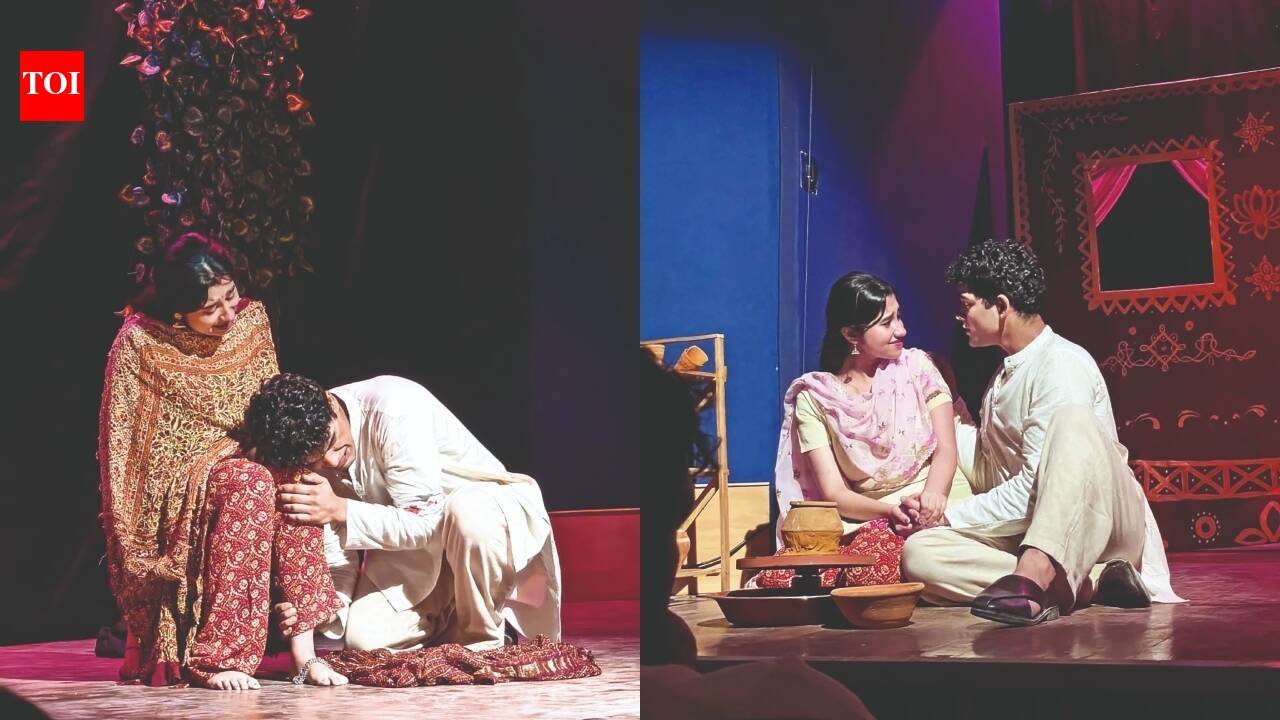
Multiple dupattas form a turbulent river where Sohni and Mahiwal meet their tragic end. The ocean-blue fabric billowing in the air, paired with stage lighting, creates a striking climax to an otherwise drawn-out, filmy retelling of the Punjabi folk tale of star-crossed lovers.Paar Chana De revolves around Sohni and Mahiwal’s tragic love story. Sohni is a pot maker’s daughter, who is known across the village for the intricate designs she crafts on her pots. One day, she meets Izzat Baig, later known as Mahiwal, who has travelled all the way from Bukhara (now in Uzbekistan) to make a living in a new place. He falls in love with her at first sight, and Sohni reciprocates his feelings. Soon, Izzat becomes the family’s buffalo herder to stay close to her. However, when her parents discover their relationship, they marry Sohni off to someone else.With little reinvention of the original tale, the dialogues could have been more poetic and less melodramatic. Instead, Paar Chana De often plays out like a trope-heavy 1980s Bollywood film. Everything is loud and in-your-face. While theatre calls for heightened expressions to help the audience follow the drama, the performances often tip into overacting.Even the first meet-cute between the leads felt sudden and abrupt. One moment, they were meeting; the next, they were confessing their feelings. A few Urdu words sounded laboured as the pair made each other’s acquaintance. The romance needed greater depth for the eventual climax to land.A few elements kept the play from becoming yet another predictable adaptation. The rustic background music at the beginning evoked the spirit of Punjab. Mahiwal’s delirious walk through the audience was another highlight, effectively breaking the stage boundary. The climax, which showed how the lovers ultimately met their tragic end, demonstrated what the production could achieve when it took over from the writing.
