





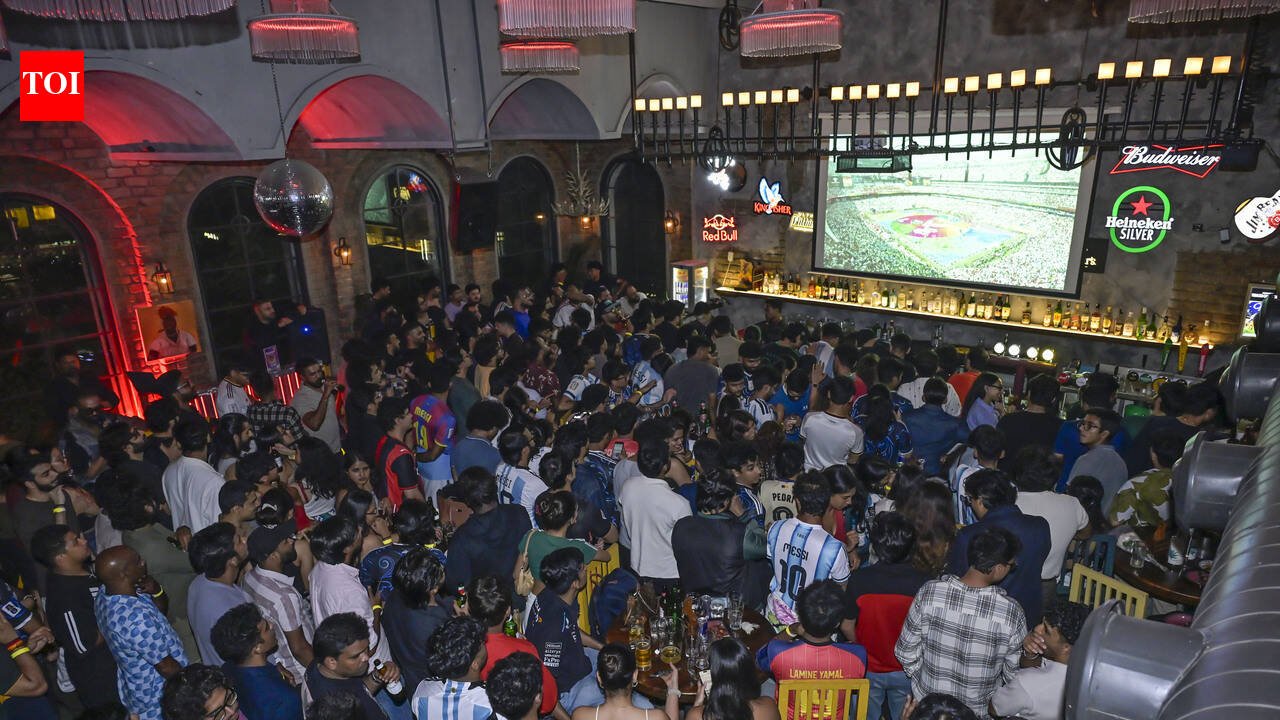
When the FIFA Club World Cup gave Bengaluru a reason to stay awake until 3:30 am, it also gave the city something to think about. For a few nights, people got a fleeting taste of what an extended nightlife could feel like. The move was temporary, but it has rekindled a much larger question: Is Bengaluru ready to become a full-fledged nightlife city?The answer isn’t a simple yes or no. Stakeholders across government, law enforcement and the hospitality industry believe it depends on whether the city’s infrastructure, workforce and security systems can evolve alongside its nightlife ambitions.There is broad agreement that Bengaluru has the demand and the appetite for a stronger night-time economy. But turning it into a city that truly never sleeps will take far more than keeping pubs open for a few extra hours. It will call for real investment in policing, transport, civic services, workforce planning and public safety so that nightlife can grow only as fast as the city’s ability to support it.
‘Bengaluru has the demand and the capacity to support extended nightlife’The city is ready to embrace a stronger night-time economy, believes Shakir Haq, CEO of NKP Empire Ventures and Vice-President of the Bengaluru Chapter of the National Restaurant Association of India (NRAI).“Bengaluru is more than capable of supporting an extended nightlife. There is a clear demand, and the industry has the capacity to meet it. While not every restaurant or café would operate through the night, fast-food joints, cafés and quick-service restaurants would thrive. We’ve seen this work successfully in cities across the world, and Bengaluru itself had a vibrant late-night culture in the past,” he says.According to Shakir, the city is now far better equipped to support late-night operations. “With app-based cabs, designated drivers and stronger surveillance systems, nightlife is more feasible than ever. Bengaluru is evolving into a global city and a major GCC hub, and its nightlife should evolve with it. We’ve always believed that the more active a city is at night, the safer it becomes,” he says. He adds that extended nightlife could boost businesses, create jobs and strengthen Bengaluru’s global appeal. “We’re optimistic the government is listening to the industry’s concerns,” he says.‘The real question is whether nightlife can extend till sunrise’“Bengaluru already has nightlife for almost the entire year. The real question is whether it can extend nightlife until sunrise, and I believe it can,” says Avinash Kapoli, mixologist and co-founder of Kompany Hospitality.Avinash points out that Bengaluru has emerged as one of India’s premier cocktail destinations, with two city bars featured among Asia’s Best Bars. Most competing Asian cities, he says, allow establishments to operate until 3 am or 4 am. He believes longer operating hours could boost tourism, generate employment and strengthen Bengaluru’s hospitality ecosystem, particularly among international travellers accustomed to vibrant night-time economies. However, he also acknowledges the operational challenges.“Extended hours would require hospitality businesses to rethink staffing and operations. If timings are increased, there should also be flexibility in licensing so businesses can manage their workforce more effectively,” he says.‘Without more manpower, staff will pay the price’Jagadish HS, who manages a resto-bar in JP Nagar, says the extended timings during the FIFA Club World Cup did not significantly benefit many establishments. “People came and stayed for longer hours but didn’t necessarily spend more on food and drinks,” he says. While he believes an everyday late-night culture could eventually become commercially viable, he warns that staffing remains a major concern.“The hospitality industry already struggles with long working hours and poor work-life balance. Extending operating hours without increasing manpower will take a serious toll on employees’ mental and physical health,” he says.‘Security has to remain the top priority’For the Greater Bengaluru Authority (GBA), the biggest concern isn’t operations but planning. M Maheshwar Rao, Chief Commissioner of the GBA, believes Bengaluru can gradually move towards a late-night economy, provided the transition is phased.“Running a city through the night always requires considerable effort from the civic agencies, especially the police. As Bengaluru evolves, it should gradually consider permitting certain events to continue late into the night based on need and with proper planning,” he says, pointing to initiatives such as the midnight marathon in Whitefield as proof that the city is capable of handling late-night events. According to him, expanding nightlife should happen in a graded manner, with security remaining the top priority.‘A night-time economy would need more police manpower’Bengaluru City Police Commissioner Seemant Kumar Singh says the police are not opposed to the idea of a city with an extended nightlife but points out that the current security framework is not designed for round-the-clock operations.“During the FIFA Club World Cup, when establishments were allowed to stay open late, it certainly put a strain on the police. With a proper shift system, we can manage such situations, but without it, the burden falls on the existing force,” he says.According to the commissioner, sustaining a night-time economy would require a significant increase in police manpower and the introduction of dedicated shift systems. “It’s not feasible for the existing force to work 24×7, so increasing personnel strength would be essential. Ultimately, however, this is a policy decision that involves multiple stakeholders,” he says. He adds that creating a city that functions through the night would require far more than simply extending pub and restaurant hours. Better street lighting, reliable public transport, sufficient cabs, efficient civic services and coordination between multiple government departments would all be crucial.What Bengaluru needs to become a 24×7 city:According to stakeholders, a full-fledged night-time economy would require:– More police manpower and a dedicated night-shift system– Robust surveillance and security using technology– Better street lighting across key commercial areas– Reliable public transport and adequate late-night cabs– Coordination between agencies, including police, GBA, transport and civic bodies– Flexible licensing for hospitality businesses– Additional staffing and revised work shifts in the hospitality sector – Support services such as eateries, tea stalls and emergency services operating through the night


