



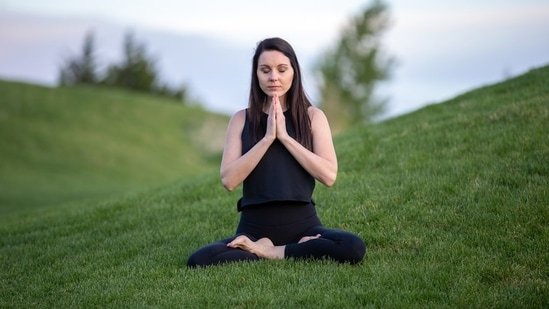
The hyperconnectivity in modern times has led to constant burnout. The urgency to know everything, the fear of missing out, constantly keeps the mind on edge. This can reciprocate into stress and anxiety. Prioritising mental well-being is a must in times like today. There are several ways to achieve the same, and meditation is one of the most powerful and proven ways to make us more mindful of our activities. We often perceive meditation as an hour-long retreat or a complex ritual that requires a silent mountain top.


For the busy professional or the stressed student, meditation isn’t about escaping life; it’s about mastering the mind so it becomes your greatest friend rather than your worst enemy. In an interview with HT Lifestyle, Dr Archika Didi, PhD in meditation and vice chairperson of Vishwa Jagriti Mission, shared a quick 5-minute routine that you can practice in daily life.
Also read | Meditation guide and war survivor Hanna Chuiko shares her healing journey: ‘Forgive because you want to live…’
1. The power of choice
Archika highlighted that meditation begins with a shift in perspective. Spend the first minute simply acknowledging your ‘self’ as separate from your busy schedule, your vibrating phone, and your physical exhaustion. Remind yourself: “I am not this stress; I am the observer of it.” This mental distancing provides instant relief from the “fight or flight” mode.
2. Focus on the Agya Chakra
The Agya Chakra, located between the eyebrows where a tilak is traditionally applied, is the centre of clarity and command. For professionals making tough decisions or students absorbing vast amounts of data, this point is vital. Close your eyes and focus in between your eyebrows. Inhale deeply, imagining a golden light entering this centre. This simple act of centering prevents the “scattering” of energy that leads to burnout.
3. The ‘Kumbhaka’ reset
One of the most effective tools for an overactive mind is the practice of Kumbhaka (breath retention). Inhale deeply for four seconds. Hold your breath for two seconds. Exhale slowly in six seconds. Holding the breath helps the mind to relax. This is a “bio-hack” for the nervous system that takes less than 60 seconds and helps your mind stay calm and relaxed.
4. Bhramari Pranayama for instant calm
If you are between back-to-back meetings or study sessions, use the Bhramari pranayama. Close your ears with your thumbs and place your fingers on your eyes. Inhale, and as you exhale, make a steady humming sound like a bee. The vibration works like a sonic massage for the brain. It clears mental blockages and enhances the intuitive power.
5. Intentional protection
End your five minutes by visualising a protective aura. Spend the final minute visualising this light surrounding you. This isn’t just “wishful thinking”; it is setting a mental boundary. Decide that for the rest of the day, you will not let small irritations turn into anger or depression.
Note to readers: This article is for informational purposes only and not a substitute for professional medical advice. Always seek the advice of your doctor with any questions about a medical condition.


