



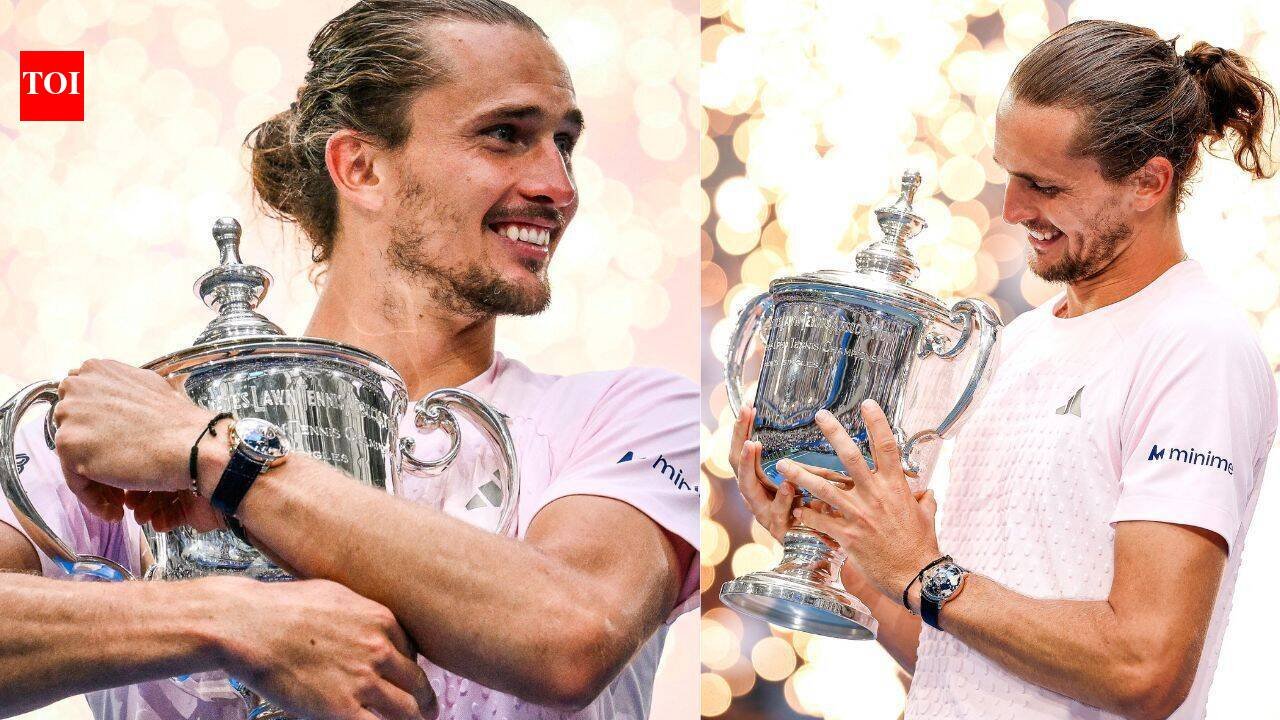
Alexander Zverev lifted his maiden US Open title on September 13, 2026, defeating Ben Shelton in a hard-fought final that went 6-3, 7-6(2), 5-7, 6-2 at Arthur Ashe Stadium. It was Zverev’s second Grand Slam title of the year, following his French Open win just three months earlier, capping what he has openly called a thirty-year wait finally paying off within a single season. But it wasn’t the scoreline that had people talking afterward. It was who Zverev chose to thank once the trophy was in his hands.
The person who “never actually watches” his matches
During his on-court victory speech, an emotional Zverev paused to thank someone he described as the most important person in his tennis career, and in his life overall, even though she rarely watches him play. That person was his mother, Irina Zvereva, a former professional tennis player herself, who coached Zverev in his early years until he was around 13 or 14 years old. Zverev, who was diagnosed with Type 1 diabetes at just four years old, recalled the moment his family first received the diagnosis. He described how doctors had warned that both life and sports would likely be “very, very limited” for a child with his condition, a moment that could easily have discouraged any parent from letting their child chase an ambitious dream like professional tennis.
10 Sept 2026 | 12:19
What’s one thing you swore you’l never do as a parent now you find yourself doing?
A mother’s response that changed everything
Instead, Zverev shared that his mother refused to accept those limitations as the final word. According to his own account, she walked out of that doctor’s office determined that her son’s illness would not decide his future, telling him he could become “whatever he wants to be,” whether that meant tennis or something else entirely. As Zverev put it in his speech, the diagnosis would not define who they were as a family. He went on to call her the strongest person he knows, saying it takes real strength for a parent to make that kind of promise to a child and even greater strength to actually help him live up to it.
Managing a lifelong condition while chasing a childhood dream
Zverev has largely kept his diabetes management private over the years, only revealing his condition publicly in 2022, despite having lived with it since childhood in Hamburg, Germany. He manages the illness through regular glucose monitoring and insulin injections, a routine that has quietly run alongside his entire professional tennis career. He later went on to establish the Alexander Zverev Foundation, an organisation focused on supporting children living with diabetes and improving their access to insulin and essential medication, turning his own childhood experience into something that could help other families facing a similar diagnosis.
A lesson for parents raising children with health challenges
For parents of children facing chronic illnesses or health conditions that come with early warnings and limitations, Zverev’s tribute to his mother offers something worth holding onto. It’s a reminder that a diagnosis, however serious, doesn’t have to become the boundary of a child’s ambitions. His mother’s decision not to let doctors’ warnings define her son’s possibilities became, in many ways, the emotional foundation for everything he achieved afterward. It’s a message that resonates well beyond the tennis court: sometimes the most important support a parent can offer isn’t a specific skill or strategy, but simply the refusal to let a limitation become the whole story.
A moment worth remembering
Zverev’s US Open victory will be remembered for the title itself, but for many watching, it will be remembered just as much for the seconds he spent thanking a mother who wasn’t even watching the match yet had shaped every part of the journey that led to it. In an era where athletes’ victory speeches often blur into routine thank-yous, this one stood out for being unmistakably personal and for putting into words something many parents of children with chronic illnesses quietly hope to believe themselves: that a diagnosis is not a limit; it’s simply part of the story.
