






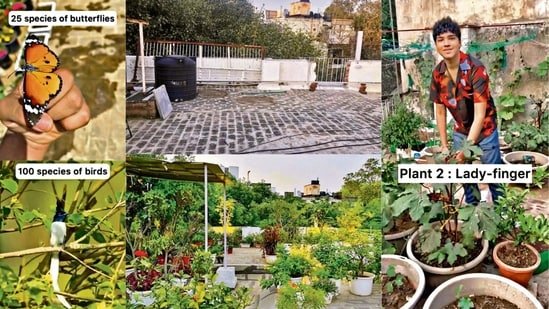
What was once a barren rooftop in Delhi’s Vasant Vihar has been transformed into a thriving urban jungle by 23-year-old conservationist Aman Sharma. Spread across 1,500 square feet, his terrace is now home to over 500 native plants, providing a refuge for more than 200 bird species, along with 25 species of butterflies and other pollinators.


It all began in 2020, when Sharma spotted a pair of bulbuls nesting near his home. He recalls, “The idea took shape during the Covid-19 lockdown. I love being out in nature, birdwatching, but stepping out wasn’t an option back then. So, I thought, why not create a place of my own?”
And so, Sharma set out to build a self-sustaining ecosystem by planting flowering and fruit-bearing species. Over time, the growing vegetation attracted insects, which in turn drew birds and pollinators. “I started with just a few plants. As they flourished, so did my dream of turning the terrace into a full-fledged urban forest. Today, it’s a lush ecosystem where birds and butterflies find a safe green haven amid the city’s hustle. The fact that they return every year to nest still feels surreal,” he says with a smile.
For Sharma, however, the terrace forest offers far more than biodiversity. “It’s not just the birds that come to me; it’s what they bring into my life. Especially for Gen Z, we’re trapped in a digital world of phones and social media, which often leads to stress, anxiety and mental fatigue. These birds reconnect me with what’s real. They bring me closer to nature and the peace that comes with it. It’s not just them benefiting from this terrace forest—I’m the one who gains an immeasurable sense of joy from it too,” he says.
How to Build Your Own Urban Jungle
Choose native species: Plant native trees, shrubs and grasses as they are better adapted to the local climate and provide food and shelter for native wildlife.
Include butterfly host plants: Butterflies lay their eggs only on specific host plants, so adding these is essential to support their complete life cycle, not just attract adult butterflies.
Opt for water-efficient plants: Given Delhi’s hot summers and water constraints, prioritise hardy species that require minimal watering once established.
Create layers of greenery: Follow the Miyawaki principle by planting species of varying heights—from ground cover and shrubs to small and tall trees—to maximise biodiversity while making the most of limited space.
Plant for wildlife: Include fruit-bearing plants to attract birds and flowering species that provide nectar for butterflies, bees and sunbirds, helping create a self-sustaining ecosystem.
For more, follow HT City Delhi Junction


