





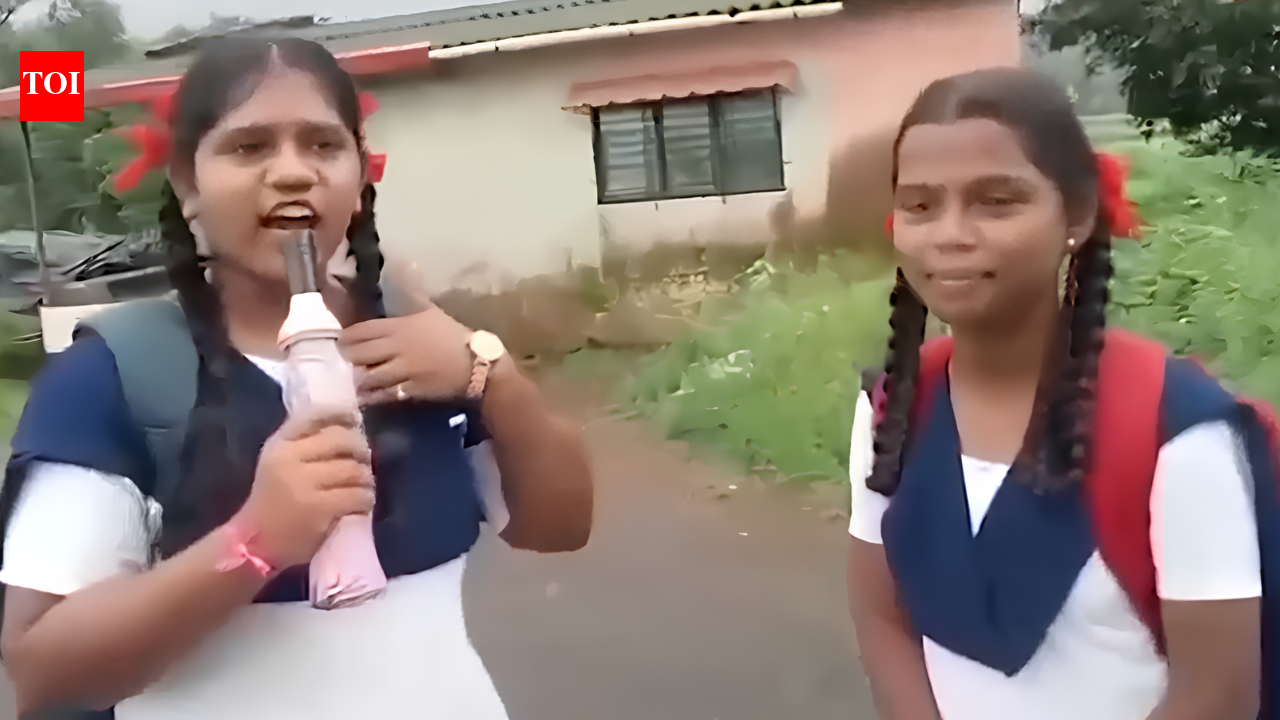
A bad road can become part of daily life so that people stop noticing it. For three Class 10 students in Raigad, Maharashtra, that changed during the monsoon.Neha Ghare, Jyotsna Mukane and Mansi Pawar, all 15, were tired of the muddy stretches and potholes on the road they used to reach school. Instead of simply complaining about it, they decided to turn the problem into a mock news report.Neha became the reporter. An umbrella became her microphone. Jyotsna played the resident explaining how difficult the road had become, while Mansi recorded the entire performance on a mobile phone.The result was meant to be funny. But the video travelled much further than the three friends expected. As it spread on social media, it caught the attention of local officials. The road was subsequently repaired.What makes the episode interesting is not just that a viral video brought attention to a pothole. It shows how three teenagers used humour to make an everyday civic problem impossible to ignore.
The ‘news report’ started with a road they knew too well
The girls did not pick a random road for their video. It was a route they themselves used while going to school.The monsoon had made the situation worse. Rainwater, mud and potholes had turned parts of the road into a difficult stretch for people travelling through the area, including schoolchildren.Rather than making a conventional complaint video, the students decided to copy the style of a television ground report.Neha stood in front of the camera with an umbrella, using it as a makeshift microphone. Jyotsna spoke about the condition of the road, while Mansi stayed behind the camera and filmed the segment.The humour was obvious, but so was the complaint underneath it.That combination probably helped the video travel. It was not a formal petition or a long speech about infrastructure. It was three teenagers showing what they experienced on their way to school.And sometimes, a muddy shoe can explain a civic problem better than a long complaint.
Three teenagers turned a pothole into satire
Neha’s reporter act gave the clip the feel of a local news bulletin. The umbrella made the performance instantly recognisable and added a playful touch. Jyotsna’s comments brought the focus back to the actual problem, while Mansi documented everything.The girls were therefore doing two things at once. They were entertaining people, but they were also documenting something that affected their community.A viral video can disappear from social media almost as quickly as it appears. In this case, however, the footage was tied to a real problem that residents already knew about. The attention it received eventually reached local officials, and the road was repaired.The girls’ families and villagers praised them for raising the issue. Neha’s father, Atmaram Ghare, said the family was proud of what the girls had done.
The real story is what happened after the video went viral
The video drew public attention to a road that the three students had to use themselves. Officials subsequently took note, and the road was repaired.That does not mean a viral video should replace formal civic systems. Roads still need regular inspections, proper drainage, quality construction and planned maintenance. Government agencies have repeatedly said that road maintenance is an ongoing responsibility, and the Centre has mechanisms for monitoring and repairing national highway stretches.But the episode does show the power of citizens documenting problems around them.Disclaimer: This article is based on publicly reported information available at the time of writing. Details about the viral video and the road repair are attributed to the reports on the incident.


