



(This article is part of the View From India newsletter curated by The Hindu’s foreign affairs experts. To get the newsletter in your inbox every Monday, subscribe here.)
Six Prime Ministers in 10 years, that is Britain’s reality, amid persisting political turbulence, an economy under strain, and a sharply polarised society. When Keir Starmer resigned on June 22, 2026, it came hardly as a surprise. Tacking further to the centre, he found himself and his party in a position where a large constituency of its supporters were disillusioned and frustrated.
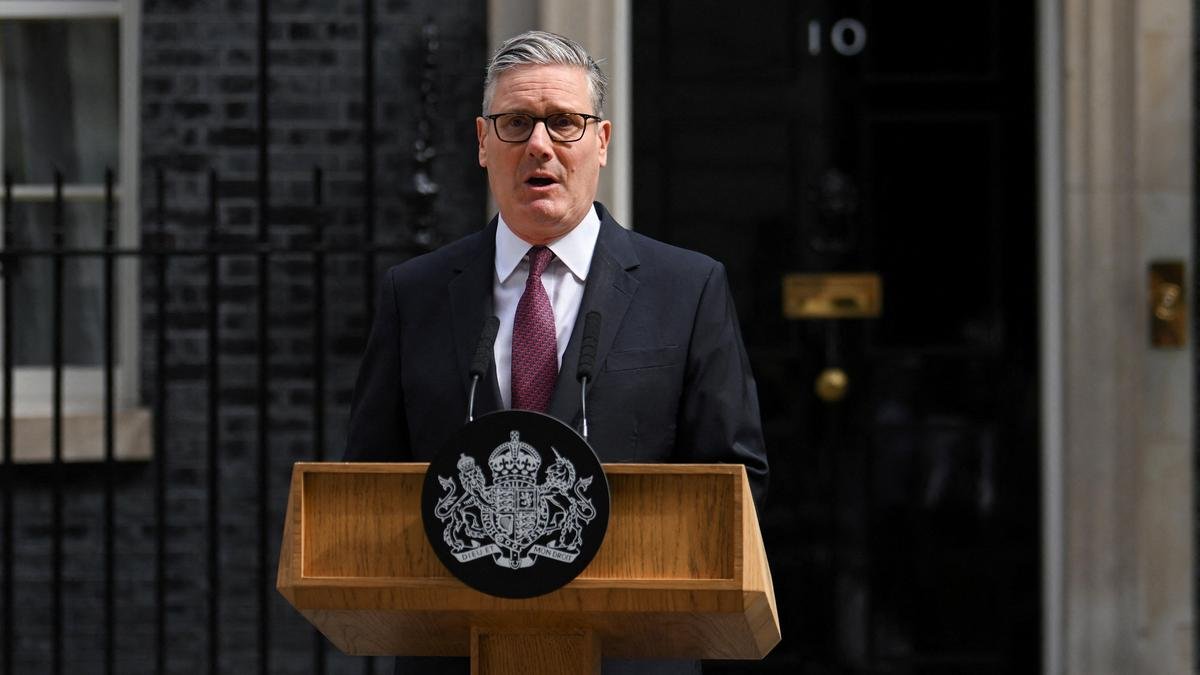
Our London Correspondent Sriram Lakshman tracked the development closely. “Speaking outside No. 10 Downing Street on Monday, the Prime Minister said he had inherited a Labour Party that was “politically, financially, and morally bankrupt”. He spoke of leading the party in a landslide victory in 2024 and highlighted his record, citing growth in real wages, the fastest economic growth in the G7, reduced wait-times for medical appointments, a ban on social media for under-16s, trade deals and mending fences with the European Union,” he wrote.
In this analysis, Sriram Lakshman notes that Mr. Starmer’s political fate was all but sealed when Labour’s ‘King of the North’, former mayor of Greater Manchester, Andy Burnham won a seat in Westminster (the U.K.’s Parliament) last week, after winning a by-election.
The Hindu’s editorial on the resignation said Mr. Starmer’s “uncharismatic, technocratic centrism failed to withstand the rapid changes shaping British politics at a time when far-right parties were surging across continental Europe”. While the country’s economy saw incremental gains, Mr. Starmer “proved largely ineffective in addressing the economic anxieties of the working-class communities that delivered his majority, or the cultural grievances Reform UK had been amplifying,” it contended. Mr. Burnham, expected to be elected the next Prime Minister, “should recognise that the Starmerite centrism is unlikely to withstand the onslaught of a far-right cultural politics entrenched in English nationalism. He must unite a fractious party around a progressive economic and foreign policy agenda and build a government that works for all while standing firmly on the right side of global issues,” it further noted.
Top 5 stories we are reading this week
1. War on Iran | The story of a shipwrecked hegemon – The war the U.S. and Israel launched has come to a fragile pause with a preliminary agreement between Washington and Tehran, but it has already diminished America’s presence in the region, writes Stanly Johny in The Hindu Profiles.
2. PACOM, the deeper meaning behind a dropped prefix – The U.S.’s reversion from INDOPACOM to PACOM suggests that its regional shifts run deeper than a simple name change, writes Suhasini Haidar.
3. Wang Yi calls for India, China to accelerate resumption of stalled dialogue mechanisms – A lengthier Chinese readout of the talks between NSA Ajit Doval and China’s Foreign Minister Wang Yi said that the Chinese leader noted that “India is an important neighbour of China, Ananth Krishnan reports.
4. Why is Sri Lanka’s dengue outbreak straining its public health sector?
5. July opens the biggest chapter in India-U.K. trade relations – The U.K.-India Free Trade Agreement, the ‘gold standard of modern trade deals’, comes into force on July 15, writes Harjinder Kang, His Majesty’s Trade Commissioner for South Asia and the British Deputy High Commissioner for western India.
Published – June 29, 2026 12:33 pm IST


