



(This article is part of the View From India newsletter curated by The Hindu’s foreign affairs experts. To get the newsletter in your inbox every Monday, subscribe here.)
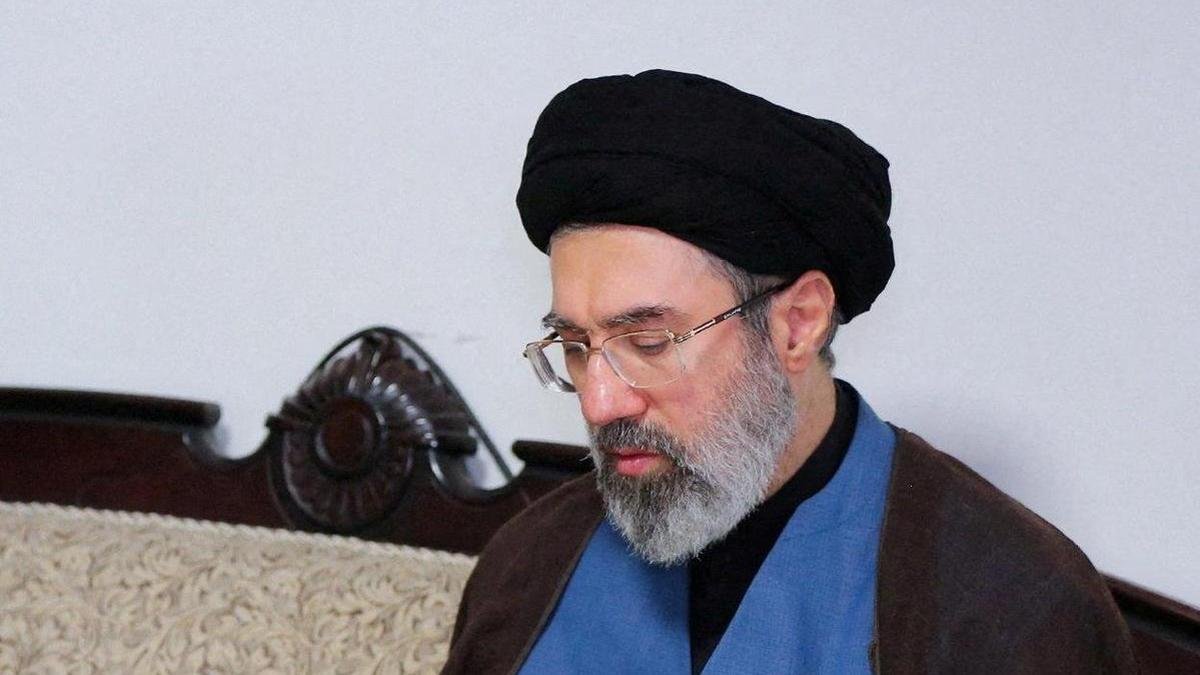
Iran’s Assembly of Experts, a body of 88 clerics, announced on Monday that Ayatollah Mojtaba Hussein Khamenei, the son of Ali Khamenei who was assassinated by a joint U.S.-Israeli strike on February 28, has been elected the new Supreme Leader. Mr. Khamenei, 56, is the third Supreme Leader of the Islamic Republic. U.S. President Donald Trump had said last week that he wanted to be involved in the election of Iran’s new leader. He also signalled that Mr. Khamenei was not acceptable to him. But Mr. Trump seems to have very little influence among the Majles-e Khobregan (Assembly of Experts). Immediately after Mr. Khamenei was appointed, Iran launched a volley of missiles towards Israel, as the war entered the 10th day on Monday.
Within 10 days, the conflict has already become regional. The U.S. and Israel have dropped thousands of bombs in Iran, hitting several military and economic targets. Iran says around 1,400 people were killed in the war. Dark haze enveloped Tehran on Sunday after oil storage facilities were bombed. Iran also accused the U.S. of bombing a desalination plant. According to an analysis by the New York Times, U.S. missile strikes likely hit a girls’ elementary school in Minab in which at least 160 people were killed. Iran has attacked U.S. bases and military assets across the region as well as Israel. Some Iranian drones and missiles targeted oil facilities in the Persian Gulf. The Strait of Hormuz remains effectively shut. Some Gulf countries have reduced oil production and others have warned of a complete halt in the coming days if the war continues. Crude price hit a 52-week high on Monday at $110 a barrel. Mr. Trump, who started this war, says it is a “short-term” pain.
On Day 1, Mr. Trump said the overthrow of the Iranian state was his goal. He urged the Iranians to take over the institutions, saying “this is a once-in-a-generation” opportunity. It did not happen. On Day 2, Mr. Trump said he has “agreed to talk” to Iran as Tehran sought negotiations. In response, Ali Larijani, Iran’s Security Council Secretary, said “We won’t negotiate with the Americans”. Last week, Mr. Trump said he would not make a deal with Iran and demanded Tehran’s “complete surrender”. He said the war would be over only after Iran’s surrender and the appointment of a new supreme leader who is acceptable to him. Mr. Larijani responded again, saying, “we won’t let Trump off the hook this time”. And on Sunday night, Iran chose a new Supreme Leader, signalling that the state continues to function despite the war. Israel and the U.S. can continue to bomb Iran, but the bombing campaign doesn’t seem to be helping the U.S. to meet its objective of regime change.
Our journalists have been covering the different aspects of the war. See the reports by Meera Srinivasan, our correspondent in Sri Lanka, about the U.S. attack on an Iranian warship off Sri Lanka’s coast. The ship IRIS Dena was in the region to attend a naval exercise in Visakhapatnam. After the attack, Sri Lanka evacuated 208 members of another Iranian ship, IRINS Bushehr, which was stranded near its territorial waters. The U.S. attack on Dena signalled a dangerous spillover of the West Asia war to the waters close to India’s coast.
One question many asked since the war broke out is: where are Russia and China, Iran’s close friends? The Washington Post ran a story last week saying Russia was sharing intelligence with Iran about the location and movement of American assets and soldiers in the region. To understand China’s position, Ananth Krishnan, our correspondent in Beijing, has two stories. In this interview, Wang Dong, professor at the School of International Studies at Peking University, says military ventures bring long-term decline. And China’s Foreign Minister Wang Yi spoke about a host of issues in a press conference on Sunday, including ties with India, the need for BRICS cooperation and the war in West Asia. Read Ananth’s analysis here.
Suhasini Haidar, The Hindu’s diplomatic affairs editor, has interviewed Finnish President Alexander Stubb. Finland is a NATO ally of the U.S. In this interview, Mr. Stubb said Europe would back the U.S. against Iran, but added that the U.S. and Israel are acting ‘outside the framework of international law’. Read the interview here.
As Iran has a new supreme leader, it is important to understand Iran’s political system. See this explainer. We also have a profile of Ali Larijani, the Security Council chief, one of the most powerful men in today’s Iran. The philosopher who seeks vengeance.
The Top Five
1. The legality of U.S.-Israel strikes on Iran
U.S., Israel launch strikes on Iran as a ‘pre-emptive’ response to an imminent threat, raising questions about the legality of the use of force under the UN Charter; missile strike on a girls’ primary school raises concerns over violations of International Humanitarian Law, particularly the principles of distinction, proportionality, precaution, writes Kartikey Singh.
2. Why does the Strait of Hormuz’s closure matter?
Where is the Strait of Hormuz and what is its significance? Why have tensions in West Asia affected this passage? What does Iran have to do with the near-complete closure of the strait? How does the situation affect India and what is the government doing about it? writes M. Kalyanaraman.
3. India-Canada uranium deal and India’s nuclear programme | Explained
India has increasingly relied on imported uranium, which currently meets nearly three-fourths of the civilian need, writes Vasudevan Mukunth.
4. Rastriya Swatantra Party – the bell strikes
The party that campaigned on anti-corruption, anti-establishment platforms has emerged as the winner of Nepal’s first post-protest election, writes Sanjeev Satgainya.
India should oppose the U.S.’s attempt to widen the war to the Indian Ocean, writes The Hindu in this editorial.
Published – March 09, 2026 12:13 pm IST


