



By Prof Dr Hemant Verma
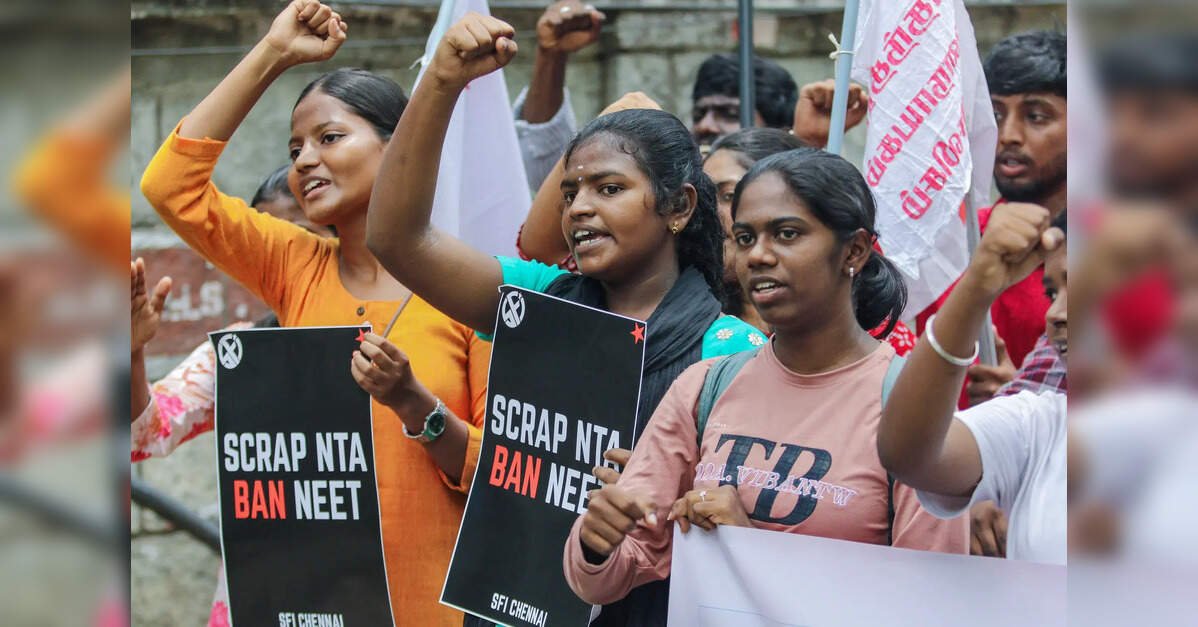
India’s competitive exam system has always been viewed as one that leads to merit and opportunity. For countless students, examinations like NEET do not serve as merely a test of ability. They serve as an embodiment of years of struggle, individual sacrifice, emotional turmoil and aspirations of many. Recently, public discourse has been dominated by polarizing debates on whether to cancel or re-conduct examinations. While these immediate administrative interventions are necessary stopgaps to ensure absolute fairness, they address only the symptoms. The deeper, foundational challenge we face is preserving and reinforcing the absolute trust of our youth in the sanctity of the system itself.
As institutional leaders, we must view this not as a systemic failure, but as a critical inflection point—an opportunity to transition from legacy testing methods to an unbreachable, next-generation examination ecosystem.
Scaling educational overnance
Managing testing logistics for millions of students across a subcontinent as diverse as India is a monumental task that few nations in the world could even attempt. The scale itself is a testament to our state infrastructure’s capability. However, as our national ambitions grow, our administrative frameworks must evolve at an accelerated pace.
In my journey in higher education administration, I have consistently emphasized the significance of ethics and values in academic management and governance along with the idea of education being learner centric. With many years of experience in the field of education, especially regarding the implementation of the National Education Policy 2020 in Haryana, I have witnessed firsthand how structural transformation succeeds when it is anchored in ethics, transparency, and a learner-centric philosophy. To fully realize this vision, our national assessment models must align with the high standards of modernization and agility.
Over the years, I have interacted with countless students preparing for competitive examinations, and I have personally seen the pressure, sacrifices and emotional strain they go through. The preparations can involve moving away from family homes to join coaching classes where they follow a very rigid timetable without much social interaction among themselves. Family members too invest huge amounts of money and emotional resources in them with the hopes of seeing their efforts bear fruits.
The exposure to such events as paper leaks makes students question how much the process depends on honesty and hard work. They begin feeling frustrated, exhausted, and helpless even after putting in good effort.
What concerns me the most is the gradual normalization of mistrust among students. If students start thinking that any system can be compromised easily, then apart from reducing the importance of exams, it will also shake their faith in the institution itself. This may lead to social dissatisfaction among the deserving students.
A tech-driven, sovereign blueprint for assessment
On the other hand, discussion on the topic needs to remain constructive. Organizing examinations for millions of students in a large country like India involves huge challenges from logistical to security issues. But in light of all these challenges, there is also a need to build better and better systems to overcome them.
Therefore, this particular situation needs to be treated as an opportunity for improvement in institutional processes and not just another cause for anger. To eliminate vulnerabilities, India must pioneer an ironclad, tech-driven protocol for high-stakes examinations:
• End-to-End Cryptographic Security: Utilizing advanced digital tracking and zero-trust security architectures from the point of question-bank creation to digital distribution at test centres.
• AI-Driven Vigilance: Deploying localized artificial intelligence tools to monitor anomalies in real-time, ensuring that human error or malfeasance is neutralized instantly.
• Sovereign Testing Infrastructure: Gradually shifting toward a dedicated, state-backed digital infrastructure for national exams, reducing reliance on fragmented third-party centres.
Yet, technology is only as strong as the governance backing it. True reform requires a synthesis of cutting-edge innovation and moral governance, a commitment to zero-tolerance policies against disruptions, backed by the stringent legal frameworks recently initiated by the central government.
Transparency has emerged as one of the highest expectations from today’s youth. They are informed, connected through digital platforms and skeptical in nature. In any matter of examination-related controversy, delay in communication or lack of clarity only causes confusion among the students and mistrust towards the authorities organizing it.
Prioritising the student ecosystem
Simultaneously, we must address the intense psychological pressure built into our current single-point assessment models. It is a collective responsibility of educators, policymakers, and society to ensure that a single exam day does not become the sole arbiter of a child’s self-worth. It is unfortunate that in India, one examination marks out whether a student will succeed in life. Such an approach makes students face high levels of stress and anxiety. Controversies, especially in this situation, make the situation worse.
As educators and institutional leaders, we must now focus more seriously on student well being. The institutions of learning, policy makers and society need to consider issues of counseling, academic advice and other factors that can help to minimize psychological distress. For instance, students must be assured that there are people who care about them and not those who only want to conduct examinations.
In addition to this, there is a need to move away from reactionary actions. It can easily be observed that most reforms in this regard come into being after controversy becomes news. Once media interest subsides, the pace of implementation of long-term solutions tends to slacken. The better way of doing things would be to engage in continuous monitoring and periodic audits and building up examination systems through proactive steps.
Fuelling the Engine of National Development
Above all else, the voices of students should always remain central to this issue. Young aspirants do not want any favors but merely a fair, consistent process that is geared towards protecting genuine merit. This demand should be taken seriously since confidence in education translates directly into confidence in national development.
It may be noted that India has one of the youngest populations in the world. Aspirations of its students will determine the future work force, innovation drive and social development of India. In such an environment, safeguarding the integrity of competitive examinations becomes a matter of shared concern.
It is not merely a matter of holding an examination again. The bigger question that arises is that of restoring the faith of students who feel more uncertain now than ever before about the system that controls their destiny.
I believe restoring student trust will require transparency, compassion, institutional accountability and above all a collective commitment towards protecting merit.
The author Prof Dr Hemant Verma is the Vice-Chancellor of SGT University, Gurugram
DISCLAIMER: The views expressed are solely of the author and ETEDUCATION does not necessarily subscribe to it. ETEDUCATION will not be responsible for any damage caused to any person or organisation directly or indirectly.


