



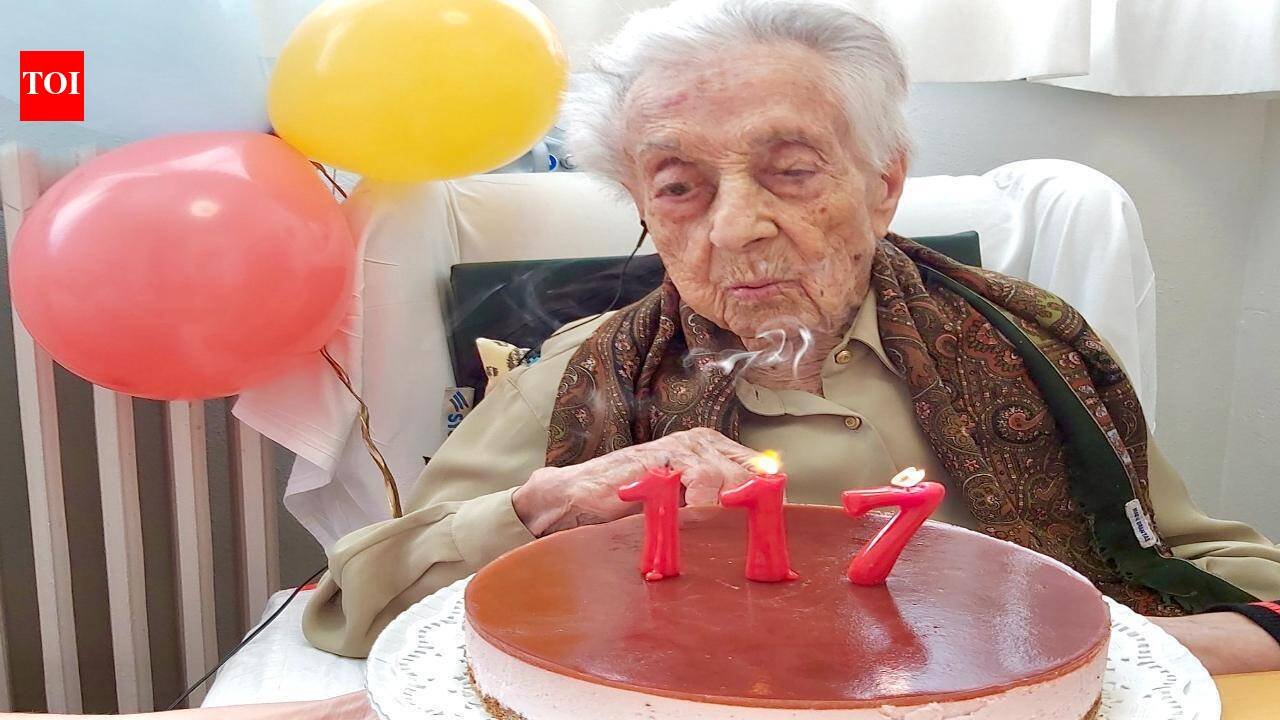
María Branyas Morera died at the age of 117 years and 168 days. But the findings from a 2025 study titled “The multiomics blueprint of the individual with the most extreme lifespan,” published in Cell Reports Medicine, in which an international team of researchers examined the genome, epigenome, metabolism, proteins and gut microbiome of María Branyas Morera, found a result that shocked them beyond their belief.The researchers collected blood, saliva and stool samples from Branyas when she was 116. They were hoping to understand how her body had remained remarkably resilient at such an age.The shocking findings?
Maria in her 1925 (Wiki)
And what they found was shockingSome parts of Branyas’ biology looked old like her telomeres, protective structures at the ends of chromosomes that generally become shorter with age, were extremely short.Her blood also showed signs of age-related changes in the immune system.But several biological systems appeared much younger and healthier than her age.What shocked them the most were the findings involved with epigenetics, the system of chemical modifications that helps regulate how genes are switched on and off.Scientists use these patterns of DNA methylation to build what are known as epigenetic clocks, molecular estimates of biological age. When the researchers applied several such clocks to Branyas’ samples, they repeatedly produced ages substantially below her actual age.23 years of age difference
Maria Brayan, New Orleans 1911 (Wiki)
The study put the average difference at around 23 years, although the result varied depending on the test and biological material examined. It’s a significant difference ior age gap.That does not mean Branyas’ entire body was literally the equivalent of a 94-year-old, or that biological-age tests can tell us someone’s “real” age. These clocks are statistical estimates based on molecular patterns.Her gut looked quite young for her ageThen there was her gut. The researchers found a relatively youthful composition of gut bacteria, including high levels of Actinobacteriota, a group that includes Bifidobacterium. These bacteria are often associated with a healthier gut environment and are known to decline with age.In Branyas’ case, it was one piece of a much larger biological puzzle. Her blood was unusually good at handling fatsAn unusual metabolic profileHer blood showed efficient lipid and cholesterol metabolism. Surprisingly, her blood also showed very low levels of inflammation. Researchers analysing thousands of proteins in her blood found signatures associated with low inflammation, efficient handling of fats and enhanced antioxidant and detoxification responses.That matters because chronic, low-grade inflammation is increasingly linked with age-related diseases. Problems with lipid metabolism, meanwhile, can contribute to cardiovascular disease.Variants of longevity
Oldest woman (Instagram)
Researchers also found variants of longevity, immune function, cardiovascular protection, brain health and mitochondrial function. The study identified rare variants in genes including EPHA2, MAL, CLU and HAPLN4, while also finding a combination of variants associated with longevity and protection from disease.Instead, the researchers described a combination of genetic resilience and favourable biological processes.Genes were only part of the storyHer genes may have given her an advantage, but they were not working alone.Researchers noted that Branyas did not smoke or drink alcohol and followed a Mediterranean-style diet rich in vegetables, fruits, legumes and olive oil. She was also known to eat plain yoghurt regularly.Brayans survived several important historical events:She lived through:Two world wars1918 influenza pandemicSpanish Civil WarThe COVID-19 pandemicShe became the world’s oldest verified living person in January 2023 and retained that distinction until her death on August 19, 2024, at 117 years and 168 days.
