






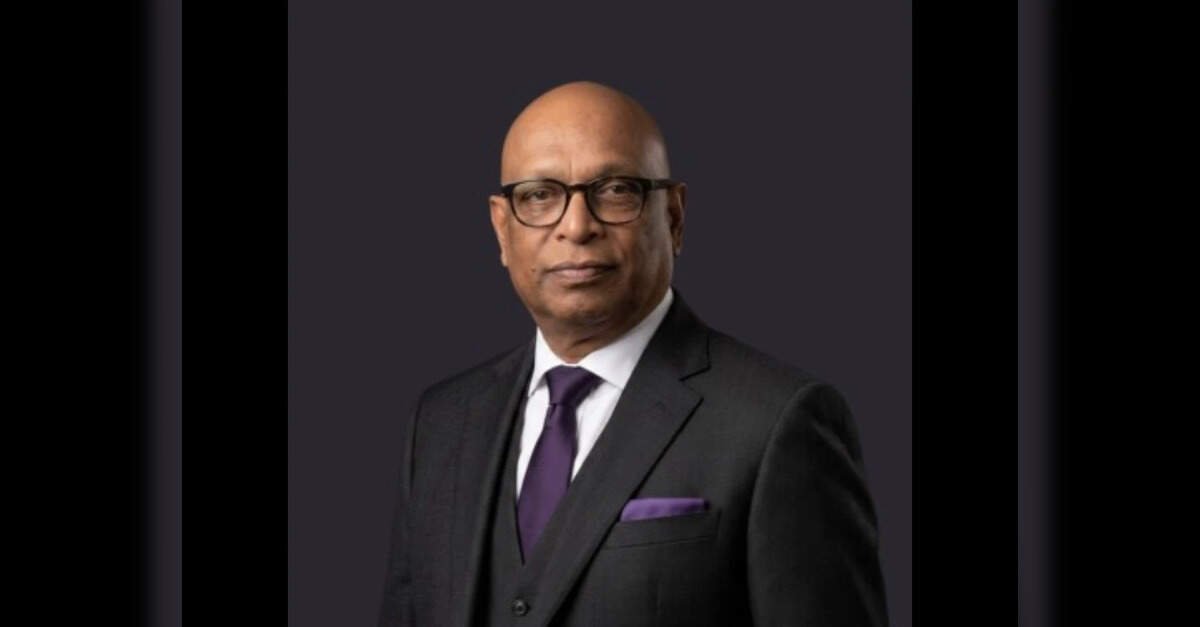
By Dr Ramesh Sinanan
In the past year, studying abroad simply meant relocating from your home country to another nation resulting in shifting far from home, adapting to a distant culture, and getting along in an entirely different environment. This phenomena has long been considered as the primary way to enhance international exposure and attain global education. Although it offers immense value, it is not the only route available.
These days, a new approach is gradually transforming higher education. Now students are able to secure internationally recognized degrees without stepping out of their homeland, all because of the advancements in digital learning and global connectivity. It means that the students can access the same curriculum, learning outcome and expert faculty while staying in a known environment.
This shift goes beyond mere convenience. It showcases a major change in the consumption and delivery of education. In an interconnected world, learning is not bounded by geography. Rather, it has turned out to be more flexible, accessible, and aligned with the requirements of modern learners who look for international exposure as well as personal or professional stability, of course in budget.
A new definition of global learning
The dream to secure a US degree is still held by millions. These degrees are generally associated with academic rigor, innovation, and a focus on critical thinking. Yet, studying abroad requires significant financial, personal, and logistical commitments, starting from tuition fees and living costs to visa processes and time away from personal and professional life.
Technological advancements have made it possible to rethink this model. Today learners can access resources, such as curricula, interaction opportunities, industry-experienced faculty, and connect with peers without having to physically relocate. This gave birth to a dominant concept: study globally, live locally.
What it means to study abroad from home
Securing a US degree off-site typically involves enrollment into programs that are specifically curated for digital or hybrid delivery. These programs aim to mirror major components of global education, including:
● Experiencing globally recognized curriculum
● Interaction opportunities with diverse peers
● Learning from industry-experienced faculties
● Studying with real-world case studies
● Developing applicable and career-ready skills
Instead of being limited by borders, learning is now defined by access and engagement.
Why this model is gaining momentum
1. Greater accessibility: One of the major advantages of this model is enhanced accessibility. Students who are unable to relocate due to lesser resources or flexibility can now attain global education from their homes itself.
2. Cost efficiency: Learning from home reduces numerous living expenses such as residential facilities, travel, and day-to-day costs. This makes global education more financially viable for a diverse audience.
3. Flexibility for diverse learners: Modern learners are not confined to recent school graduates. Many of them are working professionals, entrepreneurs, or people managing personal commitments. Flexible learning options enable them to align education with their commitments.
4. Continuity of career: For working professionals, to earn alongside studying is a key advantage. It enables learners to apply knowledge immediately and decreases the interruptions frequently associated with full-time study abroad.
The learning experience: Beyond the classroom
Here, a major question arises oftentimes, does off-site learning truly equals the depth of an on-site learning experience?
The answer to this question depends on the design of the program offered. Impactful global education irrespective of on-site or off-site priorities:
● Immersive learning systems
● Hands-on, practical assignments
● Global collaboration across diverse cultures
● Learning through active participation
If carefully designed, off-site programs can cultivate not only knowledge development but also critical thinking communication skills, and global awareness.
Global exposure without physical borders
One of the key advantages of global education is engaging with diverse peers. Online classrooms today tend to bring learners from different nations, cultural backgrounds, and industries. This diverse culture will lead to discussions, a wide range of viewpoints, and make learners ready for global partnerships. In multiple aspects, this replicates the realities of modern-day workspace, where learners continuously run across geography and time zones.
Who benefits most?
This model is specifically beneficial for:
● Working professionals who want to enhance their career portfolio without leaving their jobs
● Learners residing in geographical regions with limited access to global education ● Individuals seeking global education without going far away from their homes ● Learners who want to keep a balance between global exposure and local environment
This model is not a replacement of traditional study abroad, but instead an additional pathway that broadens the choices.
Career relevance in a changing world
The final goal of any degree depends on its ability to develop learners for industry-relevant challenges. The modern-day employers are giving more importance to skills, adaptability, and global awareness over the location of education.
Learners who have immersed in globally accredited either off-site or on-site often showcases:
➢ Enhanced problem-solving ability
➢ Multi-cultural communication skills
➢ Global confidence and adaptability
➢ Hands-on experience of industry trends
Such qualities are very crucial in a world wherein the line between global and local marketplace continues to blur.
The future of education
The development of flexible, global learning models signals an overall transformation in higher education. The future cannot be predicted with a sole dimension. Rather, it will be defined by choice, adaptability, and integration.
Learners may continue:
● Off-site learning combines with international residence for a limited time ● Work locally, learn globally
● Virtual collaboration with real-world application
Modern-day education is more about outcomes and impacts rather than just location.
Dr Ramesh Sinanan is the President of Birchwood University.
DISCLAIMER: The views expressed are solely of the author and ETEDUCATION does not necessarily subscribe to it. ETEDUCATION will not be responsible for any damage caused to any person or organisation directly or indirectly.


