


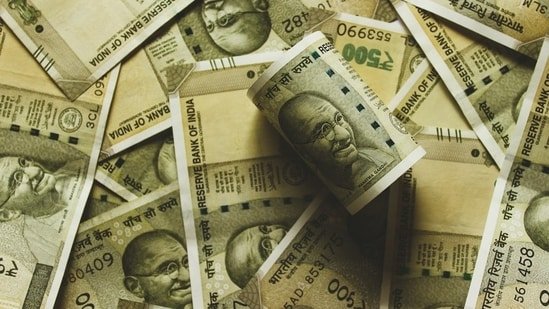
India is witnessing a constant rise in the number of millionaires and high net- worth individuals (HNIs). In the last financial year, 5,012 people entered this exclusive club. This took the strength of India’s millionaire club to more than 871,000. As an Indian, this may feel like a shimmering statistic but many aspects of the same report will leave you sad and dejected.
Income inequality is rising in India, leading to exasperation among the middle class.
For the uninitiated, HNIs are those who have property or any financial instrument worth $1 million, or ₹9.5 crore at current conversion rates, which they can quickly convert to cash if the need arises, after meeting all their financial obligations. Last year, this club witnessed an increase of 6% — comparatively lower than the 2021-2023 period (when the share market and real estate enjoyed a bull run) that saw the HNI club swell by upto 9%. These are the fortunate few who control 65-75% of India’s wealth and business.
However, we aren’t the only victims of income inequality. This tendency or trend is growing across the globe, whether in developed countries such as the US and Japan or middle-income countries such as China along with the entire group of developing nations. A report by Capgemini Research Institute and UBS Global Wealth suggests the world has witnessed an increase in average wealth, yet the common person’s financial condition has deteriorated. On the one hand, we have new money magnates such as trillionaire Elon Musk who are brushing the old-money royalty aside. On the other, their societies are seeing growing hardships among people at the bottom of the economic pyramid.
This is why the world is hurtling towards rising criminal activity and disaffection, borne out of a growing tribe of depressed people. The trend is posing a challenge not only to families, societies or administrative structures but even the integrity of nations. Let me begin with a few examples from our neighbourhood.
Recall the street demonstrations in Sri Lanka, Bangladesh, and Nepal. The disaffection among the Sri Lankan populace was so great that the demonstrators breached the heavy security cordon to enter and vandalise the Presidential palace. Public anger brought about a change of political leadership in these three countries. It’s a different matter that the “change” itself is experiencing a trial by fire today. Not only in South Asia but African nations such as Kenya, Latin American countries, and even our former colonial masters, the UK, have tasted the bitter pill of violent demonstrations.
During the violent demonstrations in our neigbourhood, I was closely watching the youth of these countries. Almost everywhere, reels showing politicians, the rich and the well-heeled went viral, with demonstrators lamenting the obscenely opulent lives of the former while they were struggling to put two square meals on the table.
In India, the situation mercifully isn’t that bad but it isn’t normal or easy either. Reports of educated young men and women attracted to cybercrime, lured by the “quick buck” and “reel worthy luxury lifestyle”, startle a conscientious person.
Consumerism has induced dangerous levels of fear of missing out (FOMO) among the youth. Income inequality adds fuel to the fire.
Now, let’s look at the other aspect. It is often said that if India has to progress economically, it needs to align its productivity and economic policies with global needs. That we have the world’s largest number of graduates and engineers sounds great, but when we assess their ability at the altar of productivity, we realise they are not up to the mark. According to a study, only 56.35% of Indian graduates are employable. This means more than 43% are condemned to struggle in the current scenario. Among the employable graduates, most are engineers. Again, within this pool, the highest demand is for computer science graduates — though the latter too are facing stiff challenges in these times of Artificial Intelligence. Are they prepared to deal with it? It is clear that even after knowing coding and theory, only 46% will be effectively employed. Even they will have to work hard to develop critical thinking and soft skills.
Also Read | What is the actual economic inequality in India? | Number Theory
The sad fact is we don’t have much time left to fill the gap. Enthusiasts who call India a young country may find their vigour dampening when they discover that we have 66% of the population in the working age bracket (15-59 years). The writing is on the wall. We have little time left to harness the demographic dividend. We will have to bridge our contradictions by the 2035-2040 timeframe. If we fail, then India runs the risk of becoming old before becoming rich.
It’s not a coincidence that most countries are facing the same malady. If they don’t increase the productivity of their workforce, they will lag behind in the age of automation and AI. It will increase the threat of neo-colonialism. We can already see green shoots of the trend.
Agencies such as the United Nations that are supposed to protect human rights and democracy are powerless in front of developed countries. This is the reason Russia’s invasion of Ukraine is entering its fifth year and Israel kept killing people in Gaza for months. Later, it attacked Iran along with the US. It is true that Ukraine is holding out against Russia with the help of Europe and the US. Iran too is making the US’ life miserable with the help of Russia and China. But the wars have endangered the current global order.
It also raises a question: What happens if the tragedy of national and social inequality is not addressed? Will it lead to mass starvation, a third world war, nuclear disaster, or something else?
Shashi Shekhar is editor-in-chief, Hindustan. The views expressed are personal.
