



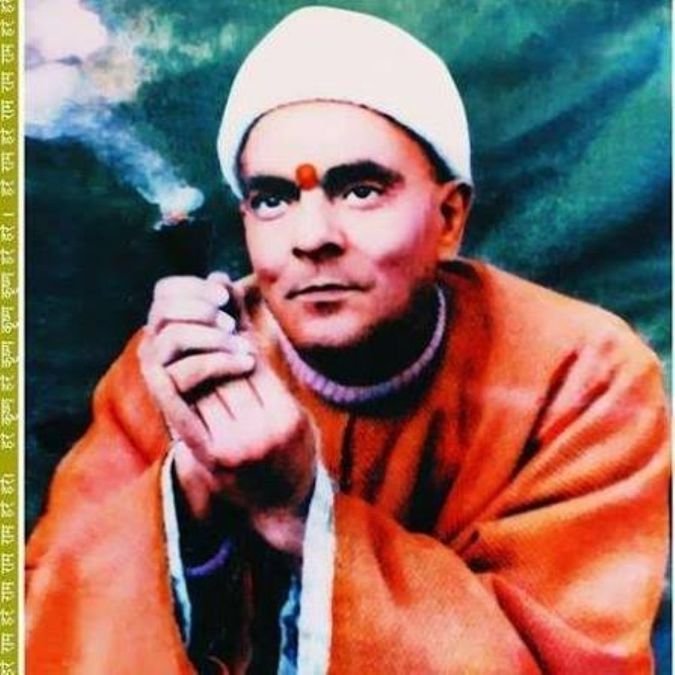
A Lineage of Faith and Fortune
Swami Nand Lal Ji was born in 1902 at Gurgari Mohalla, Zaina Kadal, Srinagar, to Pandit Sahaj Koul and Smt. Radha Mali. His birth fell during a particularly harsh Kashmiri winter, and family tradition holds that it coincided with the festival of Tilla Ashtami, when Pandit households along the Vitasta lit ceremonial fires to mark the occasion.
The Koul family- known locally as the “Kothdars” – were prosperous and well regarded. Nand Lal Ji’s forefathers had served as bankers to Maharaja Pratap Singh, and the household was known for its devotion to Goddess Sharika Devi of Hari Parbat. In every season, family members, men and women alike, would undertake the Parikrama to the shrine.
Tragedy struck early: his mother died while he was still young, leaving behind two sons and a daughter. It was his stepmother, however, who became his first spiritual guide – her simple, disciplined way of life is said to have quietly shaped the boy who would later renounce the world altogether.
Nand Lal Ji’s granduncle, Ram Koul, had earlier built a temple and dharamshala near the Maha Lakshmi shrine at Hari Parvat – structures that reportedly still stand today, testament to the family’s long-standing piety.
A Restless, Commanding YouthAs a boy, Nand Lal Ji was energetic and somewhat imperious, the kind of temperament often seen in the sons of well-off families. At school he studied up to the eighth class, and among his juniors were his cousin, the late Pandit Naranjan Nath Koul, and Pandit Sham Lal Sapru – known affectionately as ” Boetoth Ji” – both of whom he tended to dominate as boys. In time, both would become his devoted followers once he had transformed into a realized yogi.
After a brief, roughly eighteen-month attempt at business, Nand Lal Ji left home at age of fourteen in pursuit of Sadhana. Once he walked out of his father’s house, he never returned to worldly life – and for nearly twenty years afterward, he was largely untraceable, a wandering ascetic somewhere in the hills and forests of the region.
Initiation Under Swami Lal Ji of Banaras
Nand Lal Ji took the vow of brahmacharya and was formally initiated into sainthood by Swami Lal Ji of Banaras, himself a great yogi. So struck was the guru by his disciple’s spiritual attainments that he is said to have once offered Nand Lal Ji his own aasana – an honour the disciple, mindful of the proper guru-shishya relationship, declined to accept.
Swami Lal Ji reportedly remarked that Nand Lal Ji had accomplished, in a remarkably short span, a level of kriya yoga that had taken him personally years of practice to master. He is remembered to have said, in Kashmiri, that true greatness belonged only to one who could match Nand Lal Ji’s will and discipline – a measure of how far the young ascetic had progressed.
Sadhana at Bomai and the Ashram at Sharada
Much of Nand Lal Ji’s deep spiritual practice was carried out at Bomai Sadhamaleun near Sopore. He lived close to nature throughout his life – in his food, dress, and daily habits – and remained a strict vegetarian. He had a particular fondness for Sufiana music, and accomplished musicians of the tradition would travel to sit before him and perform.
After completing his Sadhana, Swami Ji settled at Sharada, in the Tangdhar area, establishing a small ashram at the historic Sharada temple – still known locally, largely among the Gujjar community of the area, as the Sharda Mai temple. His following there drew heavily from traders of Tikker village in present-day Kupwara.
Displacement in 1947 and a New Ashram at Tikker
When Pakistani raiders occupied the Sharada area in 1947, Swami Ji relocated with his followers to Tikker village in 1948, where he established a new ashram atop a hill. Interestingly, a Namberdar named Zaman Lone of Sharda gave his horse to Swami Ji to help him cross the LoC and reach Tikker.
Among the few precious belongings he brought with him from Sharda was a silver Mukut from Sharda Peeth. The same silver Mukut was installed by Swami Nand Lal Ji at the Sharda Mandir in Tikker when the temple was reconstructed in 1949. Due to unavoidable circumstances in the 1990s, the Mukut was kept in the safe custody of devotees.
An episode from this period of upheaval is remembered vividly by his devotees: a Sikh man fleeing armed raiders took refuge in Swami Ji’s ashram at Sharada. When the raiders demanded he come down to be shot for being a “Kafir,” Swami Ji calmly told him not to fear and to go down as instructed. As the story goes, the gunmen’s weapons repeatedly failed to fire; astonished, they eventually fell at Swami Ji’s feet, begged forgiveness, and left the Sikh man unharmed – though they urged Swami Ji himself to leave the area, warning him of the violence that would follow into the Valley.
During the construction of the new ashram at Tikker, workers digging the foundation reportedly encountered snakes and other creatures that departed without causing harm, after Swami Ji had reassured his devotees beforehand not to be afraid. A few feet underground, the diggers uncovered a fire tongs, a kangri, a chillum, scattered rice, a dhooni with ash, and a saligram along with fresh flowers – items his followers took as a sign that Swami Ji had performed Sadhana at that very spot in a previous life.
Turning to one bewildered devotee, Pandit Niranjan Nath, Swami Ji is said to have remarked, in Kashmiri, that there was no way to describe how much was hidden in that place. He instructed the workers to set the recovered articles – the chillum, kangri, tongs, and saligram – aside and proceed with laying the plinth.
The ashram commanded a sweeping view stretching as far as Sopore and Handwara. Swami Ji later established a second ashram at Hushoora, near Budgam, again showing what devotees describe as an unusually keen eye for site and setting.
Tales of Healing and Revival
Many miracles are attributed to Swami Ji by those who knew him, though his followers acknowledge that not all such accounts can, or should, be told. Among those still recounted: At Sopore around 1960–61, a temple priest ran to Swami Ji in distress, saying his wife had died. Swami Ji sent him to fetch a tumbler of water from the Vitasta and told him to sprinkle it on her face. She is said to have revived within minutes and outlived her husband.
On another occasion, a devotee who had passed away suddenly stirred back to life as his body was being ritually bathed, startling those present. He asked only for clothing, saying he would explain what had happened – though because his revival had not been sanctioned by Swami Ji, he permanently lost the power of speech even as he lived on for many years. This is said to have occurred after Swami Ji had already attained Nirvana.
A teenage boy in Jawahar Nagar, who privately doubted that a photograph of Lord Shiva on his wall held any real significance, later experienced a night of overwhelming light in his room, in which Lord Shiva himself reportedly appeared, seated and smiling. The next morning, Swami Ji, aware of the boy’s earlier doubt, asked him whether he still questioned the photograph’s meaning – leaving the boy to beg forgiveness at his feet.
A government employee facing certain conviction for misconduct came to Swami Ji in desperation the night before his court judgment. Swami Ji drew on his chillum, producing a burst of flame, and told him to set his worries aside. The court building and its records were destroyed by fire before the verdict could be delivered.
Perhaps the most elaborate account concerns a retired police officer from Kupwara who was rushed to SMHS Hospital in Srinagar and pronounced dead one night, to his wife’s anguish – only to show signs of life again as his body was being moved, terrifying those present. He later described being led by two figures through a vision of his own life, shown a hilltop with a lush garden on one side and a dark forest on the other, and being pushed toward the forest, where a thorn (later found to be an iron nail) pierced his foot – at which point he glimpsed Swami Ji in the distance and was allowed to return. He kept the nail until his death.
An Open Kitchen and Quiet Miracles at Tikker
Those close to Swami Ji recall an ashram where food was never denied to anyone – the langar ran daily, free of charge, feeding fifteen to twenty people or more at both morning and evening meals, and Swami Ji himself never accepted money from visitors or sought attention from important people. One devotee, Jai Kishan, is remembered to have silently wondered about the identity of Brahma, Vishnu, and Maheshwar.
One evening, three elderly Pandits in traditional dress appeared to be conversing with Swami Ji over tea; when Jai Kishan was asked to walk them partway down the hill, they vanished the moment he looked away. Swami Ji later told him this had been the answer to his unspoken question – the three visitors, he said, had been the Trikoti itself.
In another account, Jai Kishan was unexpectedly transferred from Civil Aviation to the security detail of the Prime Minister’s office not long after Swami Ji had asked him, in passing, whether he would like to see the world – a posting that eventually took him abroad in the Prime Minister’s entourage. A young airman from Hoshura who wished to volunteer for a peacekeeping post in Congo was told by Swami Ji, “Congo alone? Why not a world tour?” He was later inadvertently carried aboard a cargo flight to Washington, spent time under Indian Embassy care in the United States, and was eventually routed home via Brazil – before returning to India to serve, more prosaically, as a postmaster.
A Secular and Compassionate Outlook
Swami Ji’s following was never confined to one community. At Bomai, a Muslim resident named Mohammed Gosain is said to have once seen him in a vision resembling Lord Shiva astride Nandi, and became a devoted follower from that day. Another Muslim devotee, troubled that his cow had stopped giving milk, was told simply to place a pot before the animal and ask her, in Swami Ji’s name, to give milk – which she did at once.
Swami Ji is also remembered for a prophecy made in early 1967 warning that Kashmiri Pandits faced difficult times ahead – a warning his followers later connected to the community’s upheavals later that decade.
A Personal Testimony
One devotee, recalling his own school days in 1965, described being caught apparently cheating during a Matriculation physics examination – only to find, when the invigilator opened his answer book, that the concealed material had simply vanished, sparing him from punishment. Visiting Swami Ji’s ashram afterward, he was startled to be asked directly what had become of the book he had hidden during the exam – proof, in the devotee’s telling, that Swami Ji’s awareness and protection extended far beyond his physical presence, and continued for his followers even after his passing.
Nirvana and Succession
Swami Nand Lal Ji attained Nirvana in January 1966, on the day of Gauri Tritiya, at the Malviya Nagar residence of his disciple Pandit Prem Nath Sadhu in New Delhi. He left behind a wide circle of disciples and named three successors: Shri Vibhishan Ji, who continues at an ashram in Bordi; Swami Kral Bab Ji, who established an ashram at Gaddi, Udhampur, before his own passing some years ago; and Swami Mast Ram Ji, who has carried his guru’s name and teaching to ashrams in Jammu, Karala (Delhi), and Haridwar – the last able to host up to 2,000 pilgrims at a time, free of charge. Among his earliest and most senior disciples were two men initiated in his own lifetime: Swami Sedhmol, born Vedh Lal, and Swami Sham Lal Sapru, ” Boetoth Ji” – both of whom, like their guru, are remembered for quiet spiritual power exercised without any desire for recognition, and for their lasting contribution to the Kashmiri Pandit community.
A Living Tradition: Smriti Yatra & Sharda Ashtami Mahotsav 2026
Six decades after his Nirvana, Swami Nand Lal Ji’s memory continues to draw pilgrims back to the hills he once walked. The Mata Kheer Bhawani Asthapan Committee, Tikker, Kupwara, is organising the Swami NandLal Ji Smriti Yatra & Sharda Ashtami Mahotsav 2026, a spiritual and cultural yatra from 14th to 19th September, held in remembrance of the saint’s lifelong dedication to Kashmir’s spiritual and cultural revival.
The yatra will begin at Tikker on 14th September and proceed to Hushroo in Budgam, before moving on to Bomai (Sopore), Chandigam (Lolab), Kariham, and the Gaurishankar Mandir at Gotingoo, with devotees returning to Tikker thereafter. From there, the pilgrimage continues toward Jumagund and the banks of the Krishan Ganga, taking in Pushkar Naag, Kindreshwar Dham, Rudrawan (Ladewan), and Mokhta Sar, culminating in puja at the Krishan Ganga. The route then turns to Ramchandrun (Sita Sarayain) and Meeyal for further puja, Guru Vandana, and the offering of prasad.
Devotees are scheduled to return to Tikker on 18th September to begin preparations for the Sharda Ashtami celebrations, which will include a Maha Aarti, Sharda Abhishek, Vedic chanting, a talk on the life of Swami Nand Lal Ji, and the formal conclusion of the yatra (Yatra Sampan).
After decades, the same sacred Mukut is now set to be reinstalled at the Sharda Mandir in Tikker on the 19th September. The organisers have extended an open invitation to devotees and well-wishers of the land to join the pilgrimage – to walk together, remember together, and help preserve the spiritual heritage that Swami Nand Lal Ji devoted his life to nurture.
(The Author is a columnist)
