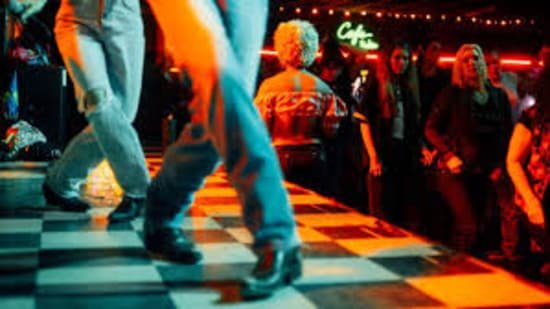
IT IS A frigid midweek evening in New York; snow has been pushed into large mounds on the pavement. But inside Desert 5 Spot, a Western-themed bar in Brooklyn, a group of 20-somethings is bringing the heat. Two instructors, going by the names Spitfire and Sugarfoot, guide the crowd through a line dance called “Texas Time”. It is carried out to the tune of “Good Luck, Babe!”, a pop song by Chappell Roan, an American hitmaker, and the participants twirl, hop and strut in their cowboy boots. “When we open the doors at six o’clock there’s a line of people waiting to get in,” Chase Manhattan, the bar’s moustached entertainment director, shouts over the music.
Representational image.
Line dancing is no longer the preserve of far-flung cowboys. When Desert 5 Spot started to host line dances around a year ago, only a handful of people showed up, Mr Manhattan recalls: now tickets sell out. Daily line-dancing classes at SCUFF, another organisation, are consistently full. In New York there is a gathering happening almost every night.
Across America Google searches for line dancing have been steadily climbing since 2020, peaking last year. A decade ago the perception of line dancing was that it was “corny and dorky and honky and stupid”, says Sean Monaghan, who co-founded Stud Country, a queer line-dancing event, in Los Angeles in 2021. Today people see it as “sexy”. Pop stars such as Sabrina Carpenter have incorporated line dances into their music videos.
What explains the step change? It helps that Americana is in vogue. Brands including Ralph Lauren, Christian Louboutin, Louis Vuitton and Prada have released clothing and accessories inspired by the cowboy aesthetic. Neo-Western dramas are having a revival on screen, too, and country music is surging in popularity, boosted in recent years by albums from Beyoncé, among others. In 2025 the genre was streamed 122.5bn times in America, according to Luminate, an analytics firm, behind only pop, rock, hip-hop and R&B.
Line dancing is also a stomping success on social media. There are millions of videos of line dancing online, showing young and old alike doing the boot-scootin’ boogie. Several first-timers to Desert 5 Spot say they discovered the event on Instagram and TikTok. And the dances themselves, which are quicker and shorter than other types of choreography, suit the pace of online short-form video well. You can see a particular move or section of a dance “done twice…in less than 30 seconds”, says Mackenzie Katz, who recently launched another line-dancing event in Manhattan.
Line dancing’s distinct etiquette chimes with the habits of the young in other ways, too. Most events prohibit drinks on the dancefloor to prevent partygoers from slipping over. It is a policy that might seem counterintuitive for a bar—Desert 5 Spot charges an entry fee in anticipation of the shortfall—but is potentially attractive to Gen Z patrons. Just 50% of Americans aged 18-34 reported drinking alcohol last year, according to Gallup, down from 59% in 2023. “A lot of our crowd either don’t drink at all or don’t really drink that much,” observes Spitfire.
Instead, young folk come to line-dancing bars in search of a different kind of high. Bylie is a 24-year-old regular at Desert 5 Spot; she comes alone, seeking community in the crowd. There is something about the synchronised scuffing and shuffling that dancers seem to find intoxicating in a socially atomised age. At Stud Country “people scream and holler, and the energy just gets really loud,” observes Mr Monaghan. “There’s just this connection that you feel with the people around you.” Toeing the line has never been so fun.