



When Yogi Adityanath assumed office as the chief minister of Uttar Pradesh in March 2017, he inherited a state that, despite its enormous demographic and economic potential, faced persistent challenges of poor infrastructure, weak industrialisation, concerns over law and order, and uneven development. Although Uttar Pradesh is India’s largest state by population and contributes significantly to the nation’s agriculture, culture and human resources, it had long struggled to translate these strengths into sustained economic growth.Over the past nine years, the Yogi Adityanath government sought to fundamentally alter this narrative through a governance model built on five key pillars—strong law and order, infrastructure-led development, industrialisation, digital governance, and transparent welfare delivery. Rather than introducing isolated schemes, the government attempted to create an integrated development framework that could transform Uttar Pradesh into a trillion-dollar economy and position it among India’s fastest-growing states.One of the government’s most ambitious objectives was to change both the perception and reality of governance. The administration consistently maintained that economic growth could only be achieved if investors had confidence in security, transparent administration and policy stability. Consequently, law and order became the cornerstone upon which subsequent development initiatives were built.
Restoring law and order: The first game changer
Perhaps the most defining feature of the Yogi government’s first term was its uncompromising focus on law and order. Prior to 2017, concerns over organised crime, land mafias, illegal mining, extortion and political patronage had created an atmosphere that discouraged investment and hindered economic activity. The government adopted what it described as a “zero-tolerance policy” against crime. Law enforcement agencies were empowered to act against organised criminal syndicates through provisions of the Gangsters and Anti-Social Activities (Prevention) Act and other legal mechanisms. The administration did not limit itself to arresting criminals but also targeted their financial networks by attaching illegally acquired assets and recovering encroached public land through the Anti-Land Mafia Task Force.The use of bulldozers to demolish illegally constructed properties became one of the most visible symbols of the government’s campaign against organised crime. According to the government, these actions sent a strong message that criminality would not be allowed to flourish under political protection.The administration argues that these measures substantially improved public confidence and created an environment conducive to investment. Business associations and investors increasingly viewed Uttar Pradesh as a safer destination for industrial activity, thereby establishing a direct relationship between law and order and economic development.
From agrarian state to manufacturing hub
With improved governance as the foundation, the government shifted its focus towards transforming Uttar Pradesh into a major manufacturing and industrial centre.The Industrial Investment and Employment Promotion Policy, introduced in 2017 and revised in 2022, became the umbrella framework for industrial growth. The policy provided investors with attractive incentives including capital subsidies, stamp duty exemptions, SGST reimbursements, interest subsidies and infrastructure support.However, one of the most remarkable features of the Yogi government’s industrial strategy was the introduction of sector-specific policies instead of relying on a generic industrial framework.Separate policies were formulated for electronics manufacturing, information technology, semiconductors, defence manufacturing, electric vehicles, renewable energy, food processing, logistics, warehousing, tourism, textiles, pharmaceuticals and data centres. These sector-specific incentives enabled Uttar Pradesh to compete aggressively with other industrial states.The Noida-Greater Noida-Yamuna Expressway region gradually evolved into one of India’s largest mobile manufacturing ecosystems, attracting global electronics companies. Simultaneously, dedicated policies for data centres positioned Uttar Pradesh as an emerging digital infrastructure hub.
Defence Industrial Corridor: A strategic initiative
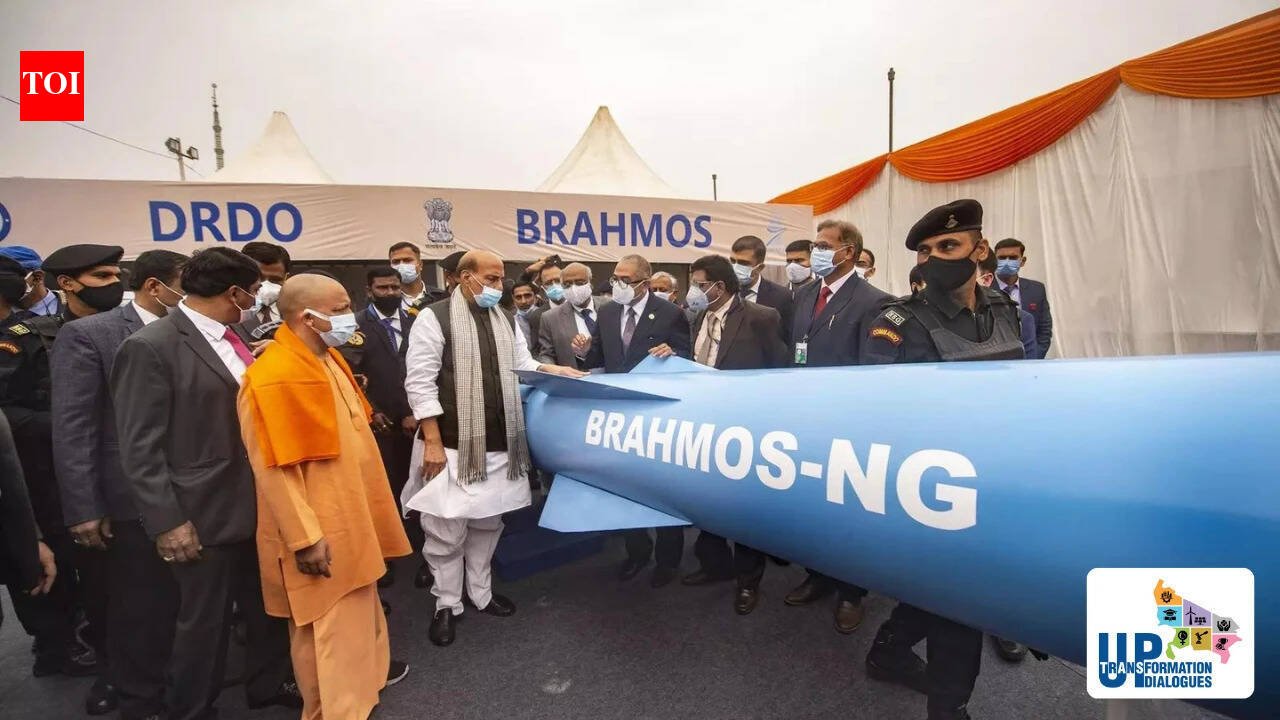
Among the government’s most ambitious initiatives was the Uttar Pradesh Defence Industrial Corridor. Spread across six nodes of Lucknow, Kanpur, Jhansi, Chitrakoot, Agra and Aligarh, the corridor seeks to strengthen indigenous defence manufacturing while promoting industrial development in Bundelkhand—one of the state’s historically underdeveloped regions.The project aims to attract both public and private investment in defence manufacturing, generate employment, strengthen MSMEs engaged in defence production and reduce India’s dependence on imported defence equipment.The corridor also complements the Government of India’s “Make in India” and “Atmanirbhar Bharat” initiatives.
Global Investors Summit: Showcasing Uttar Pradesh to the world
The Global Investors Summit organised in Lucknow in February 2023 marked a watershed moment in Uttar Pradesh’s investment journey.The summit attracted participation from leading Indian industrial houses, multinational corporations, diplomats and investors from numerous countries. Investment proposals worth several lakh crore rupees were signed across sectors including manufacturing, renewable energy, logistics, healthcare, tourism, education and urban development.Unlike previous investment efforts, the government closely monitored implementation through regular groundbreaking ceremonies and project reviews. Equally significant was the emphasis on balanced regional development. Investment proposals were deliberately encouraged not only in western Uttar Pradesh but also in Bundelkhand, Purvanchal and central Uttar Pradesh, thereby reducing regional disparities.
Ease of doing business: Reforming government processes
Attracting investment requires more than policy announcements. Investors also expect speedy approvals, transparency and minimal bureaucratic hurdles.Recognising this, the Yogi government introduced extensive administrative reforms centred around digital governance. The flagship initiative in this area was the Nivesh Mitra portal—a comprehensive single-window clearance system integrating numerous government departments on one digital platform. Entrepreneurs could submit applications online, monitor progress, receive approvals digitally and obtain clearances within prescribed timelines.The system significantly reduced physical interaction between investors and officials, thereby limiting opportunities for delays and corruption.Successive upgrades transformed Nivesh Mitra into one of India’s most advanced investment facilitation platforms. Along with other governance reforms, it helped Uttar Pradesh emerge as one of the country’s leading “Achiever” states in Ease of Doing Business rankings.
Digital Governance Beyond Industry
The emphasis on technology was not restricted to industrial approvals alone.The government expanded online citizen services across departments through e-office systems, digital certificates, e-tendering, online grievance redressal, GIS-based monitoring and transparent procurement systems.The Integrated Grievance Redressal System (IGRS), CM Helpline and various online citizen-centric platforms significantly improved responsiveness and accountability.By leveraging technology, the administration sought to minimise discretion, increase transparency and improve the efficiency of governance.These reforms collectively established the administrative foundation upon which the broader transformation of Uttar Pradesh was built.
Welfare and inclusive growth
While industrialisation and administrative reforms laid the foundation for Uttar Pradesh’s transformation, the Yogi Adityanath government simultaneously focused on strengthening the state’s traditional economic strengths through MSMEs, agriculture, infrastructure and technology-enabled welfare delivery. The objective was to ensure that the benefits of economic growth reached both urban centres and rural communities.
One District One Product: Reviving traditional industries
Among the most innovative initiatives of the Yogi government was the One District One Product (ODOP) programme, launched in January 2018. The scheme sought to revive the traditional products and crafts for which each of Uttar Pradesh’s 75 districts is historically known.Instead of adopting a uniform industrial strategy, ODOP recognized the unique economic identity of every district. Whether it was Kannauj’s world-famous attar, Bhadohi’s hand-knotted carpets, Moradabad’s brassware, Aligarh’s locks, Gorakhpur’s terracotta, Lucknow’s chikankari embroidery, Varanasi’s silk sarees or Firozabad’s glassware, the programme aimed to modernise production while preserving traditional craftsmanship.The government supported artisans through easy bank credit, subsidised loans, design development, modern packaging, branding assistance, quality certification, skill development and participation in national and international trade fairs. Common Facility Centres equipped with advanced machinery enabled small producers to improve quality without making large capital investments.An equally important feature of ODOP was its focus on market access. Products were promoted through e-commerce platforms, government exhibitions, airports, railway stations and dedicated retail outlets. As a result, Uttar Pradesh witnessed substantial growth in MSME exports, while lakhs of artisans, women entrepreneurs and rural households found new livelihood opportunities. Today, ODOP has emerged as one of the state’s most successful and widely appreciated development initiatives.
Expressway revolution: Creating India’s logistics hub
If ODOP transformed the grassroots economy, the expressway network transformed the state’s physical geography. Over the last nine years, Uttar Pradesh earned the distinction of becoming the “Land of Expressways.” The Purvanchal Expressway, Bundelkhand Expressway and Gorakhpur Link Expressway became operational, while construction of the nearly 600-kilometre Ganga Expressway progressed rapidly. These projects dramatically reduced travel time, improved connectivity and integrated previously isolated regions into the mainstream economy.The Purvanchal Expressway opened eastern Uttar Pradesh to faster movement of agricultural produce and industrial goods. The Bundelkhand Expressway became a lifeline for one of India’s most backward regions while supporting the Defence Industrial Corridor. The Ganga Expressway is expected to emerge as the state’s principal east-west economic corridor, linking western Uttar Pradesh with Prayagraj.Importantly, these expressways are not merely highways. Industrial parks, logistics hubs, warehousing facilities, food processing units and commercial centres are being developed along these corridors, thereby creating employment and attracting investment. Reduced logistics costs have also improved the competitiveness of Uttar Pradesh’s manufacturing and agricultural sectors.
Airport expansion and multi-modal connectivity
Complementing the expressway revolution was the rapid expansion of airport infrastructure.The operationalisation of international airports at Ayodhya and Kushinagar, along with the development of the Noida International Airport at Jewar, has significantly strengthened Uttar Pradesh’s connectivity with domestic and international markets. Regional airports developed under the UDAN scheme have further expanded air connectivity to smaller cities.Metro rail expansion in Lucknow, Kanpur and Agra, together with improved railway infrastructure and inland waterways, has contributed to creating an integrated multi-modal transport network. These developments are expected to support tourism, manufacturing, exports and logistics over the coming decades.Digital governance and transparent welfare deliveryTechnology became one of the defining features of governance during the Yogi government’s tenure. The expansion of Direct Benefit Transfer (DBT) fundamentally transformed the implementation of welfare schemes. Financial assistance under agricultural programmes, scholarships, pensions, Kanya Sumangala Yojana, old-age pensions, widow pensions, disability pensions and numerous other schemes began reaching beneficiaries directly into their bank accounts.The Public Distribution System also underwent major reforms through Aadhaar authentication and electronic Point-of-Sale machines. These measures reduced duplication, improved transparency and ensured that foodgrains reached eligible beneficiaries.The government also digitised procurement payments to farmers purchasing wheat and paddy, thereby reducing delays and leakages. Digital governance was further strengthened through e-office systems, online certificates, e-tendering, IGRS grievance redressal and technology-enabled monitoring of development projects.
Agriculture and rural prosperity
Agriculture remained a priority sector throughout the nine-year period. The government focused on increasing farmers’ income through better procurement systems, expansion of irrigation, diversification into horticulture and dairy, food processing, ethanol production and rural infrastructure development.One of the most significant achievements was timely payment to sugarcane farmers and promotion of ethanol production, which improved the financial health of sugar mills while creating additional income streams. The government also promoted food processing industries, cold storage infrastructure and value addition to agricultural produce.Large-scale rural road construction, electrification, housing programmes, drinking water supply and irrigation expansion improved the quality of life in villages while strengthening the rural economy.Other hallmark policies of nine yearsSeveral additional initiatives collectively defined the governance model of the Yogi government:Mission Medical Education: Uttar Pradesh witnessed an unprecedented expansion of medical colleges under the vision of “One District, One Medical College,” substantially improving healthcare infrastructure.Power Sector Reforms: Continuous investment in electricity generation, transmission and rural electrification ensured improved power supply for households, agriculture and industry.Startup and Innovation Ecosystem: Through the Startup Policy and incubation support, the government encouraged innovation among young entrepreneurs and educational institutions.Tourism and Religious Infrastructure: Major projects such as the Kashi Vishwanath Dham Corridor, Ayodhya redevelopment, Mathura-Vrindavan development, Buddhist Circuit expansion and eco-tourism initiatives significantly boosted tourism and local employment.Women’s Empowerment: Expansion of Self-Help Groups under the Uttar Pradesh State Rural Livelihood Mission, Mission Shakti, financial inclusion programmes and entrepreneurship initiatives strengthened women’s participation in the economy.Urban Development: Smart City projects, metro rail expansion, drinking water supply, sewerage systems, housing and solid waste management transformed urban infrastructure across major cities.While large investments have been announced, ensuring their timely implementation and maximizing employment opportunities attracted proper attention of Yogi Government. Further strengthening skill development through Industrial Training Institutes (ITIs), polytechnics and vocational education is essential to meet the workforce requirements of emerging industries. Administrative reforms at the district and municipal levels remain a continuing priority to ensure that state-level policy reforms are fully reflected at the grassroots.Thus the period between 2017 and 2026 marks one of the most significant phases of governance reform in Uttar Pradesh’s history. Through a combination of improved law and order, investment-friendly policies, digital governance, expressway-led infrastructure development, MSME promotion, welfare reforms and administrative modernization, the Yogi Adityanath government sought to fundamentally reshape the state’s economic and governance landscape.Policies such as Zero Tolerance against Crime, One District One Product (ODOP), Nivesh Mitra, the Global Investors Summit, the Defence Industrial Corridor, the Expressway Network, Direct Benefit Transfer, Mission Shakti, the Startup Policy and the One District One Medical College initiative have emerged as the defining hallmarks of the government’s nine-year tenure.Today, the state is increasingly viewed not merely as India’s largest state by population but as one of its most dynamic economic frontiers, playing a pivotal role in India’s aspiration of becoming a developed nation and positioning itself firmly on the path toward becoming a one-trillion-dollar economy.


