



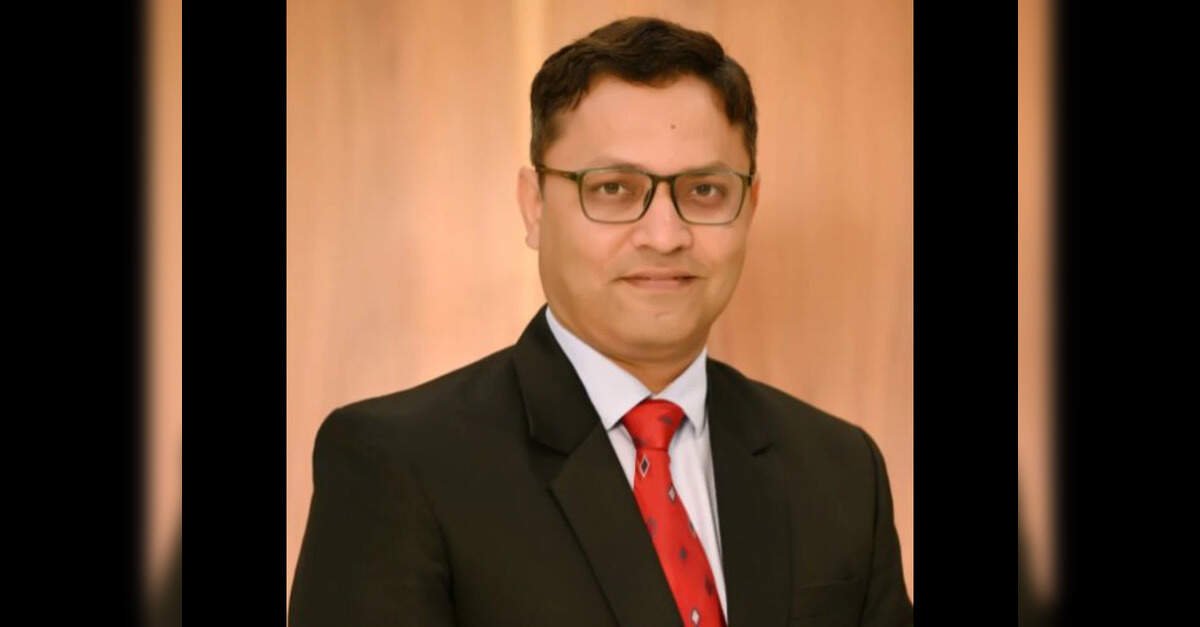
By Dr Anshuman Jaswal
Historically, knowledge has not always followed the map of power. Some of the world’s most influential centres of learning developed outside the dominant metropolitan centres of their time. London is the United Kingdom’s political and economic centre, but Oxford and Cambridge became globally recognised centres of higher learning in their own right. In the United States, Yale, Princeton, Harvard, and MIT, developed outside the country’s largest metropolitan centre. Their academic ecosystems nevertheless remained connected to wider networks of ideas, talent, research and enterprise, allowing knowledge and innovation to flow across geographical boundaries though retaining their own identities.
India’s own intellectual history offers an even older reminder. Nalanda, described as a centre of learning from the 5th century CE to 1200 CE, flourished in ancient Magadha, away from what is now considered the major metropolitan city of Patna. Takshashila in the north-west and Ujjayini in central India emerged as important centres of intellectual and cultural life. These centres drew scholars and students because of the quality and breadth of learning they offered, demonstrating that knowledge ecosystems have long been formed by scholarship and intellectual interest rather than by proximity to a metropolis.The advantage of being a notch away
There are practical and logical reasons why universities have often developed slightly away from metropolitan centres. For one, universities require space, concentration and an atmosphere supportive of sustained research, collaboration, and intellectual work.
Space, at its most basic, means land. India’s largest metros are running out of it, and university campuses need room to breathe: labs, libraries, hostels, and student life. Metros haven’t stopped wanting these institutions. They cannot offer them the acreage anymore. Indore illustrates the Tier 2 advantage: an educational campus in Indore can have the space needed for academic, research, and student activities while staying linked to the city. It’s one reason the city houses both an IIM and an IIT. With most of Indore accessible within 45 minutes and strong road-rail links, being a notch away from the urban core need not be a constraint.
For universities, the relevant question is therefore whether they are connected to the networks of people, institutions, ideas and opportunities that matter, rather than whether they sit within a metropolitan boundary. Improved road, rail and air connectivity, combined with digital technology, has reduced the disadvantages formerly associated with being outside a major city.
Tier-2 cities can offer a compelling quality-of-life
The quality-of-life gap between metros and emerging cities has narrowed. Digital access, contemporary services, and upgraded urban infrastructure mean students need not sacrifice access to culture, entertainment, brands, technology, food or lifestyle by studying outside a metro. Cities such as Indore can also offer shorter commutes and a lower cost of living, giving students and professionals affordability and quality of life that are difficult to replicate in metros.
A new education map is taking shape
The shift is visible in how students choose where to study and build their careers. The ETEducation report provides evidentiary support for this shift. Higher education enrolment has crossed 4.33 crore, and universities in cities like Coimbatore, Gandhinagar, Jaipur, Indore, and Bhubaneswar are receiving more applications. These universities are witnessing rising interest in AI, semiconductors, analytics, design, and other future-centric programs.
Students who previously sought admission in top cities including Delhi, Mumbai, and Bengaluru, or even overseas, are now considering emerging cities. Chandigarh University Online, for instance, reported fourfold growth between FY24 and FY26, with learners from over 900 cities.
This reflects a change in what students expect from an institution. They are increasingly asking: Are there research opportunities? Can they work on live industry problems?
Students are starting to evaluate the ecosystem around a university, not just the university itself.
Global Capability Centres (GCCs) are changing the economic geography
Tier-2 cities are increasingly entering the conversation around GCC expansion, not only as low-cost locations but as emerging pools of specialised talent. In June 2026, hiring within Tier-2 cities in the GCC ecosystem grew 23% year-on-year, almost twice the pace recorded in metros.
A GCC brings engineers, analysts, managers, and technologists into the city, creating networking opportunities, exposure to international practices, and a base of future mentors, founders and research collaborators.
If GCCs show global companies taking knowledge-intensive functions to emerging cities, India’s startup ecosystem shows entrepreneurs increasingly building businesses from those cities. India now has more than 2.35 lakh DPIIT-recognised startups with more than half emerging from Tier-2 and Tier-3 cities.
Global companies decentralising work and entrepreneurs building from wherever they are point in the same direction. But neither trend alone creates a knowledge economy. It’s created when education, research, entrepreneurship and talent reinforce one another.
From creating talent to retaining experience
Knowledge compounds when people stay in the ecosystem. The next challenge for Tier-2 India is therefore retaining experienced talent. There is a difference between having graduates and having a deep talent market. An Economic Times report found that Tier-2 GCCs took over 75 days to fill leadership positions, compared to 42-56 days in metros. The opportunity lies in converting a stable talent base into a sufficiently deep one, where professionals can build careers without having to move to a metro.
However, emerging cities do have an advantage. A recent report by ANSR identifies lower attrition and stronger workforce stability in Tier-2 cities, while Zinnov reports 25% growth in digitally skilled talent in these cities over the past two years.
What separates a growing employment location from a genuine knowledge economy is a self-reinforcing cycle. Once a city develops sufficient talent depth, the relationship between talent and opportunity becomes circular: experienced professionals mentor younger talent; companies expand where the right skills exist; universities gain industry partners and opportunities for applied research; and entrepreneurs benefit from access to experienced professionals.
Tier-2 India does not need another Bengaluru
There is little value in every emerging city trying to reproduce Bengaluru. Different cities can build specialised knowledge economies around their own industrial, academic and entrepreneurial strengths while developing new layers of technology, research, entrepreneurship and higher education. For instance, project SAMARTH at IIT Gandhinagar brings together government, academia, and industry around semiconductor research. At NMIMS Indore, a partnership with Vibe6 Digital is establishing a Centre of Excellence in AI, ML. Blockchain, IoT, and Web3.
These projects are early pieces of the puzzle. The harder ones remain: deeper research capacity, greater access to capital, stronger industry-academia collaboration, better senior talent pools, and infrastructure which supports professionals across their careers. The opportunity is significant. So is the work required to turn a promising hub into a self-sustaining ecosystem.
Conclusion
The geography of knowledge has always been more expansive than the geography of political and commercial power. India’s next phase of growth offers an opportunity to build on that history.
A successful Tier-2 city will be one where a university produces talent, industry creates opportunity, startups create ambition, experienced professionals transfer knowledge, and research solves local as well as global problems. Each part strengthens the others. That is the flywheel.
Once it starts turning, the city’s competitive advantage changes. It’s not merely just cheaper than a metro; its relationships, expertise and knowledge become assets that are hard to duplicate.
For decades, India’s talent moved towards economic opportunity. The next phase could be different: with a wider network of cities creating, attracting and retaining talent, innovation and knowledge, each shaped by its own economic strengths, economic opportunity may increasingly move towards India’s talent.
Dr Anshuman Jaswal is the Director of NMIMS Indore.
DISCLAIMER: The views expressed are solely of the author and ETEDUCATION does not necessarily subscribe to it. ETEDUCATION will not be responsible for any damage caused to any person or organisation directly or indirectly.
