






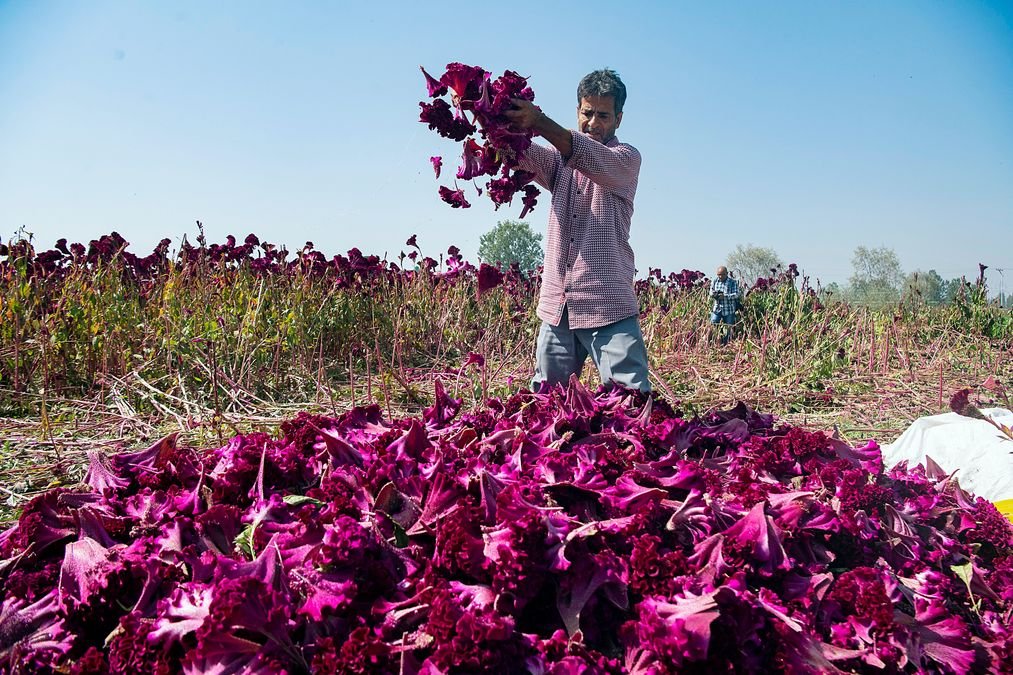
Srinagar, Oct 17: Mawal, the crimson cockscomb flower (Celosia cristata), is a traditional natural colouring ingredient in Kashmiri cuisine, used to give food its distinctive red hue. Its dried petals are steeped in water to extract a crimson liquid used in Wazwan preparations, particularly rista, Roganjosh and Marchiwangan korma. The flower is also used in certain sweet dishes, extending its culinary role beyond savoury food. Although Mawal has long been part of Kashmir’s food culture, scientific evidence establishing the health benefits of consuming it in the quantities used in everyday cooking remains limited.
In Kashmir, the appearance of food is closely connected to its cultural significance. At weddings and other celebrations, Wazwan, the Valley’s elaborate multi-course feast, is recognised for its rich gravies, carefully prepared meat dishes and traditional cooking techniques.
Among these preparations, rista is known for its deep red gravy. Mawal has traditionally been used to contribute to this colour, with cooks extracting the pigment from dried petals before adding the liquid during cooking. The practice reflects culinary knowledge passed down through generations of Kashmiri wazas, whose techniques help preserve the distinctive character of the feast.
The flower’s use is not limited to Wazwan. Mawal is also used in certain traditional sweet preparations, where its extract adds colour and visual appeal. Its presence in both sweet and savoury cooking illustrates how local ingredients have become part of Kashmir’s wider food culture.
An autumn harvest rooted in tradition
Mawal cultivation follows a seasonal cycle in Kashmir, with flowers harvested as they mature. While the plant can grow during the warmer months, the main harvesting activity reported around Srinagar takes place in autumn, particularly in October. In Noor Bagh on the outskirts of Srinagar, farmers were harvesting the crimson flowers in early October 2026, picking them by hand before spreading them out to dry.
The harvesting process requires careful timing because the flowers must be collected at a suitable stage to preserve their colour. After picking, they are dried in the sun and stored for later use. The dried material is then used to prepare the natural colouring ingredient added to traditional dishes.
A traditional alternative to artificial colouring
The use of Mawal offers an alternative to synthetic food colours. The flowers are dried and stored before being steeped in water, allowing their colour to be extracted when required. For traditional cooks, the process is part of established kitchen practice rather than simply a way to improve presentation. The final colour of a dish depends on the recipe, the quantity of Mawal used and other ingredients, including spices.
As interest in traditional and locally sourced ingredients grows, Mawal also raises questions about the preservation of indigenous crops and the knowledge associated with them. Maintaining its culinary use depends on the availability of the flower and continued demand from households, caterers and restaurants.
What does science say about Mawal’s health benefits?
Beyond its culinary role, Mawal has attracted interest because of the naturally occurring pigments and other plant compounds found in Celosia species. However, its traditional use as a food colour should be distinguished from claims about medicinal properties.
Plants in the Celosia genus have been investigated for phytochemicals, including compounds that may show antioxidant activity in laboratory studies. Antioxidants can neutralise certain free radicals under specific conditions, but laboratory findings alone cannot establish that consuming Mawal extract provides measurable health benefits. Further research is needed to determine whether the specific flower preparations used in Kashmiri cooking have meaningful effects on human health.
The flower contains naturally occurring pigments responsible for its colour, and their concentration can vary depending on the plant variety, growing conditions, storage and extraction method. While research on some Celosia plants has examined their antioxidant properties, these findings cannot automatically be applied to every species, plant part or preparation. Mawal’s long-standing place in Kashmiri kitchens establishes its culinary and cultural importance, but traditional use alone does not prove that it prevents or treats disease. There is insufficient reliable clinical evidence to claim that the small quantities of Mawal extract used in Wazwan or sweets improve immunity, prevent chronic illnesses or treat specific health conditions.
Natural does not automatically mean risk-free
Although Mawal is used as a natural colouring ingredient, its quality depends on proper cultivation, harvesting, drying and storage. Contamination or poor handling can affect the safety of the material used in food. Further research could establish which compounds are present in its petals, whether they remain stable during cooking and what evidence exists regarding their safety at customary consumption levels. Such findings would help distinguish Mawal’s established culinary role from health claims that remain unproven.
Preserving a culinary tradition
Mawal connects Kashmir’s agricultural practices with its food traditions. Its use in Wazwan and certain sweet dishes illustrates how a locally familiar flower has become part of the region’s culinary identity. Renewed interest in its cultivation could provide opportunities for farmers if demand remains strong. However, claims about an agricultural revival or expanding export markets need to be supported by verified production and trade figures.
For Kashmiri Wazas, Mawal remains an ingredient associated with the colour of familiar dishes and the preparation of food for important occasions. Preserving its use means retaining not only a traditional natural colouring practice but also a small yet significant part of the knowledge that shapes Kashmiri cuisine.


