


From a perfect 300/300 to an Asian Physics Olympiad medal, India’s top JEE Main 2026 rankers took different paths. But they’re all headed to the same destination.
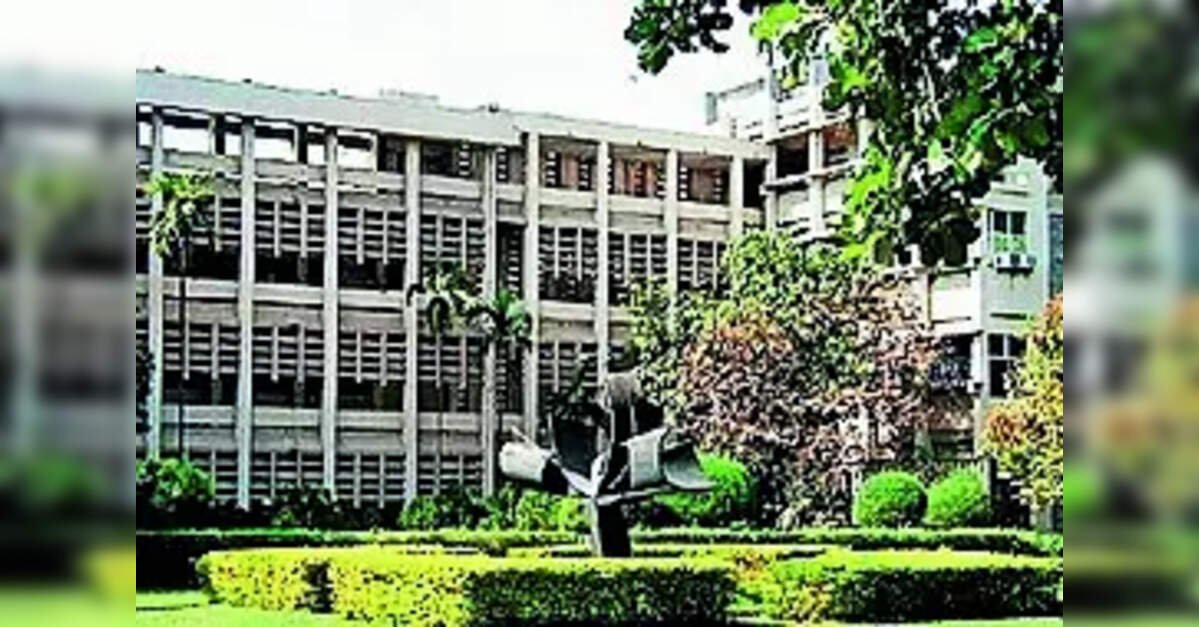
They cracked India’s most competitive exam, scored near-perfect marks against 1.5 million rivals in the JEE Main 2026 result, just as JEE Advanced 2026 registration begins today, and landed in the top 10 of a nation of 1.4 billion. Yet when asked what comes next, four of India’s best performers gave nearly identical answers, IIT Bombay, Computer Science.
Not AI. Not research. Not startups. Just one answer.
Kabir Chhillar (AIR 1), Arnav Gautam (AIR 5), Shubham Kumar (AIR 6), and Rishi Premnath (AIR 8) come from different cities, backgrounds, and preparation journeys, with all four having undergone structured coaching support at institutes such as Allen Career Institute alongside rigorous self-study. But their post-JEE goal converges with striking clarity: securing IIT Bombay CSE- India’s most competitive engineering seat.
Four students. Top 10 of India. One destination.
It is a striking convergence that tells a story far bigger than any individual topper, about aspiration, economics, brand power and what a generation of India’s sharpest minds believes success looks like in 2026.
The boy who scored 300: Kabir Chhillar, AIR 1
Kabir Chhillar is 17 years old, from Gurugram, and the son of an IITian. His father Mohit Chhillar works at a private company; his mother Priyanka is a school teacher. He scored 98% in Class 10.
What set him apart, he says, was not what he studied- but how.
“I attribute the primary reason for my success to the guidance provided by my faculty members. During self-study, I prioritise both my attention span and the quality of learning. After every test, I conducted a self-analysis and focused most intensely on the specific areas where I identified shortcomings.”
The discipline extended to how he managed information overload, a challenge every JEE aspirant knows intimately. Rather than attempting to cover everything, Kabir built a system of small, manageable targets, concise notes, and regular revision cycles.
“Rather than rote learning, my greatest strength has been my ability to truly understand every topic and apply that knowledge. I broke down my studies into small, manageable targets, created concise notes, and made regular revision a habit.”
He also ensured mental recovery remained part of his routine.
“I also spared time to spend with my friends, which helps me stay mentally refreshed.”
For Kabir, IIT Bombay CSE is not the end goal, it is a stepping stone. His next target is MIT, reflecting a generation that sees IIT as a launchpad to global opportunities.
The Olympiad Edge: Arnav Gautam, AIR 5
Arnav Gautam’s journey reflects the power of long-term preparation. A Kota resident, he has been associated with coaching since Class 6.
He participated in multiple Olympiads, from Junior Science (2023) to Astronomy (2024) and Physics (2025), where he won a Bronze at the Asian Physics Olympiad.
“Preparing for national and international Olympiads helped strengthen my academic foundation. While self-study is crucial, the support of coaching is equally essential for receiving the right guidance.”
While coaching played a role, toppers consistently emphasised that self-analysis, consistency, and independent problem-solving were equally critical to success.
Olympiad preparation gave Arnav an edge, pushing him beyond syllabus learning into conceptual depth. Yet, despite this academic breadth, his destination remains unchanged: IIT Bombay CSE.
From Gaya to AIR 6: Shubham Kumar
Shubham Kumar’s story stands out for its simplicity and discipline. Hailing from Gaya, Bihar, he moved to Kota for preparation and secured AIR 6 with 295 marks.
His preparation focused on consistency and clarity.
“I engage in self-study for 6 to 8 hours daily. I revise the topics taught in class on the very same day and regularly analyse my preparation level by taking mock tests.”
“I focus on concepts, as having clear concepts makes it easier to solve problems.”
He handled pressure by maintaining focus and self-belief.
“I always kept my focus on my goal and maintained faith in myself.”
His dream mirrors the others: IIT Bombay CSE.
The Comeback Story: Rishi Premnath, AIR 8
Rishi Premnath’s journey highlights the importance of course correction. After scoring 262 in the January session, he made a sharp comeback to secure AIR 8.
His strategy was precise, daily mock tests in the final week, deep revision, and focus on weak areas.
“Many of the exam questions were similar to the mock tests, which greatly benefited me. I also thoroughly revised previous years’ question papers.”
His improvement underlines a key insight: JEE Main is increasingly about analysis and optimisation, not just knowledge.
His goal, too, is clear, IIT Bombay CSE.
The numbers behind the obsession
The JEE Main 2026 result once again highlighted the extreme competition, with over 15.38 lakh aspirants and only a fraction making it to top engineering institutes.
With JEE Advanced 2026 registration opening, the focus now shifts to the next stage, where these toppers will compete again for final IIT ranks.
The CSE average package at IIT Bombay stands at ₹28 LPA, with the highest domestic offer touching ₹2.2 crore and international offers going up to ₹3.67 crore.
There are only 170 CSE seats at IIT Bombay.
In JEE Advanced 2025, the closing rank for General category CSE was AIR 66.
The math is staggering: from 15.38 lakh aspirants to just a few dozen securing the most coveted seat.
This is not a department. It is a needle’s eye.
More than a degree — a launchpad
IIT Bombay CSE is not just a course, it is a gateway to global opportunities.
Its alumni network spans top tech firms, startups, and global academia. The ecosystem, combined with strong placements and brand value, makes it the most sought-after engineering destination in India.
For many toppers, including Kabir, it is also the first step toward global ambitions.
The question that remains
The convergence of India’s top rankers on a single branch raises a larger question: is the country’s brightest talent being funnelled into one narrow path?
While AI, data science, and interdisciplinary programmes are gaining popularity across IITs, this alternative landscape is still rarely considered among the very top ranks.
Whether this reflects clarity of ambition or a lack of diversification in aspirations remains an open question.
JEE Advanced 2026 registration begins April 23, with qualified candidates now preparing for the next decisive stage of the IIT admission process.
