



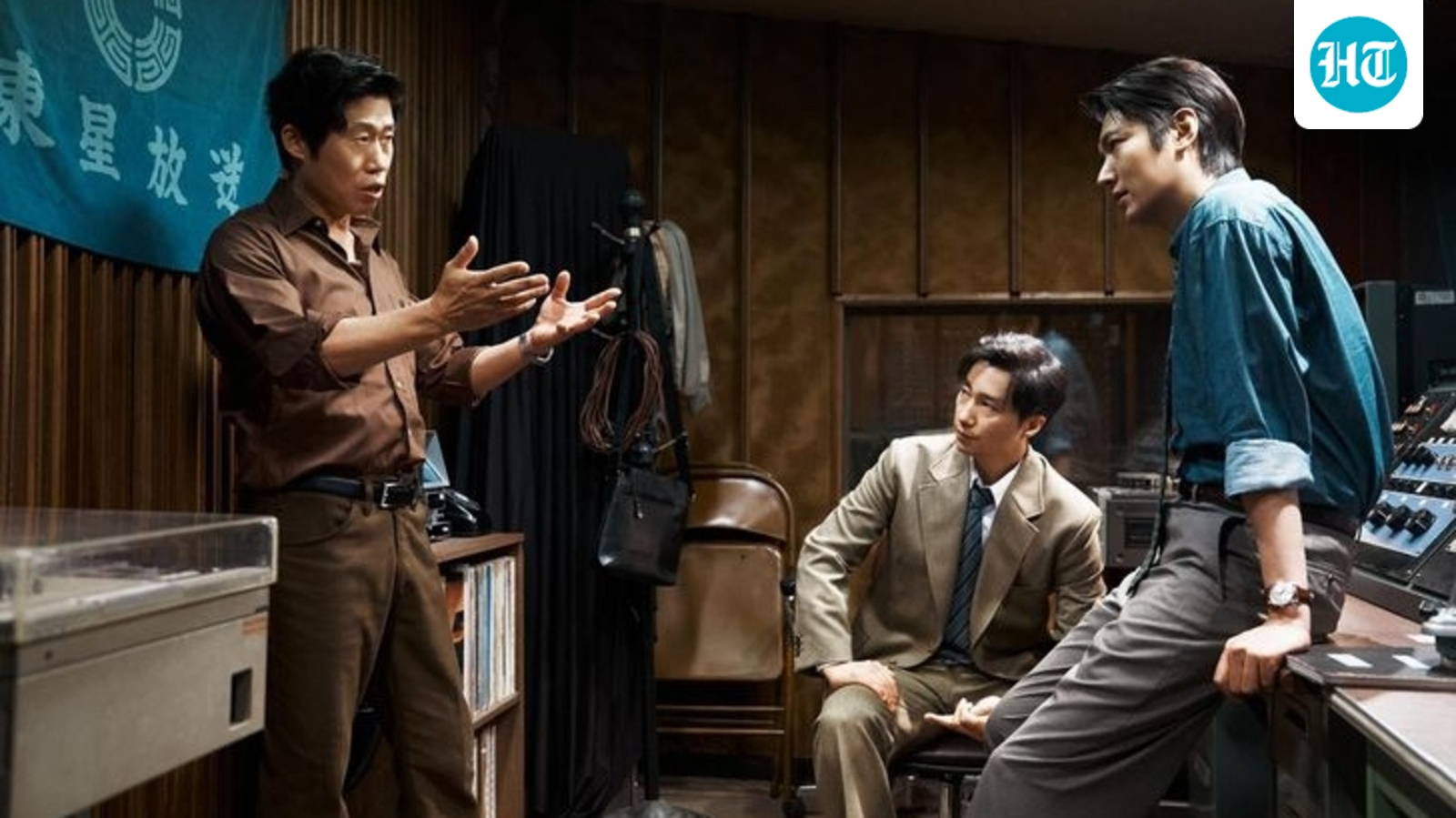
South Korean historical thriller The Assassin(s) has crossed 2 million moviegoers, but the film’s box office success has come alongside a growing controversy. Directed by Hur Jin Ho, the film stars Yoo Hae Jin, Park Hae Il, Lee Min Ho and Jung Woo Sung and revisits one of the most politically sensitive incidents in modern Korean history. Its fictional take on the 1974 assassination attempt on then-President Park Chung Hee and shooting of first lady Yuk Young Soo has angered conservative groups, triggered legal action and led to online attacks against the cast.
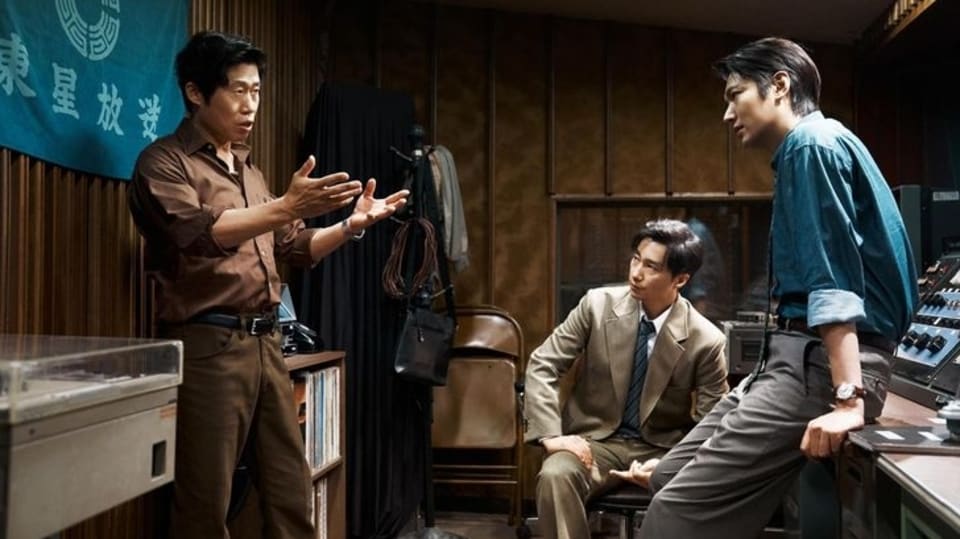
The debate initially centred on the film’s interpretation of history. But as the backlash grew, it moved beyond criticism of the movie. Protests were organised outside Yoo Hae Jin’s home, celebrities who supported the film were targeted online and several Korean film organisations have now spoken out against the harassment.
What is The Assassin(s) about?
The film is set around the August 15, 1974 assassination attempt on Park Chung Hee. The attack did not kill the president, but his wife, First Lady Yuk Young Soo, was fatally shot. According to the established historical account, the gunman was Mun Se Gwang, an ethnic Korean from Japan with pro-North Korean sympathies. He was convicted and executed in December 1974.
The Assassin(s) does not simply recreate that version of events. Instead, the film uses some of the unanswered questions surrounding the original investigation to build a fictional theory of its own. Among the questions explored are those surrounding missing forensic evidence, unidentified bullets and shell casings that were discarded shortly after the shooting. The film uses these gaps to explore the possibility that the Korean Central Intelligence Agency (KCIA), or even Park Chung Hee himself, could have been involved in a larger political plan.
Why are conservatives angry with the film?
Critics argue that the film goes too far in turning an established historical event into an alternative political narrative. For them, the concern is that audiences could mistake the fictional premise for a new version of what actually happened.
The strongest political criticism has come from South Korea’s conservative People Power Party (PPP). Lawmaker Yoo Young Ha, a close aide to former President Park Geun Hye, described the film as an “immoral act that hurts the bereaved and betrays history”. The PPP also drafted a letter to the Singapore International Film Festival asking for The Assassin(s) to be withdrawn as its opening film.
The film has also become the subject of a police complaint. Former Seoul city councilor Lee Jong Bae filed a criminal complaint against the head of the production company, the director and the screenwriters, accusing them of defaming the dead.
The backlash has been particularly visible online. Conservative netizens began flooding the film’s rating and review pages, in what was described as “rating terrorism”. Naver reportedly detected unusual automated traffic and abusive activity on the pages.
There was also controversy over a promotional item released by Megabox. The cinema chain created a souvenir ticket featuring bullet holes positioned over an image of the ceremony hall connected to the 1974 shooting. The design was criticised for making a national tragedy part of a promotional campaign. Megabox later apologised and destroyed the remaining tickets.
Yoo Hae Jin and other actors face backlash
The criticism has increasingly been directed at people associated with the film rather than just the film itself. Yoo Hae Jin has become one of the main targets. A right-wing civic group led by Kim Sang Jin obtained police permits to hold daily protests outside the actor’s home in Seongbuk Gu, Seoul. The group said it would continue the demonstrations until Yoo agreed to appear in “right-wing films” to balance his political filmography.
The protests were followed by online attacks on brands that work with Yoo. Malicious comments reportedly appeared on promotional content involving Burger King and Kiwoom Securities, leading the companies to restrict comments on their platforms.
His agency VAST Entertainment released a strong worded statement on October 5 which read, “We recently confirmed that slander and falsehoods about our actor Yoo Hae Jin are being spread indiscriminately through online communities and social media. We are taking very seriously the creation and spread of falsehoods about our actor, the malicious attacks of character and insults [being made], along with all acts violating the actor’s privacy, threatening his personal safety, or defaming his character. Therefore, we are continuously gathering relevant posts and evidence, and we plan to take all possible measures to protect our actor’s personal rights and safety from such illegal acts.”
Other celebrities have also been targeted for publicly supporting the film. Lee Young Ae and Kim Go Eun attended the VIP screening and later faced a wave of hostile comments online. Lee described the film as “thrilling and deeply moving”, while Kim said she felt “deeply grateful for the present”. Both actors were subsequently criticised online by people who accused them of being insensitive to the historical controversy. Ryu Hye Young also faced boycott calls after she described the movie as “very fun”.
What do the director and production company say?
Hur Jin Ho has pushed back against the claim that The Assassin(s) directly says Park Chung Hee ordered the shooting. According to the director, interpreting the film in that way is “illogical”. In an interview with YouTube channel ‘Bong Ji-wook’s Off the Record’ on September 30, the filmmaker said, “The actors and staff worked so hard on this, but I never expected it to be belittled like this, and the actors are all struggling. It’s devastating to see frames being imposed due to the historical distortion controversy.”
He has instead described the story as a “cinematic hypothesis” based on questions left behind by the 1974 investigation. Hur has also said that it breaks his heart to see the cast and crew dealing with the “distortion label”. He added, “Don’t people seek facts that benefit them, regardless of which side they are on? I wanted to raise questions about this, even though I don’t know what the truth is.”
Korean film organisations speak out
With the backlash increasingly spilling into the personal lives of the cast and filmmakers, major Korean film organisations have now joined the discussion. The statement was backed by 19 Korean film industry organisations representing a wide range of sectors, including production, directing, cinematography, art direction, screenwriting, distribution, exhibition, film festivals, education and labour.
On October 5, 2026, the Directors Guild of Korea (DGK) and the Korean Film Directors Association released statements condemning the attacks. They argued that what was happening had moved beyond normal criticism of a film, saying, “What we are witnessing now is not criticism or condemnation of the film, but attacks that cross the line into personal defamation.”
The organisations also warned about the possible impact on the country’s film industry. They said filmmakers should be able to face criticism for their work without having their personal lives and careers targeted, stressing: “Creators may face criticism for their work, but such criticism should not escalate to destroying their personal lives or livelihoods.”
The Korean Film Producers Association, the Korean Film Producers Guild and the Korean Cinematographers Association have also issued statements supporting the filmmakers. They called for an end to what they described as “excessive attacks targeting creators as individuals” and urged audiences to keep the discussion focused on the film rather than turning it into a political campaign against individuals.
BIFF 2026 cancelled
The film had its premiere at Toronto International Film Festival (TIFF) 2026 but the actors decided to withdraw from Busan International Film Festival (BIFF) 2026 following immense backlash.
“After careful consideration and taking into account the safety of audiences and attendees, we have decided not to participate in the Busan International Film Festival Opening Ceremony or the Outdoor Stage Greeting scheduled for October 7. After carefully reviewing the current situation surrounding the film, we made this decision to ensure everyone’s safety and allow the event to proceed smoothly. We sincerely apologize to everyone who has been looking forward to these events, and deeply appreciate your understanding,” the official statement read.
