


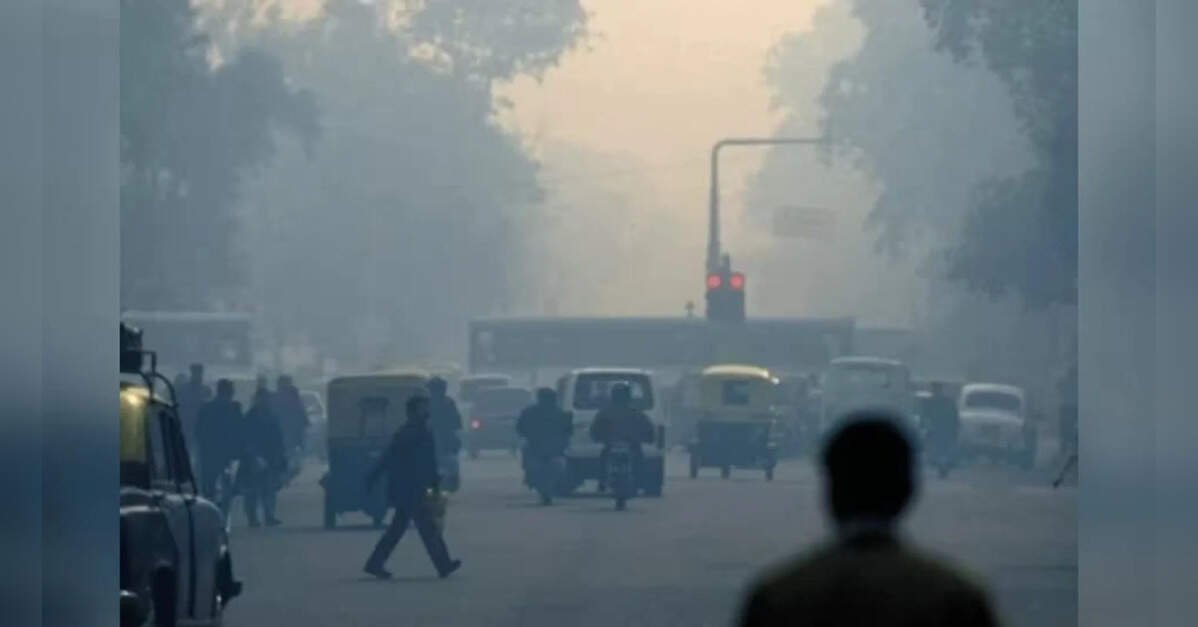
New Delhi, A large epidemiological study has found a possible link between exposure to fine particulate air pollution (PM2.5) and a higher risk of death among tuberculosis patients undergoing treatment in Delhi.
The study accessed by PTI, and described by researchers as the world’s largest study examining the association between air pollution and tuberculosis (TB) mortality, analysed data from 61,925 adults who started tuberculosis treatment in Delhi between September 2022 and August 2023.
One of the researchers, Pranay Sinha from the Boston University School of Medicine, said the research is the first study of its kind in India and, to the researchers’ knowledge, the largest anywhere in the world to examine the link between air pollution and tuberculosis deaths.
The study was conducted by researchers from the All India Institute of Medical Sciences (AIIMS), the Central Tuberculosis Division under the Union Ministry of Health and Family Welfare, and the South Asian Institute of Health Promotion, in collaboration with Boston Medical Center, Boston University, Cornell University, the University of Virginia, HydroSciences Montpellier in France, and Maastricht University in the Netherlands.
The findings showed that the risk of dying during treatment increased as pollution levels rose. Compared with patients exposed to less than 40 micrograms per cubic metre of PM2.5 before starting treatment, those exposed to 40-80 micrograms had three per cent higher odds of dying during treatment.
The odds increased to 22 per cent among those exposed to 80-120 micrograms, 31 per cent for people exposed to 120-160 micrograms, and 66 per cent for those exposed to 160 micrograms or more.
In simple terms, researchers found that patients who were exposed to the highest levels of air pollution before beginning treatment were much more likely to die than those who breathed cleaner air.
To understand whether polluted air could influence treatment outcomes, the researchers turned to Nikshay, India’s national tuberculosis database, which records details of patients undergoing treatment. They matched these records with satellite-based estimates of PM2.5 — tiny particles in the air that are small enough to travel deep into the lungs and even enter the bloodstream.
The team focused on the 30 days before treatment began. Sinha said this period was chosen because it is often the most dangerous stage of the disease.
“TB deaths tend to come early, and the weeks just before treatment starts are a dangerous window. The disease is at its peak and the patient has no protection from treatment yet. We expected pollution during that period to hit hardest, so that is where we looked,” he said.
The researchers also found that the pattern remained even after accounting for other factors already known to affect tuberculosis outcomes, including age, sex, HIV infection, diabetes, nutritional status, smoking, alcohol use, whether patients were treated in the public or private sector, and whether they had pulmonary or extrapulmonary tuberculosis.
They said this strengthens the findings because the link with pollution could not be explained away by these factors alone.
Sinha, however, stressed that the study does not prove polluted air caused the deaths.
“This is an observational study, so we cannot claim to have proven cause and effect. What we can say is that the link is strong and biologically plausible. People with TB are already in a fragile state. When air pollution spikes, they may struggle to breathe and sustain more lung damage, and it is reasonable to think this raises their risk of dying. Readers should treat this as a serious warning signal, not as final proof,” he said.
He added that the findings nevertheless carry significant implications for a country that bears the world’s highest tuberculosis burden.
“For India this is a serious finding. India carries the world’s largest TB burden, and the country has invested enormous effort and resources into finding people with TB and getting them onto treatment. That work saves lives,” Sinha said.
He further said that the study suggests polluted air can raise a patient’s odds of dying by two-thirds even when they are on the right treatment. So a risk we have largely left out of the equation may be quietly undercutting one of the country’s biggest public health achievements.
Asked whether tuberculosis patients should be advised to reduce exposure during periods of severe pollution, Sinha said more research is needed before firm recommendations can be made but some simple precautions appear reasonable.
He further said the findings could extend well beyond tuberculosis.
“Almost certainly. Air pollution is a risk factor we tend to take for granted and leave out of our analyses. Given how clearly it affects TB mortality, we can no longer afford to ignore it,” he said.
The researchers said polluted air may affect tuberculosis patients in several ways. Fine particles such as PM2.5 can inflame and narrow the airways, making it harder to breathe. While inflammation is part of the body’s natural defence against infection, excessive inflammation may damage the lungs instead of helping them fight the disease, potentially making recovery more difficult.
