


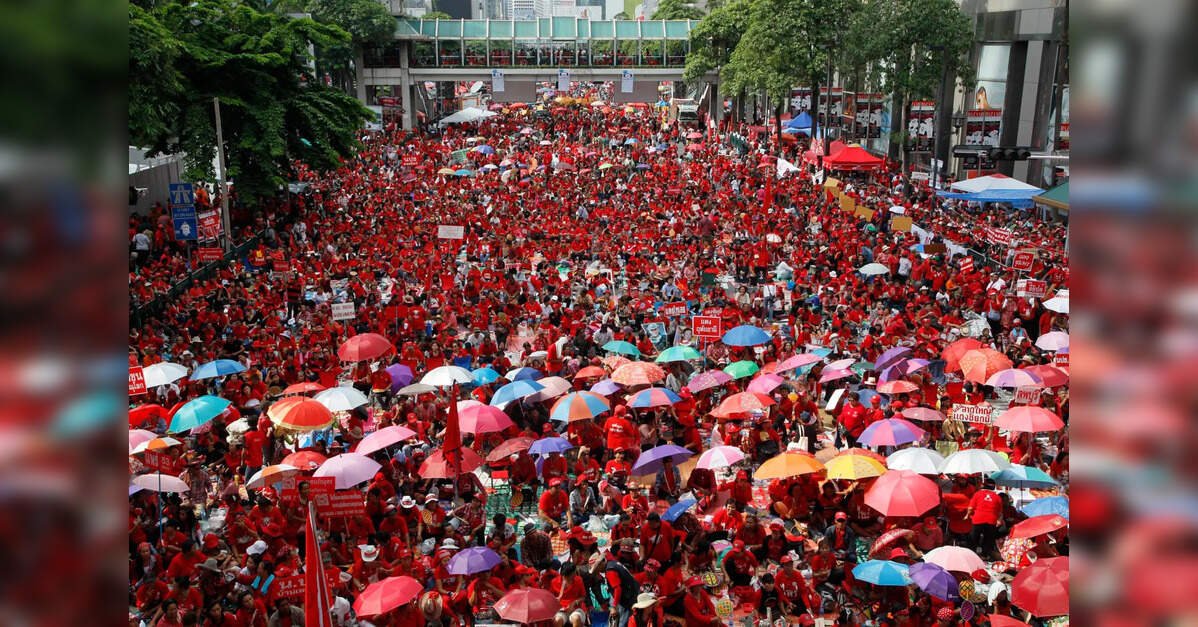
An amnesty for political offences committed in Thailand over the past two decades took effect Monday, but the law excludes some of the more serious cases, including those involving lese majeste, or defaming the monarchy.
The amnesty was introduced to promote reconciliation after past political instability, violent protests and military coups and could cover about 6,000 people, according to estimates made in Parliament. But the exclusion of lese majeste offences has drawn criticism that the amnesty will not truly resolve political divisions.
The Peaceful Society Promotion Act passed a final vote by lawmakers in July and was published in the Royal Gazette on Sunday. A committee chaired by the prime minister will determine who qualifies for the amnesty. The committee must hold its first meeting within 30 days, although it’s unclear how long the process will take.
The law covers a range of offences related to political activities from January 1, 2005 to July 15, 2025. It will not only grant release for current prisoners, but also close investigations and prosecutions, dismiss pending court cases, and clear criminal records of those eligible for the amnesty.
In addition to lese majeste, the amnesty will also exclude corruption and crimes resulting in death or serious injury.
The lese majeste law, also known as Article 112 of the Criminal Code, is controversial not only because it has been used to punish things as simple as liking a post on Facebook, but also because anyone – not just royals or the authorities – can lodge a complaint that most of the time leads to detention during lengthy legal proceedings.
A conviction of defaming the monarchy carries a prison term of up to 15 years, and critics say Article 112 has often been used to quash political dissent.
Student-led pro-democracy demonstrations starting in 2020 sought reforms of the lese majeste law, but the protesters became targets of the law.
Thai Lawyers for Human Rights, a law advocacy group, says more than 290 people, many of them student activists, have been charged with violating Article 112 since early 2020.
As of July, the group said at least 54 people remained imprisoned in connection with political cases. Only about 10 were expected to benefit from the new amnesty, since the others were accused of lese majeste.
Thailand’s machinery of state remains deeply conservative. Its political establishment is sensitive about any perceived threats to the status of the monarchy.
The country’s political conflicts revolved mostly around former Prime Minister Thaksin Shinawatra, who was ousted by a military coup in 2006.
His populist policies won strong support among poorer voters, particularly in the rural north and northeast, but his popularity and sometimes high-handed style created deep fractures between his base and the country’s urban elites, royalists and the military. Violent protests and political upheaval repeatedly followed as parties aligned with Thaksin returned to power while he remained in self-imposed exile. (AP)
