


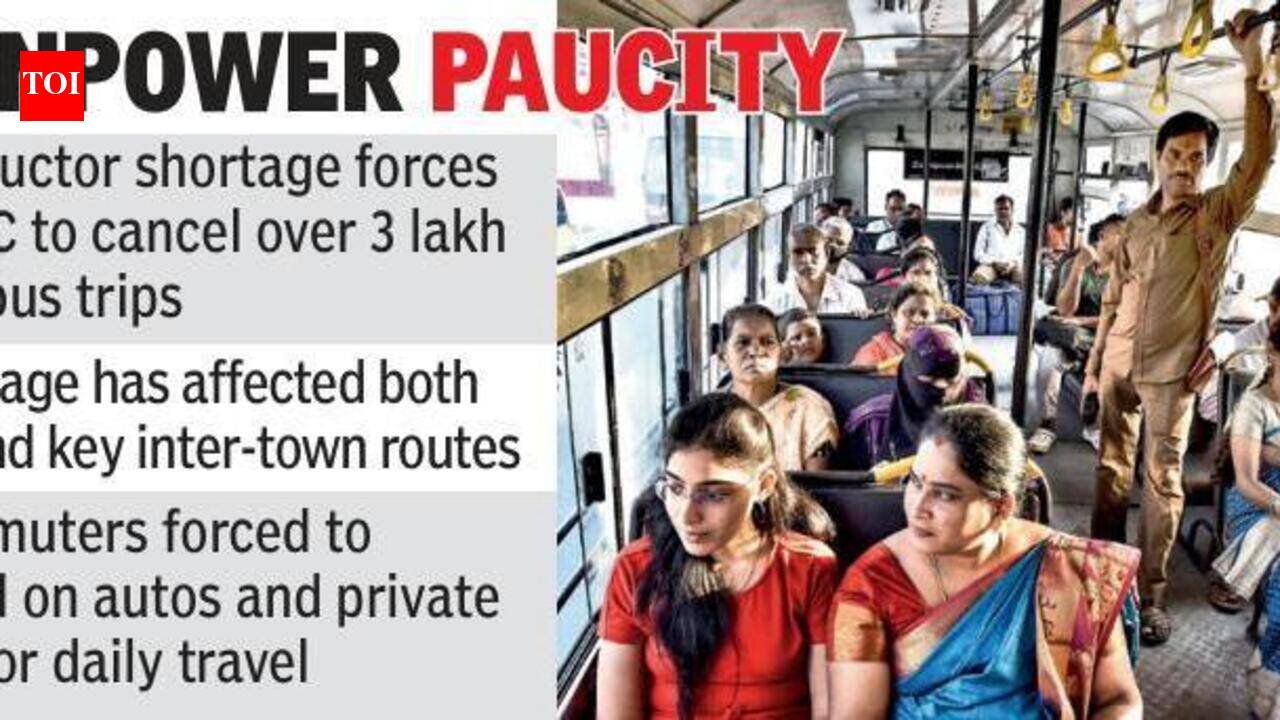
Hyderabad: A severe shortage of conductors has forced the Telangana State Road Transport Corporation (TGSRTC) to cancel as many as 3.34 lakh kilometres of bus trips across the state in the last four months, disrupting services on several routes and leaving hundreds of villages with fewer public transport options.Unlike the usual cancellations caused by damaged roads during the monsoon or poor connectivity in remote areas, the latest disruptions stem from a manpower crisis. Buses are available, roads are motorable, and drivers are on duty, but many services are being cancelled because there are no conductors to operate them.
The shortage has affected both rural and key inter-town routes. According to a senior RTC employee, “TGSRTC is currently short of hundreds of conductors, resulting in buses remaining parked at depots despite demand for services.
CJP Jantar Mantar Protest Updates
The impact is being felt in almost all the districts, particularly in tribal and remote areas where public transport is often the only affordable mode of travel”.To minimise cancellations, depot managers have been told to take outsourcing employees on contract basis.The reduction in bus services has forced many commuters to depend on autorickshaws and private jeeps for daily travel. Ironically, TGSRTC has long discouraged passengers from using such vehicles, citing safety concerns, but the shrinking number of bus services has left people in several villages with few alternatives.The official added, “The shortage has built up gradually over the years. The last regular recruitment of conductors was carried out in 2013, when the undivided Andhra Pradesh State Road Transport Corporation filled vacancies. After the formation of Telangana, the corporation did not conduct any large-scale direct recruitment. Instead, it relied on compassionate appointments and limited outsourcing to fill gaps”.The problem remained largely under control after TGSRTC reduced its fleet by around 2,000 buses in 2019 on the directions of the then state govt. The downsizing left the corporation with surplus drivers and conductors, allowing it to manage operations without fresh recruitment for several years.However, that cushion has gradually disappeared as employees retired. Corporation sources said 150 to 200 employees across different categories retire every month, steadily widening the manpower gap. While the corporation has recently hired some conductors through outsourcing, officials admit the numbers are too small to address the shortage.Financial constraints have also delayed fresh recruitment. Successive wage revisions significantly increased the corporation’s salary bill. After Telangana’s formation, employees received a 44% fitment under the 2013 wage revision, followed by a 21% fitment under the 2017 revision. Salaries now account for more than half of TGSRTC’s total expenditure, making the corporation reluctant to undertake large-scale recruitment amid continuing financial stress.Instead, TGSRTC has increasingly relied on hired buses, where vehicle owners provide drivers, reducing its staffing burden. On the conductor side, it has preferred temporary and outsourced appointments to contain salary costs rather than creating permanent posts.Although the proposals for large-scale recruitment were entrusted to the state recruitment agency, the exercise did not move forward. The govt expanded the recruitment framework by involving multiple recruitment boards and recently permitted TGSRTC to recruit 1,500 employees on its own. However, despite nearly three years of announcements and administrative processes, regular recruitment has yet to begin.
