



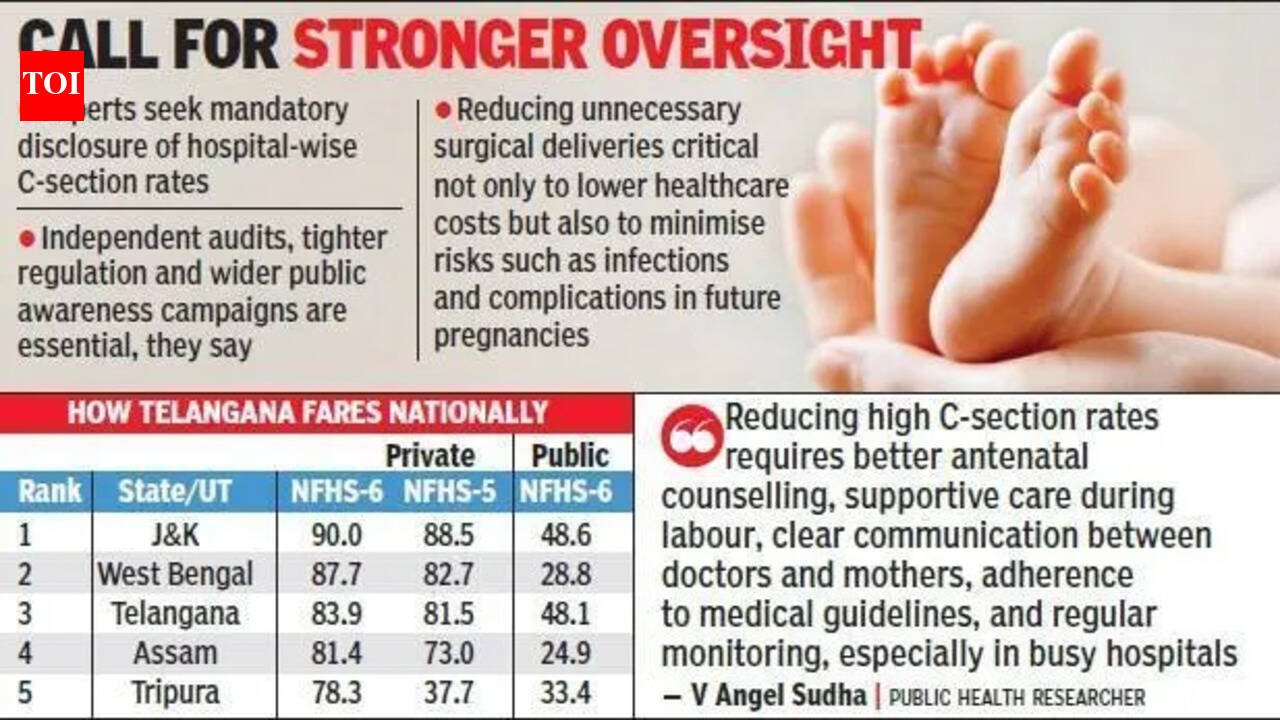
Hyderabad: Despite years of govt campaigns to promote normal deliveries, caesarean section (C‑section) births continue to climb in Telangana’s private hospitals, placing the state among the highest in the country for surgical deliveries.The latest National Family Health Survey (NFHS‑6) reveals that while govt hospitals have largely kept rates below 50%, private facilities report some of the steepest figures nationwide, underscoring a widening gap between medical necessity and practice.According to NFHS‑6, 83.9% of births in Telangana’s private hospitals were delivered through C‑sections, up from 81.5% in NFHS‑5 (2019‑21). While Telangana has highest overall c-section rate in India, the state now ranks third only to Jammu and Kashmir, where 90% of private hospital births are surgical, followed by West Bengal (87.7%). Telangana’s figure is also far above the national private‑sector average of 54.1% and of neighbouring Andhra Pradesh, where c-sections in private sector accounts to 66.2%Overall, Telangana’s C‑section rate stands at 62.2%—the highest in India. The contrast is stark: While private hospitals report nearly 84% of births through surgery, govt hospitals remain at 48.1%, up slightly from 44.5% in NFHS‑5 but still below the halfway mark.Beyond medical necessityHealth experts say the persistent gap points to systemic issues. They cite higher revenue from surgical deliveries, convenience of scheduling births, and counselling practices that exaggerate risks of normal delivery.Cultural factors also play a role, with families often opting for C‑sections to align childbirth with astrologically auspicious “muhurtam” timings. “High‑risk pregnancies, delayed motherhood and infertility treatments have increased the need for some C‑sections,” said Dr K Sujatha, senior govt gynaecologist.Angel Sudha V, Public Health Researcher at the Institute of Public Health (IPH), Bengaluru, said the trend reflects broader issues in how childbirth care is delivered. “Studies have consistently found higher C-section rates in private facilities, driven by factors such as institutional practices and greater reliance on medical interventions. The trend also places a significant financial burden on families,”Studies reinforce these concerns. A PLOS One analysis of NFHS‑5 data estimated that 8.4% of deliveries in Telangana involved potentially preventable C‑sections without recognised clinical indications.Over the years, the state has introduced measures to curb unnecessary surgical births—C‑section audits, withdrawal of the ₹11,000 Aarogyasri incentive for private hospital C‑sections, and incentives to encourage normal deliveries in govt facilities. In 2025, health minister Damodar Raja Narasimha directed officials to crack down on unnecessary c-section in private hospitals through strict audits and regular inspections. Hospitals found performing C-sections without valid medical indications may face action, including licence cancellation under the Clinical Establishments Act. “We are also promoting normal deliveries through awareness campaigns for pregnant women, expanded midwifery training in govt nursing colleges, and strengthened maternal healthcare services in public hospitals,” said a senior health official.These steps appear to have contained rates in public hospitals, but private‑sector figures remain stubbornly high.Call for stronger oversightExperts argue that mandatory disclosure of hospital‑wise C‑section rates, independent audits, tighter regulation under the clinical establishments framework, and wider public awareness campaigns are essential.Reducing unnecessary surgical deliveries, they stress, is critical not only to lower healthcare costs but also to minimise risks such as infections, longer recovery periods, and complications in future pregnancies. “Reducing high c-sections rates requires better antenatal counselling, supportive care during labour, clear communication between doctors and mothers, adherence to medical guidelines, and regular monitoring, especially in busy hospitals,” said Angel Sudha V, a Public Health Researcher at the Institute of Public Health (IPH), Bengaluru.


