


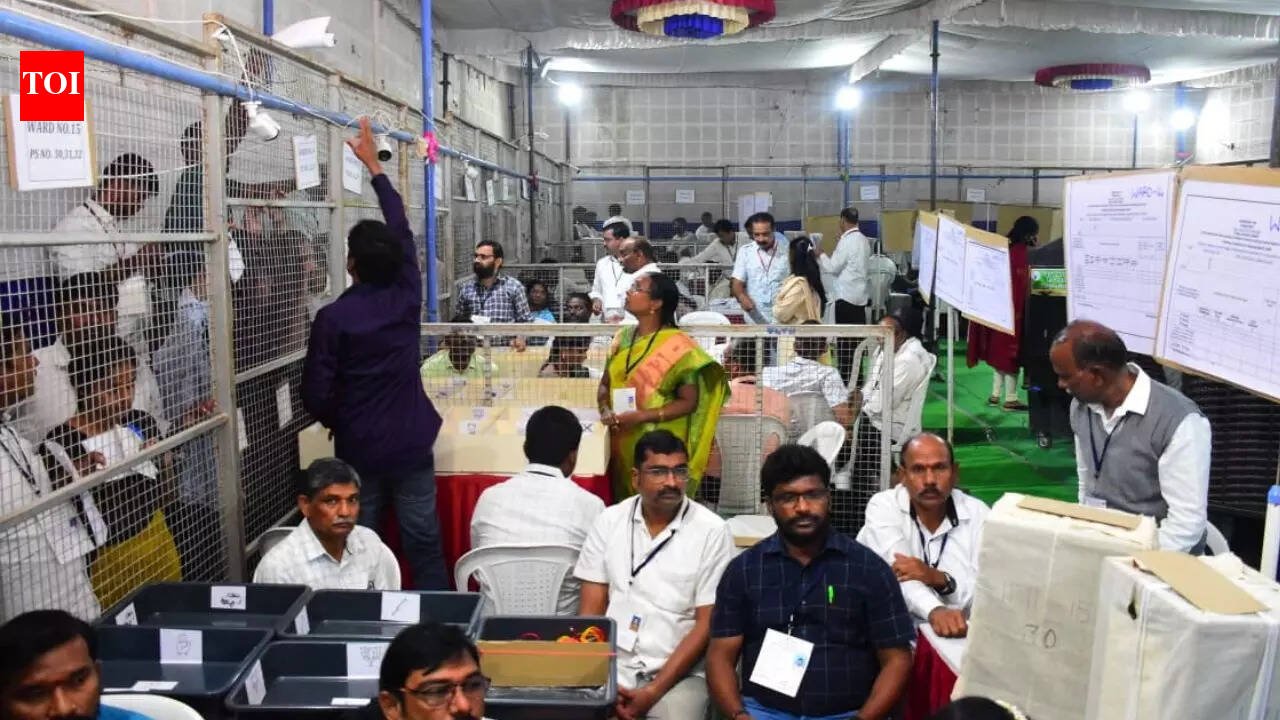
HYDERABAD: As the real battle for control of urban local bodies moves beyond ward-level results, the focus has now shifted to ex-officio members, whose votes could decide who becomes chairperson or mayor in some of the closely-fought civic bodies where even independents seem to hold all the aces.With the results out on Friday, political parties are already preparing for the decisive second stage. The State Election Commission will conduct these indirect elections on Feb 16. Ex-officio members, including MLAs, MLCs, and Rajya Sabha and Lok Sabha MPs, are set to play a crucial role in the indirect elections to choose municipal chairpersons and mayors. Their votes become critical when no single party secures a clear majority of wards needed to win the chairperson or mayor post.In situations where parties are separated by just one or two wards, the influence of ex-officio members increases sharply, opening the door to intense political manoeuvring, a political analyst explained. Ex-officio members are not directly elected to municipal bodies but are granted voting rights in the election of chairpersons, vice chairpersons, mayors and deputy mayors. While MLAs are required to vote and Lok Sabha MPs can vote only within their respective constituencies, Rajya Sabha MPs and MLCs—who do not have defined constituencies—are free to exercise their option in any municipal body across the state. According to official sources, ex-officio members enjoy voting rights equal to those of elected ward councillors and corporators during these indirect elections. Strategic allotmentSources pointed out that in the previous municipal elections, several ex-officio members, particularly Rajya Sabha MPs and MLCs, were strategically allotted to neighbouring municipalities and even to key civic bodies such as GHMC.With corporations like Khammam, Warangal, Nizamabad and Karimnagar emerging as politically significant this time, parties are expected to allocate ex-officio members strictly based on numerical requirements, sources said.At present, Congress enjoys a clear advantage in numbers, with about 65 MLAs, eight Lok Sabha MPs, three Rajya Sabha MPs, and nearly two dozen additional members, including defected MLAs and MLCs. The BRS has around 27 MLAs, about half a dozen MLCs (though officially 20), four Rajya Sabha MPs, and no Lok Sabha representation. The BJP has eight MLAs, eight Lok Sabha MPs, and three MLCs. AIMIM, with nine members, is also a factor and is likely to back Congress in the GHMC, as its MLAs and MP fall within Greater Hyderabad limits.


