



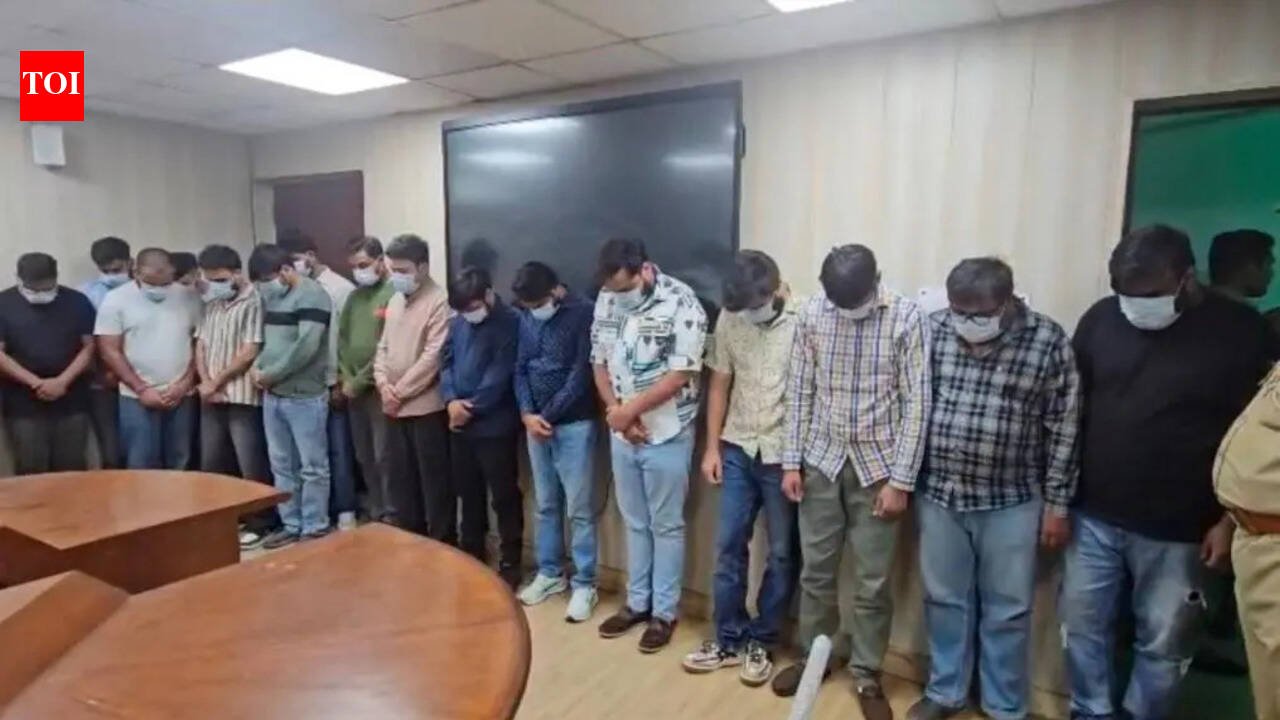
Noida: A “tech support” racket was busted with the arrest of the mastermind among 16 people following a raid on a call centre in Sector 16 on Thursday.According to police, the accused — including mastermind Varun Gupta — trapped foreign nationals by issuing customer care numbers in paid advertisements on the internet and then extorted huge amounts via cryptocurrency in the name of technical support.While they had remote access to the targets’ computer, the accused obtained confidential banking information and accessed the targets’ accounts. If there was a small amount in the account, they would pretend to just fix the computer for $100-$500. If the account was substantial, then the call was transferred to “senior” fraudsters, who would manipulate the target into paying larger sums.Evidence of transactions worth crores of rupees was found from the information on mobile phones and laptops recovered from them. The Cyber Crime station has registered a case against the accused under various sections of BNS and the IT Act. Police are investigating the mastermind, funding and foreign network of the call centre. Officials say that “more people may be arrested”.Besides Varun, the other accused have been identified as Vivek Thakur, Gaurav Singh, Gaurav Gupta, Abhishek Masih, Ashwani Kumar, Rohan Sharma, Sant Kumar, Upendra Singh alias Rohit Singh, Ankush Chaurasia, Ayush Chaubey, Sudeep Singh, Anupam Saxena, Abhishek Maurya, Shivam Pathak and Pradeep Kumar Singh. All of them are residents of Noida, Delhi, Ghaziabad and Punjab. All the accused are graduates and are proficient in English, DCP Shavya Goyal said.Police recovered four laptops, 15 desktops, 15 monitors, 16 mobile phones, 16 mic-headphones, two routers and one modem from the fake call centre. The accused said during interrogation that they would run paid advertisements on the internet and social media. Toll-free numbers were given in these advertisements, which were said to be tech support or customer care numbers. As soon as foreign nationals called these numbers, the calls directly reached the system of the accused through the calling software. After this, the accused would pretend to be technical support agents and say that their computer or mobile had been hacked.To take the target into confidence, the accused used to get the screen-sharing app downloaded and gain remote access to the system. Then fear was created by making the computer screen go blank, due to which the target became nervous and was influenced by the words of the accused. On the pretext of repair, money in dollars was collected from the victims.


