





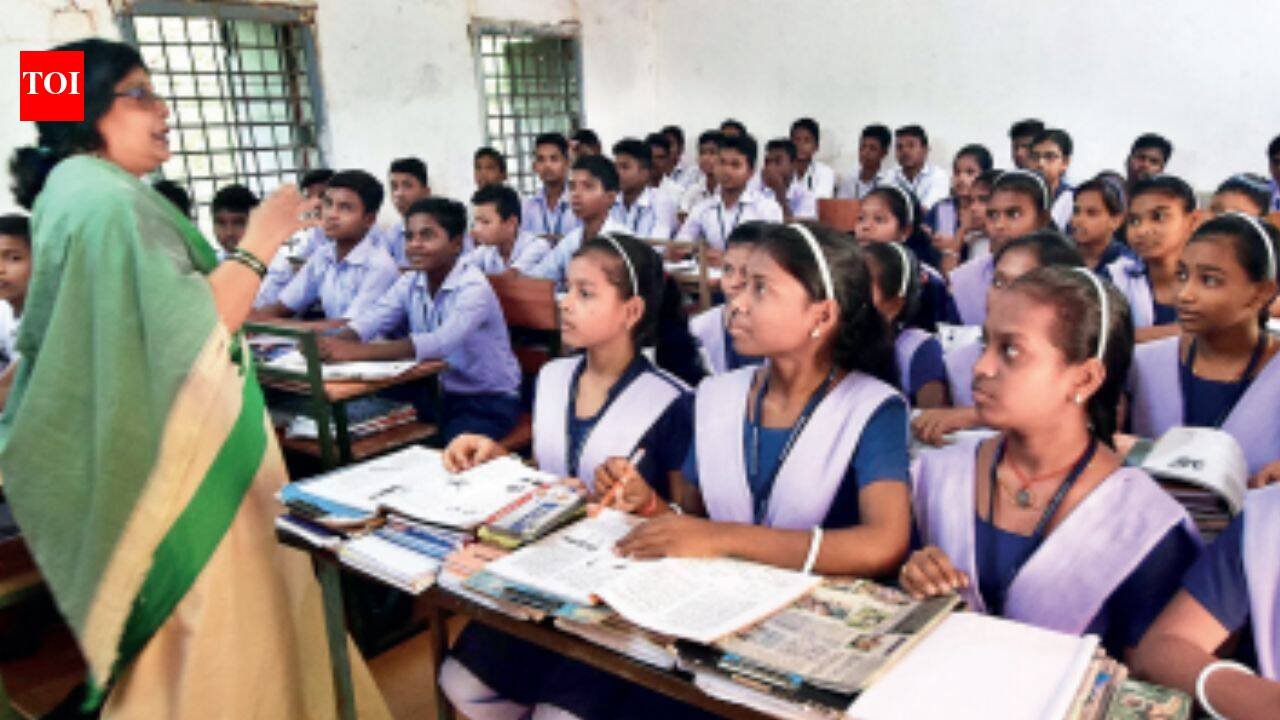
Already grappling with acute staff shortages and an expanding list of non-academic responsibilities, govt school teachers in Odisha are now being asked to shoulder yet another task – teaching from corrected copies of the state’s error-ridden textbooks and ensuring students rectify mistakes in their own books until revised editions arrive.On July 1, the school and mass education commissioner-cum-secretary, N Thirumala Naik, announced that the department would soon provide students with new and error-free textbooks following chief minister Mohan Charan Majhi’s direction. Earlier, school and mass education minister Nityananda Gond had said corrected copies of the textbooks would be supplied to schools for classroom teaching until revised editions are printed next year.Teacher associations said the education department has not specified when the new textbooks will reach students this year, leaving teachers to shoulder the responsibility of correcting the thousands of identified errors while conducting class and in the students’ books, in the meantime.While teachers welcomed the decision to replace the textbooks, they said the interim arrangement would further slow the teaching and learning process, particularly when schools are already nearly three months into the academic session.“There are over 50,000 teaching posts lying vacant in elementary schools. Existing teachers are already overburdened with classroom teaching and more than 25 non-academic duties, including mid-day meal management and implementation of various govt programmes. Expecting us to teach from corrected copies while ensuring every student corrects these mistakes is simply unrealistic, even for a limited period,” Brahmananda Maharana, president of State Primary Teachers’ Association, said.He added, “Elementary school teachers are yet to receive official guidelines on how the corrected copies should be used in classrooms or whether students will be required to manually correct their textbooks.”Teachers said their task goes beyond correcting typographical or factual errors, as several textbooks also contain contextual and conceptual issues that require detailed explanation in classrooms.“Each child has to be told what is incorrect and what the correct version is. This will consume valuable classroom time that should otherwise be devoted to teaching,” Charulata Mohapatra, a govt school teacher in Kendrapada, said.While Naik said subject experts have been engaged to examine all the reported errors in the textbooks, teacher associations demanded that practising primary school teachers also be included in the review process, arguing that they are the ones who use the books in classrooms every day.


