



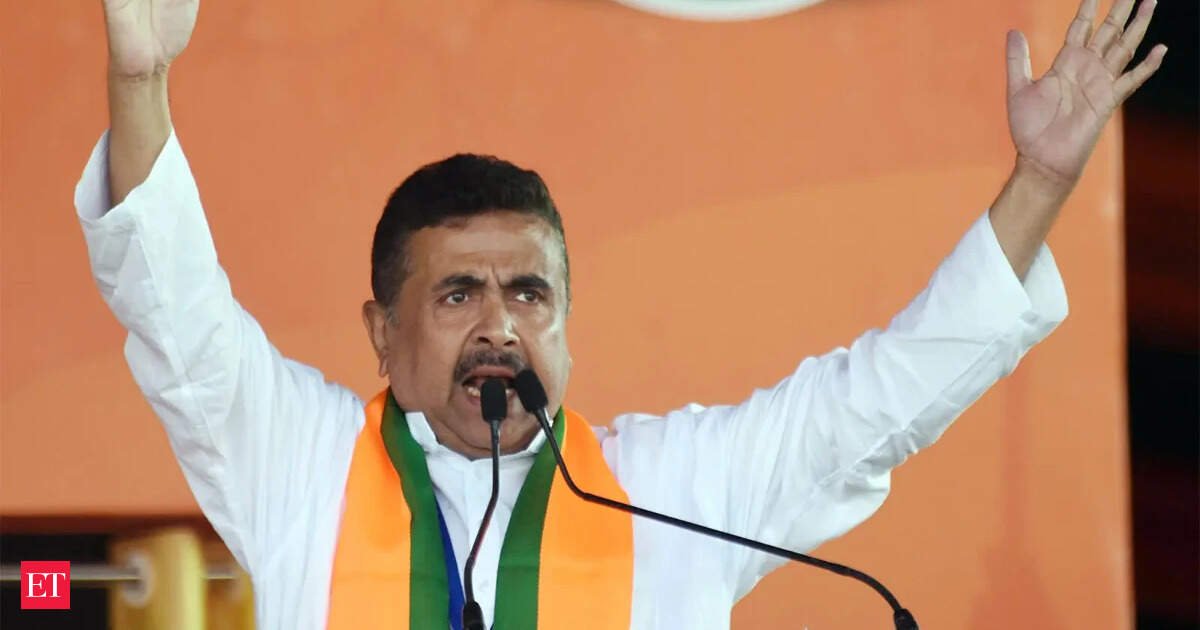
Adhikari, who contested from Nandigram and Bhabanipur, defeated outgoing Chief Minister Mamata Banerjee in Bhabanipur by a margin of more than 15,000 votes. This marked his second electoral victory over the TMC supremo, having earlier defeated her in Nandigram during the 2021 Assembly elections.
Read More: BJP picks Bhabanipur ‘giant killer’ as Bengal CM
Notably, his father, Sisir Adhikari, was one of the key figures in the TMC and even served as a union minister in UPA 2 govt under Manmohan Singh.
Early political career
Adhikari began his political career with the Congress, serving as a councillor in Kanthi municipality in 1995. He joined the Trinamool Congress in 1998 and won the Contai South Assembly seat in 2006.
His political rise gathered momentum during the 2007 Nandigram land agitation against the Left Front government’s proposed chemical hub project. Adhikari emerged as one of the key organisers of the movement, which played a major role in propelling the TMC to power and ending the Left Front’s 34-year rule in West Bengal.
He later moved to national politics, winning the Tamluk Lok Sabha seat in 2009 and retaining it in 2014. In 2016, Adhikari returned to state politics after winning the Nandigram Assembly seat on a TMC ticket and was subsequently inducted into Mamata Banerjee’s cabinet. However, amid growing differences within the party, he resigned from the TMC in December 2020 and joined the BJP. Following his victory over Mamata Banerjee in Nandigram in 2021, Adhikari became the Leader of Opposition in the West Bengal Assembly. In this role, he has frequently targeted illegal immigration, particularly raising concerns over Bangladeshis and Rohingya, while also speaking in favour of what he described as “nationalist Muslims.”
His switch to the BJP initially triggered some apprehension within sections of the party due to his lack of roots in the RSS or BJP’s ideological framework. However, Adhikari addressed such concerns by openly acknowledging his “outsider” status while asserting his commitment to the BJP. His rapport with state BJP president Samik Bhattacharya also helped ease internal friction within the party.


