






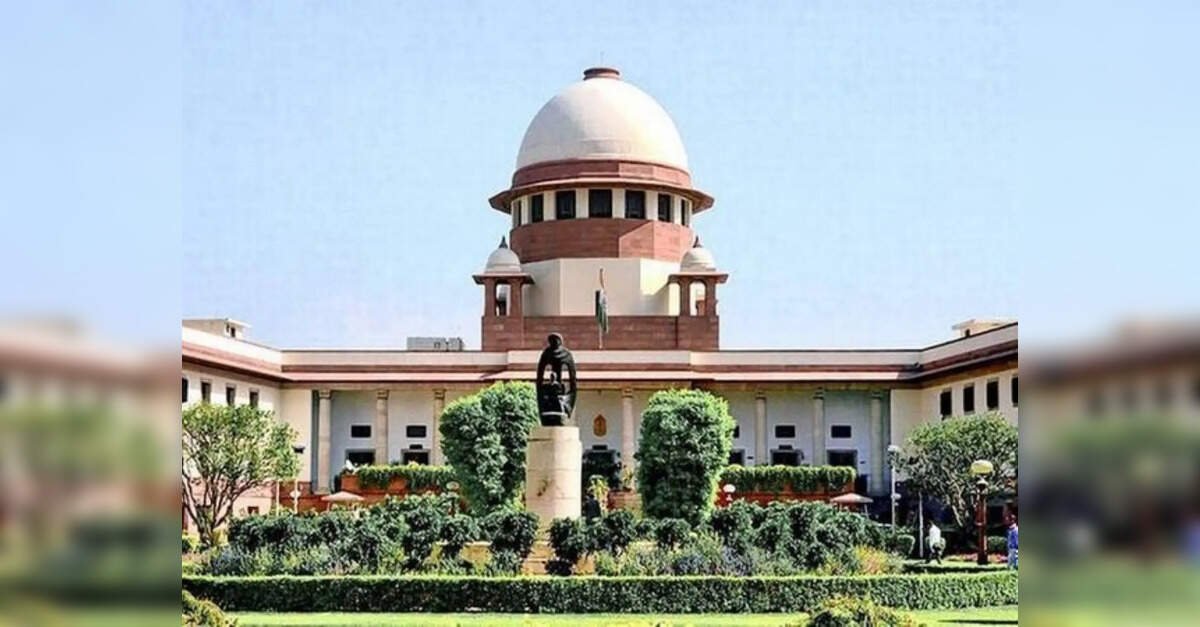
The Supreme Court has directed authorities to prioritise action against commercial activities being carried out in areas earmarked exclusively for residential use, including sealing premises where such activity is found.
A bench of Justices Ahsanuddin Amanullah and R. Mahadevan, hearing a miscellaneous application arising from its February 18, 2026 judgment in Loganathan v. State of Tamil Nadu, issued a series of directions on September 22 in relation to unauthorised construction and land use across several States.
The Court directed that where an area is specifically shown as residential and the permission granted by the state government is only for residential use, authorities must ensure that no commercial activity takes place. Where such commercial activity is found, the premises shall, in the first instance, be sealed.
The Court further said that in areas where the permitted use is not clearly specified as commercial or residential, the question of mixed use may require consideration. However, the existing status quo should not be disturbed for the time being, while proceedings on paper may continue.
The directions also apply where disputes concerning title or other litigation are pending. The Court clarified that pendency of such proceedings would not prevent authorities from sealing premises if their use violates the purpose for which the land or building was allotted or the plan was sanctioned and approved.
The Court also said that where a structure has been constructed wholly without authorisation or approval from the competent authority, the process of sealing or demolition, as required in accordance with law, shall proceed.
No selective enforcement
The bench emphasised that authorities acting under the Court’s orders must carry out the exercise without discrimination.
“If it is brought to the notice of the Court that the Authorities have resorted to any pick-and-choose approach, this Court shall take a strict view of the matter,” the Court said.
The observation came after the amicus curiae, Ajit Kumar Sinha, informed the Court of instances in Bhopal where its directions were allegedly not being fully complied with and were also being selectively used.
The amicus told the Court that certain buildings or properties were initially sealed but subsequently unsealed within a few hours or days without any intervening development, such as a response to a show-cause notice or a decision by the competent authority.
The Court also permitted publication of the draft State Master Plan for Bhopal, while making clear that the test for any property or construction would be its conformity with the existing Master Plan and applicable building bye-laws of the competent authority.
The matter has been listed for November 23, 2026, with States and authorities directed to file updated status reports one week before the next hearing. The amicus has also been asked to submit a consolidated report.


