



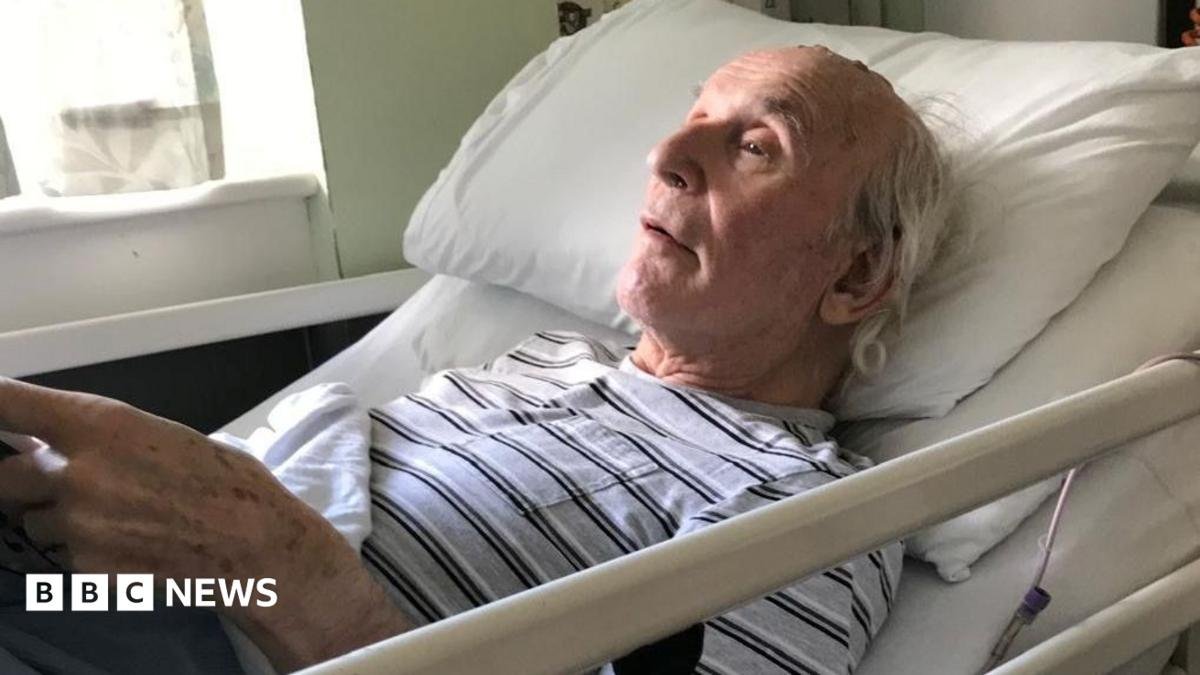
Sadly, stories like John’s are not uncommon.
The latest data tells us that in July, just over 2,000 people were stuck in hospital that were medically well enough to leave. Hundreds of them had been there for more than three months.
Two thousand patients is almost twice the capacity of Scotland’s biggest hospital – so those beds could be used much more effectively.
And being stuck in a hospital bed is not good for a patient, often leading to a decline in physical health rather than aiding their recovery.
But finding appropriate social care or space in a care home is challenging, particularly in rural areas.
Ask anyone in healthcare, and they will say if you improve social care it would take the pressure of hospitals and allow people a better quality of life.
But attracting staff into a profession where pay does not match that of NHS workers is a big barrier for the sector.
Experts and politicians agree that social care needs fundamental reform, but efforts to create a National Care Service for Scotland fell apart last year.
It’s partly because the delivery of care is so fragmented and complicated, with local authorities and the NHS working alongside charities and private companies.
Now Scottish ministers are starting a consultation process to simplify the delivery of social care, with the NHS taking the lead.
But with so many bodies involved such negotiations will never be straight forward.
