


Kolkata: There was little to dislike about India’s first day of preparation for the Test series against Sri Lanka, except perhaps the preparation itself. Sri Lanka XI finished the opening day of the three-day warm-up match on 363/8 from 90 overs, spending much of Friday batting with a comfort that India would probably have preferred not to provide.
On a placid Nondescripts Cricket Club pitch, the hosts were allowed to settle, build partnerships and test the patience of an Indian attack that was playing its first competitive cricket at this level since the home series against South Africa in November 2025.
India’s caution was understandable. Shubman Gill, the Test captain, had already been ruled out of the match after injuring his right ring finger during practice, with the BCCI medical team monitoring the injury ahead of the first Test. KL Rahul stepped up, drawing all the more attention to the decisions taken throughout the day.
These games are supposed to expose rust, test combinations and provide information about conditions and players. By the end of the first day, India may have wondered whether they had extracted enough of that information.
The first session belonged decisively to Sri Lanka XI, breezing their way to 138/1 in 29 overs. Although India’s bowlers were not particularly wayward, there was little sense of sustained pressure. Nishan Fernando made 66 from 65 balls, with 11 fours and a six, before a bizarre mix-up finally ended the opening partnership with Ravindu Rasantha.
It was the sort of wicket India needed more of, created by pressure or at least uncertainty. Instead, Rasantha and Pasindu Sooriyabandara rebuilt. Rasantha’s 71 off 143 was particularly revealing. He repeatedly used his feet against the spinners, unshackled more by India’s reluctance to attack with catchers around the bat.
Sooriyabandara made 35 before Jadeja had him beaten by pace and trajectory in the 41st over. He rocked back to pull a delivery that was not short enough, and the ball skidded through to hit the stumps. At tea Sri Lanka XI were 246/4. Four more wickets fell in the final 30 overs, but even that late cluster did not entirely change the complexion of the day.
India’s spinners eventually accounted for six wickets between them. Suthar was the standout, finishing with 2/33 from 13 overs. His best wicket was Rasantha, who had been stepping down the pitch successfully for much of his innings before Suthar finally beat him with flight and dip. Rasantha advanced again, failed to reach the pitch and skewed a catch to deepish mid-off.
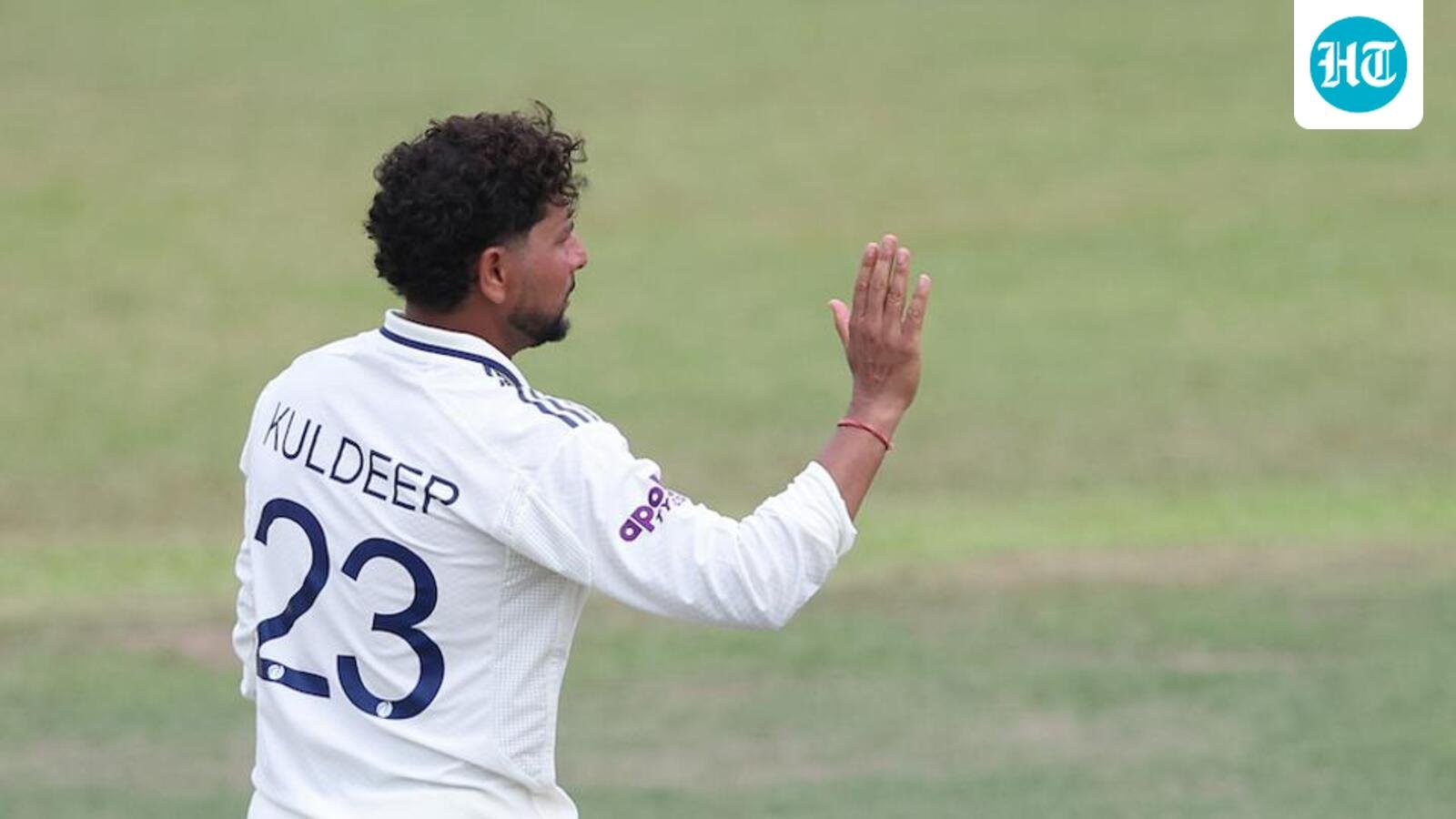
That was precisely the sort of wicket that demonstrated why warm-up matches matter. Suthar had started cautiously but settled into a disciplined length, and his 2.53 economy rate was the best among India’s bowlers. Kuldeep Yadav also claimed two wickets in 18 overs, dismissing Ahan Wickramasinghe and Anjala Bandara. Wickramasinghe top-edged a sweep after Kuldeep shortened his length and induced a little extra bounce. Bandara then misjudged one that skidded on and was trapped lbw.
Ravindra Jadeja also took two, including Ramesh Mendis, who edged a full delivery outside off to first slip, where Devdutt Padikkal took a fine low catch. Sonal Dinusha, Sri Lanka’s captain, then became Suthar’s second victim, lbw for 52 after missing another sweep against a full delivery that stayed low.
Yet India’s bowling figures also tell another story. Mohammed Siraj and Prasidh Krishna combined for 21 overs and went for 76 without a wicket. Siraj was economical enough, conceding 44 from 13, but neither he nor Krishna appeared to be threatening consistently.
Gurnoor Brar was perhaps the most intriguing sight among India’s newer seamers. He bowled 12 overs for 49 and picked up Pavan Rathnayake with a short-ball plan that worked. Rathnayake swivelled at a shoulder-high bouncer and picked out the fielder at deep backward square leg. Brar’s pace and bounce was beguiling on a flat surface. But the fact that he bowled only 12 overs, while Kuldeep was given 18, underlined India’s conservative approach to workload and experimentation.
Saransh Jain had an equally informative but less successful outing, conceding 54 in 11 overs. He started bowling from round the wicket, pushing the ball through and getting punished immediately. But it improved when he came over the wicket and looked to give the ball more loop.
Overall, the field placements rarely suggested India were trying to force the issue. There were periods when Sri Lanka’s batters could simply settle into their shots, particularly against the new-ball attack.
None of this should be overinterpreted. It’s a warm-up match, not a Test, and India had obvious reasons to avoid unnecessary risk after Gill’s injury. But warm-ups exist precisely because the consequences are supposed to be limited. They are the safest place to be bold, to attack with close catchers, test rookie bowlers for longer spells, try unusual field settings and discover what works before the real contest begins. India did some of that on Friday, but clearly not enough of it.
