



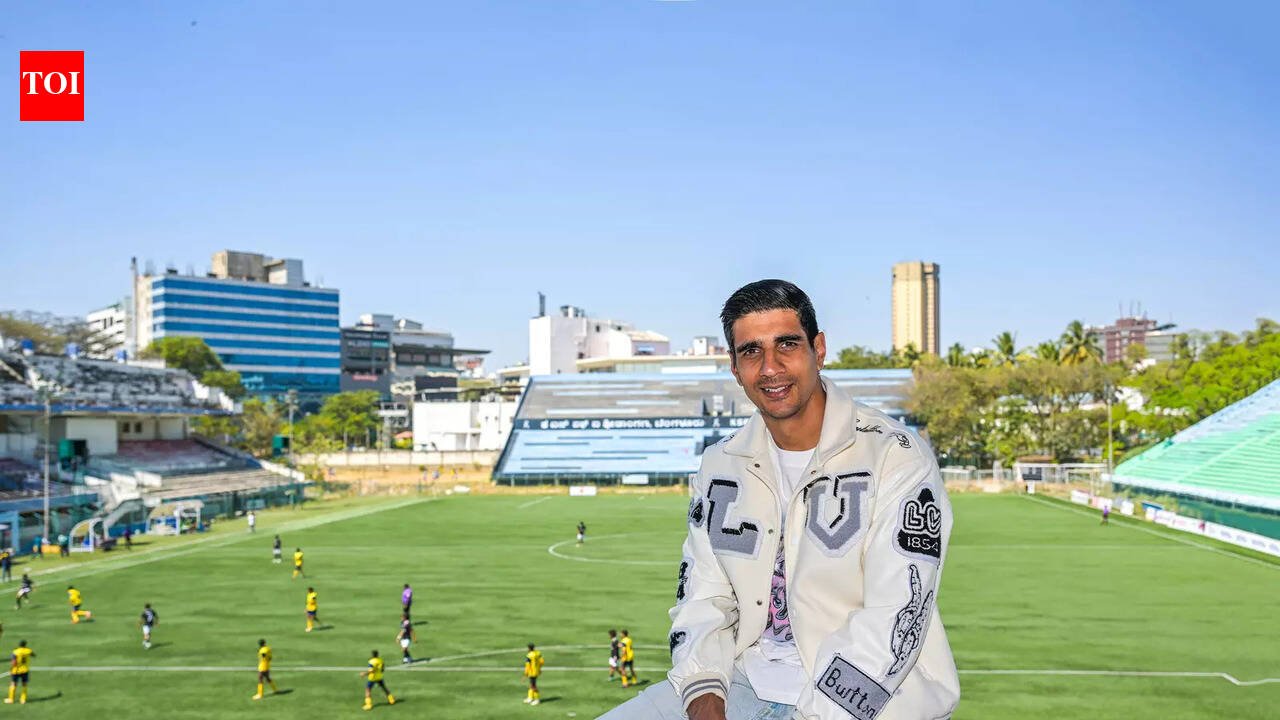
As Indian football navigates a challenging phase with players recently coming together to voice concerns about the sport’s future, captain and goal keeper Gurpreet Singh Sandhu remains focused on doing his bit on the pitch. Nearly two decades into the game, he reflects on his journey with gratitude. “Knowing what we know now, and seeing how football struggles at times in the country, I feel we’re lucky to have played these many years,” he says. In a chat with us, the skipper speaks about pressure, learning from failure, the growth of the sport, and why Bengaluru now feels like home. Excerpts:When you look back at your journey as a footballer, what do you feel today, especially as someone who now leads the national team?Honestly, I’ve rarely had the time to sit back and reflect on the years that have gone by. In a country like India, with so many people and so many sporting options, the fact that football worked out for me feels like a blessing. After almost 16 years of professional football, I feel nothing but gratitude. Considering how the sport struggles at times in the country, many of us feel fortunate to have played this long and represented India.Does the responsibility of being the national team captain bring added pressure?Any job comes with pressure to perform, to give your best, to succeed. But I try not to overthink it. Sometimes I take too much responsibility on myself, believing I need to fix everything, and that can affect my perfor mance. People around me remind me to fo cus on what I can control. As a goalkeeper, your job is clear: do your role perfectly. You have to be almost flawless because one mis take can mean a goal. That pressure is al ways there, but now I enjoy it.Do high-pressure situations bring out the best in you especially on field? Definitely. Whenever I’ve been on the back foot, tough matches, strong opponents, or even difficult phases in my career, I’ve usually bounced back stronger. Those mo ments reveal a lot about who you are. I perform better when I challenge myself. If things become too comfortable, I tend to relax or get complacent. So I consciously push myself every day, in training and in matches.Indian football has evolved over the years. Where do you think we’re still lacking? We’ve made significant progress, especially in terms of popularity. But we still lack strong infrastruc ture and long-term planning. In In dia, we often chase short-term results. What we need is a 30-year vision. Every one involved — from the ball boy to the association president, from coaches to players — must work towards one shared goal: making In dian football better for the future. We need more academies, more trained coach es, and schools that integrate sport into education.Compared to when you started, is it easier today for a young player to enter professional football?When I was growing up, there were no fixed ways to becoming a profes sional footballer. Today, it’s better. There are many clubs, each with acad emies and youth programs. But it’s still not enough. For a country of our size, the pathways into sport must multiply many times over.What’s the biggest lesson football has taught you? How to lose. Learning how to handle defeat is one of sport’s greatest les sons — and that’s crucial in life. Fail ure reveals your character and shows you who truly stands by you. Winning is easy. Losing is hard. But the more I failed, the closer I moved towards success.How has your relationship with Bengaluru evolved over the years? I wish I could learn the local language faster — that would make life easier! But you can manage well here with English and a bit of Hindi. Bengaluru has been home for almost nine years now. The rst time I came here was for international matches, and the connection with the fans felt special. It immediately felt like a place where I belonged. So when the opportunity came to move here, it was my rst choice — not just because of the club, but because of the city itself. It’s one of the best places to live in India. Even today, when people ask me where home is, I say Bengaluru — not Chandigarh.


