



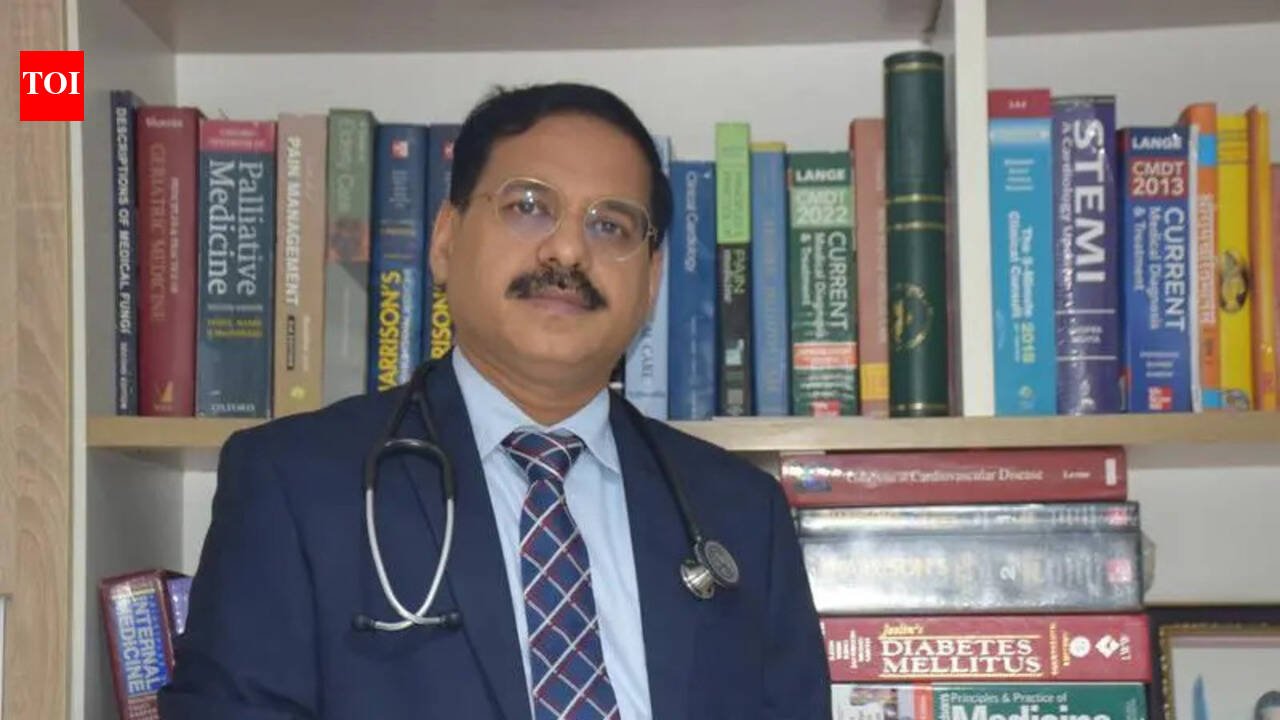
Dr Abhishek ShuklaEvery year on World Health Day, we pause to talk about health priorities, infectious diseases, maternal health, lifestyle disorders and preventive care. Yet one rapidly emerging public health challenge rarely receives the attention it deserves: the health of our ageing population.Challenges of LongevityIndia is ageing faster than we often realise. Improvements in healthcare and living conditions have helped people live longer, which is undoubtedly a positive sign of development. But longevity also brings new responsibilities for our healthcare system and society. The number of people above the age of 60 is steadily increasing, and with this demographic shift comes a rise in age-related health concerns that require focused attention. In day-to-day clinical practice, one begins to notice patterns in the health issues affecting older adults. These are not always dramatic diseases but often a cluster of problems that quietly reduce independence and quality of life. In geriatric medicine, these are sometimes referred to as the “geriatric giants”, conditions such as reduced mobility, falls, memory problems and incontinence.Mobility ChallengesThey may appear simple on the surface, but their impact on an elderly person’s life can be profound.Many elderly individuals gradually reduce their physical activity due to joint pain, weakness, or fear of falling. Over time, this leads to further muscle loss and frailty, creating a cycle that is difficult to reverse. Something as basic as walking to the market or climbing a few steps can become a significant challenge. Closely linked to mobility problems is the risk of falls. Falls are one of the most frequent reasons older adults require emergency medical attention. A fracture of the hip or spine can completely alter an individual’s independence and confidence. Often, the fear of falling again leads to even less movement, further worsening physical health.Incontinence Another issue that often remains hidden is incontinence. Many elderly individuals experience problems with bladder control, yet they hesitate to discuss it due to embarrassment. Families too may ignore the issue, assuming it to be a natural part of ageing. However, untreated incontinence can lead to infections, skin problems and a significant decline in dignity and social interaction.Cognitive DeclineCognitive decline is another growing concern. Memory problems and conditions like dementia are becoming increasingly visible as life expectancy rises. Unfortunately, the early signs are frequently dismissed as “normal ageing.” By the time medical help is sought, the condition may already have progressed considerably. Early diagnosis and structured care can make a significant difference, not only for the patient but also for families who struggle to cope with the changes.Over MedicationA related but often overlooked issue is polypharmacy, the use of multiple medications by a single patient. Elderly individuals frequently consult different specialists for various health conditions. Without proper coordination, they may end up taking several medicines simultaneously, increasing the risk of side effects, drug interactions and confusion. While these challenges are real, ageing itself should not automatically be associated with illness or dependency. Many older adults remain active, independent and socially engaged well into their later years. The key lies in recognising the specific health needs of this age group and addressing them proactively.Healthy ageing requires a broader approach than simply treating diseases when they appear. Regular health check-ups, appropriate nutrition, safe physical activity, and mental engagement play an important role in maintaining health. Rehabilitation services, physiotherapy and supportive caregiving can help older adults maintain independence for longer. Equally important is the need for a stronger geriatric healthcare framework in the country. India still has a limited number of specialists trained specifically in geriatric medicine. As the elderly population grows, healthcare systems will need to adapt by expanding training programs, improving community-based services and supporting caregivers. At a societal level, we must also rethink our attitudes towards ageing. Older adults are often viewed as dependents rather than individuals with experience, wisdom and continuing potential. Respect, patience and empathy are as important as medical treatment in ensuring their well-being.On this World Health Day, it is perhaps time to ask ourselves a simple question: are we truly prepared for an ageing India? The answer will depend not only on hospitals and doctors, but also on families, communities and policymakers working together to ensure that growing older does not mean growing invisible. Because ultimately, the goal of healthcare is not just to help people live longer, it is to help them live those years with dignity, independence and quality of life.(Writer is a senior geriatrician and member of UP Varishtha Nagrik Rajya Parishad and “Steering Committee”, National Institute of Social Defence, Ministry of Social Justice & Empowerment)


