


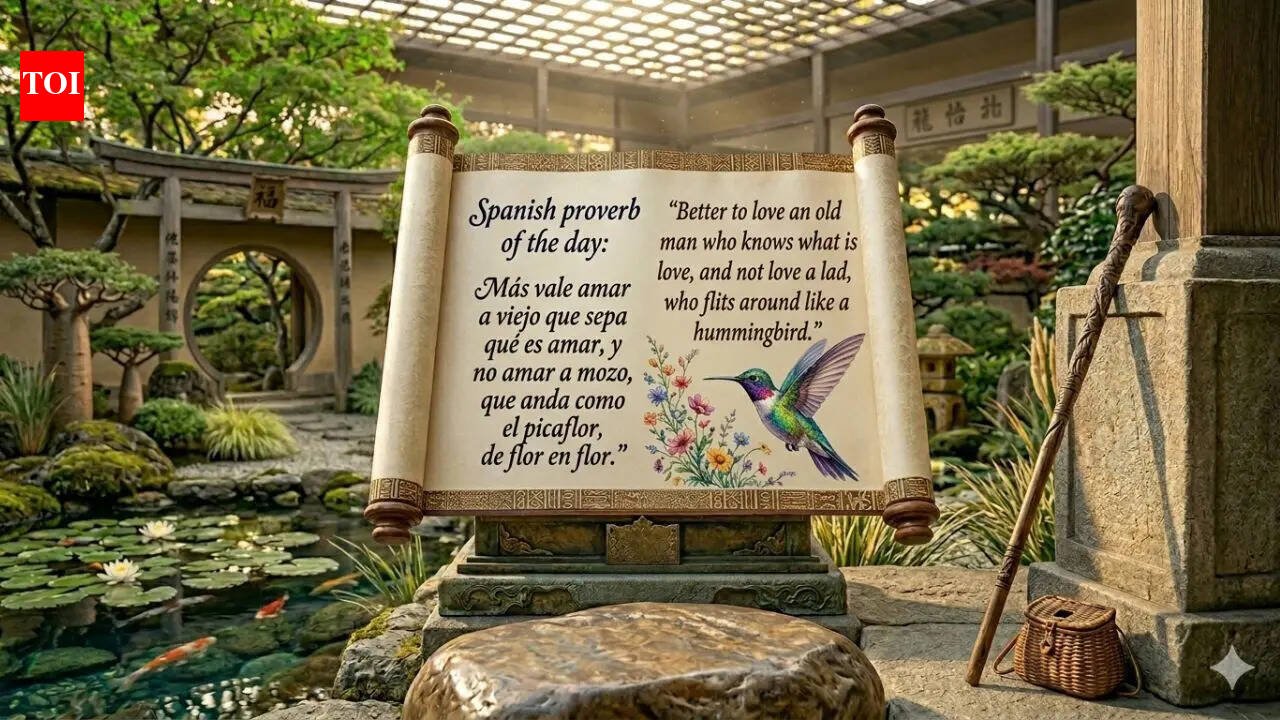
Love advice has existed for as long as people have been telling stories. Some of it arrives through poems. Some through songs. Some conversations between parents and children that somehow stay in memory years later. Then there are proverbs. Short sayings that often sound simple until you stop and sit with them for a while.This Spanish proverb belongs to that category. At first reading, it might feel a little surprising to modern ears. It compares an older man with a younger one and places experience against restlessness. The wording almost sounds old-fashioned. Maybe even a little blunt. But underneath it sits a broader idea that seems to have travelled across generations because it touches something many people recognise.The proverb says: “Better to love an old man who knows what is love, and not love a lad, who flits around like a hummingbird.”It is not really an age statement alone. It seems to be asking something deeper. What matters more in relationships: excitement or steadiness? Attraction or understanding? Passion or emotional maturity?Those questions are still hanging around today.
Spanish proverb of the day
“Better to love an old man who knows what is love, and not love a lad, who flits around like a hummingbird.”
What is the meaning behind this Spanish proverb
The immediate message appears fairly straightforward. The proverb suggests that experience and emotional understanding may matter more than youth or fleeting charm when it comes to relationships.The older man in the saying represents knowledge, stability, and a deeper understanding of love. The younger man, described as moving around like a hummingbird, seems to symbolise inconsistency and distraction. The image itself is interesting because hummingbirds move quickly. They dart from one flower to another without staying still for long.That comparison is doing most of the work here.The proverb is not necessarily criticising youth itself. Instead, it seems to be questioning emotional behaviour that lacks depth or commitment. It hints that affection without steadiness can sometimes feel beautiful at first and frustrating later.There is something quietly practical about it.Love often gets discussed in dramatic terms, but this saying shifts attention toward reliability and understanding rather than excitement alone.
Why the hummingbird image works so well
One reason the proverb stays memorable is because of that hummingbird image. It feels light at first, almost playful, but it creates a very clear picture.Most people can imagine it immediately. A tiny bird moving rapidly from place to place, never settling for very long, always chasing the next thing.People sometimes behave that way, too.Not only in romance, either. Friendships, ambitions, interests, and even careers can occasionally follow a similar pattern. Attention moves quickly. Focus changes. Something exciting appears and immediately pulls energy toward it.In relationships, that kind of restlessness can create uncertainty.Someone may be charming and exciting one day, distant the next, and somewhere else emotionally the day after that. Attraction can survive that for a while. Long-term connections often struggle with it.That may be what the proverb is quietly pointing toward.Consistency tends to become more valuable over time.
Love looks different as people grow older
There is also a broader human observation sitting underneath the proverb. Love itself often changes with experience.People in the early stages of life sometimes chase intensity. Excitement feels important. Grand gestures feel important. Uncertainty can even feel exciting because unpredictability creates emotion.Later on, priorities often shift.Experts who study relationships sometimes suggest that emotional maturity changes what people value in partners. Qualities like trust, communication, and reliability begin carrying more weight than simple attraction alone.That does not mean passion disappears.It just means other things start becoming important too.Many people eventually realise that feeling understood can sometimes matter more than feeling impressed.The proverb seems to recognise that idea long before modern relationship advice began discussing it.
Why experience sometimes matters more than appearance
The saying also touches on something people do not always admit openly. Experience changes how people understand care and affection.Someone who has lived through mistakes, disappointments, and complicated relationships may approach love differently from someone encountering those experiences for the first time.Experience does not automatically make people wiser, of course. Life does not work quite that neatly.Still, it appears that experience often teaches patience. It teaches compromise. It teaches people that relationships are not built entirely on excitement.Some lessons arrive slowly. Sometimes very slowly.The proverb seems to suggest that understanding love matters more than simply feeling attraction.There is a difference between wanting love and knowing how to sustain it.
Modern relationships still face the same question
It is interesting how an old proverb can still feel familiar in modern life.The details look different now. Dating apps exist. Social media exists. Communication happens instantly. People can meet each other from completely different places and backgrounds.But some questions seem strangely unchanged.People still wonder whether they should follow excitement or stability. They still wonder whether someone genuinely understands commitment. They still struggle to separate temporary attraction from something deeper.The “hummingbird” idea may even feel more relevant now in some ways.Modern attention moves quickly. Conversations move quickly. Choices appear endless. Connections sometimes begin and disappear within days.The pace feels different from earlier generations.Human emotions do not seem to have changed quite as much.
There is a quieter message hidden beneath the romance
The proverb can also be read outside romantic relationships entirely.It seems to speak about human priorities in general. About choosing depth over distraction. Understanding over appearance. Substance over quick excitement.People often get pulled toward what shines brightly in the moment. That is not unusual.The difficult part is that bright things do not always stay bright.Steady things often receive less attention at first because steadiness can appear ordinary. Then time passes and perspectives shift.Many people eventually discover that reliability has its own kind of beauty.Not loud beauty. Quieter beauty.The kind people notice later.
Final thoughts
This Spanish proverb remains interesting because it avoids dramatic language and still manages to raise larger questions about relationships and human behaviour.“Better to love an old man who knows what is love, and not love a lad, who flits around like a hummingbird.”At first, it sounds like age advice. Then it begins sounding more like advice about emotional understanding, maturity, and the difference between attraction and lasting connection.Its real focus does not appear to be youth versus age at all.It seems to be asking a simpler question.When excitement fades and life becomes ordinary again, who still knows how to love?
