



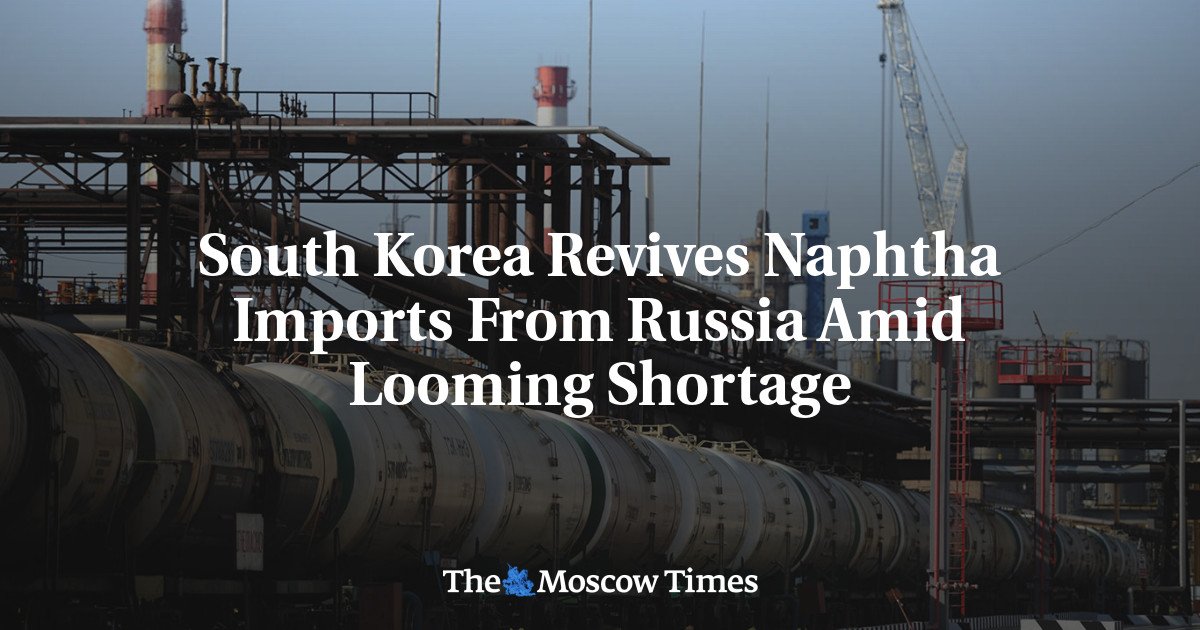
South Korea has purchased Russian naphtha for the first time in four years as disruptions linked to the effective closure of the Strait of Hormuz force refiners to seek alternative supplies.
LG Chem bought 27,000 metric tons of naphtha, according to sources cited by the Yonhap News Agency, with shipments expected to arrive on Monday.
The deal was made possible after the United States issued a waiver for the delivery and sale of Russian crude oil and petroleum products loaded onto ships between March 12 and April 11.
Naphtha is a liquid distilled from petroleum that is essential for making ethylene, a key ingredient in everything from plastic grocery bags to food packaging.
South Korea was a major buyer of Russian naphtha before the full-scale invasion of Ukraine in 2022.
While Iran war headlines have focused largely on the looming shortage in crude oil across the globe, the impact of limited naphtha supplies in Asia could be felt much sooner, as some refineries in countries like Japan have recently announced production cuts.
The price of naphtha shipped into Asia has soared 60% since the United States and Israel launched their war against Iran. South Korea imports 45% of its naphtha, 77% of which comes from the Middle East.
Although LG Chem’s purchase of Russian naphtha represents only a fraction of the country’s monthly demand of around 4 million metric tons, it signals an early shift toward alternative supply routes.
Refiners are also trying to secure shipments of Russian crude oil, South Korea’s industry ministry said, according to Reuters.
South Korea stopped buying Russian oil in December 2022.
If refiners move ahead with those plans, South Korea would join a growing list of East Asian countries, including the Philippines and Vietnam, that have already purchased or are in talks for purchasing Russian crude oil as global supplies tighten.
A Message from The Moscow Times:
Dear readers,
We are facing unprecedented challenges. Russia’s Prosecutor General’s Office has designated The Moscow Times as an “undesirable” organization, criminalizing our work and putting our staff at risk of prosecution. This follows our earlier unjust labeling as a “foreign agent.”
These actions are direct attempts to silence independent journalism in Russia. The authorities claim our work “discredits the decisions of the Russian leadership.” We see things differently: we strive to provide accurate, unbiased reporting on Russia.
We, the journalists of The Moscow Times, refuse to be silenced. But to continue our work, we need your help.
Your support, no matter how small, makes a world of difference. If you can, please support us monthly starting from just $2. It’s quick to set up, and every contribution makes a significant impact.
By supporting The Moscow Times, you’re defending open, independent journalism in the face of repression. Thank you for standing with us.
Continue
Not ready to support today?
Remind me later.
×
Remind me next month
Thank you! Your reminder is set.


